- Payment disputes represent the most frequent issue in American business contracts, often caused by vague terms.
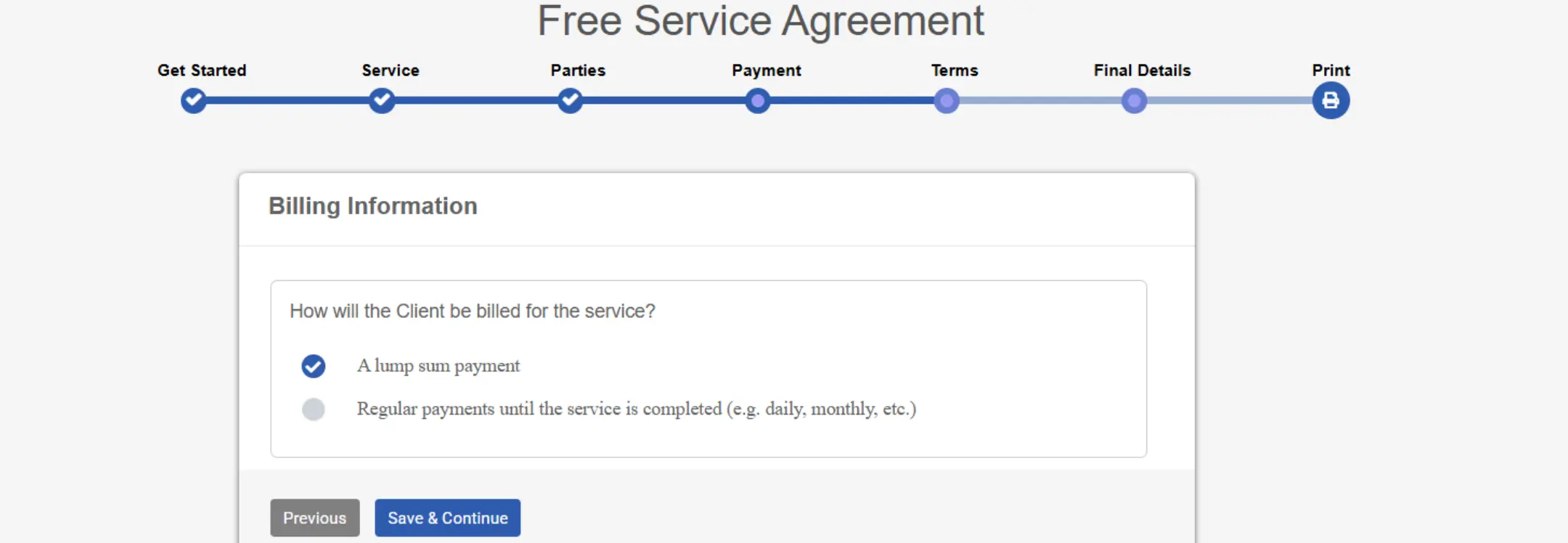
- Providers must select between fixed, hourly, and retainer models based on the predictability of the project scope.
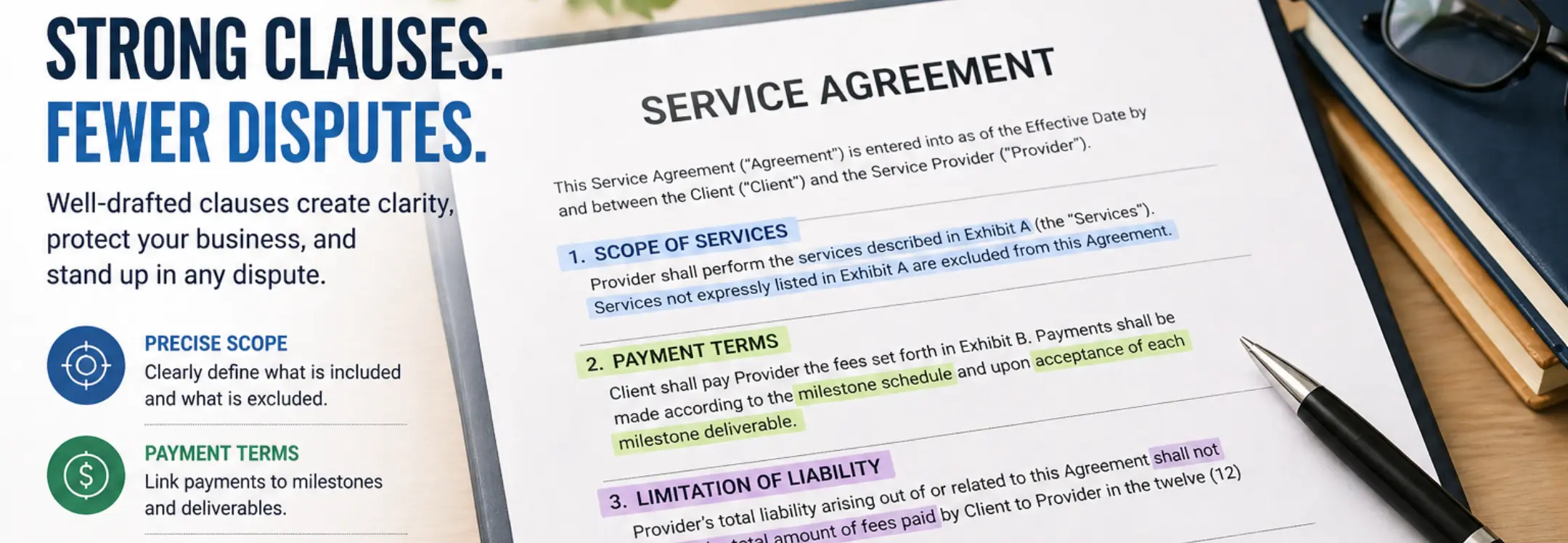
- Strategic payment schedules utilize upfront deposits and milestone installments to distribute financial risk fairly.
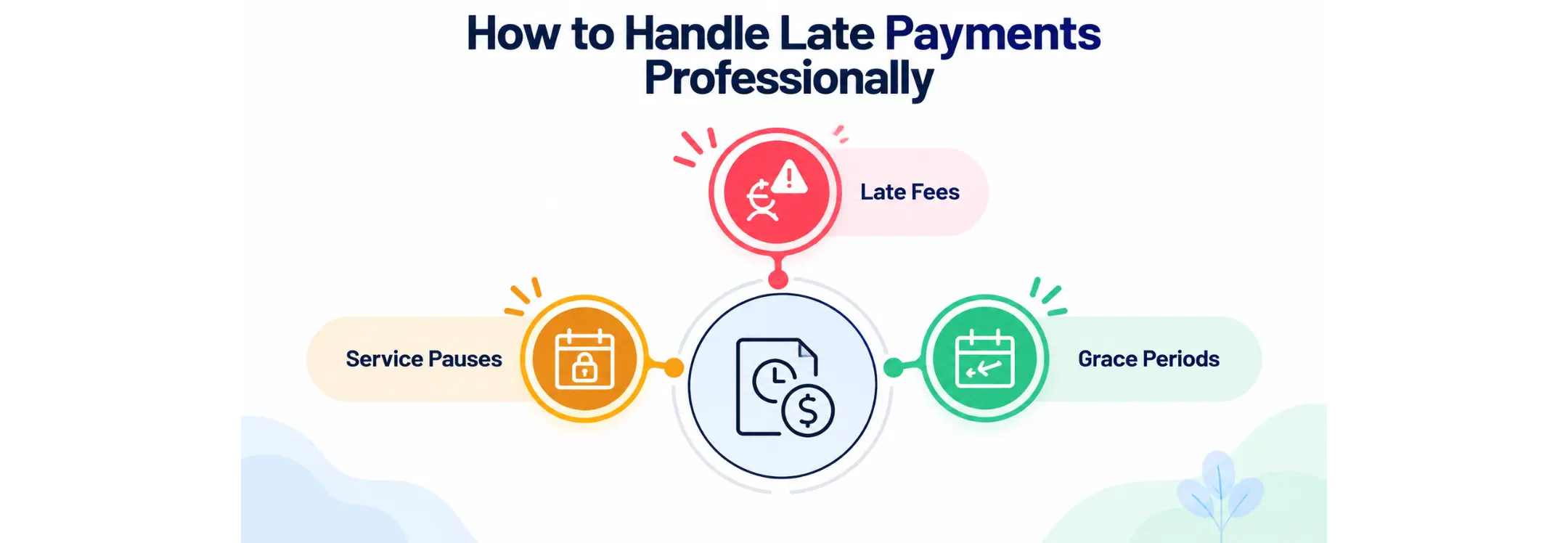
- Professional late payment management involves clear fees, grace periods, and the contractual right to pause services.
- Advanced protections like kill fees and escrow accounts offer additional security for high-value or long-term deals.
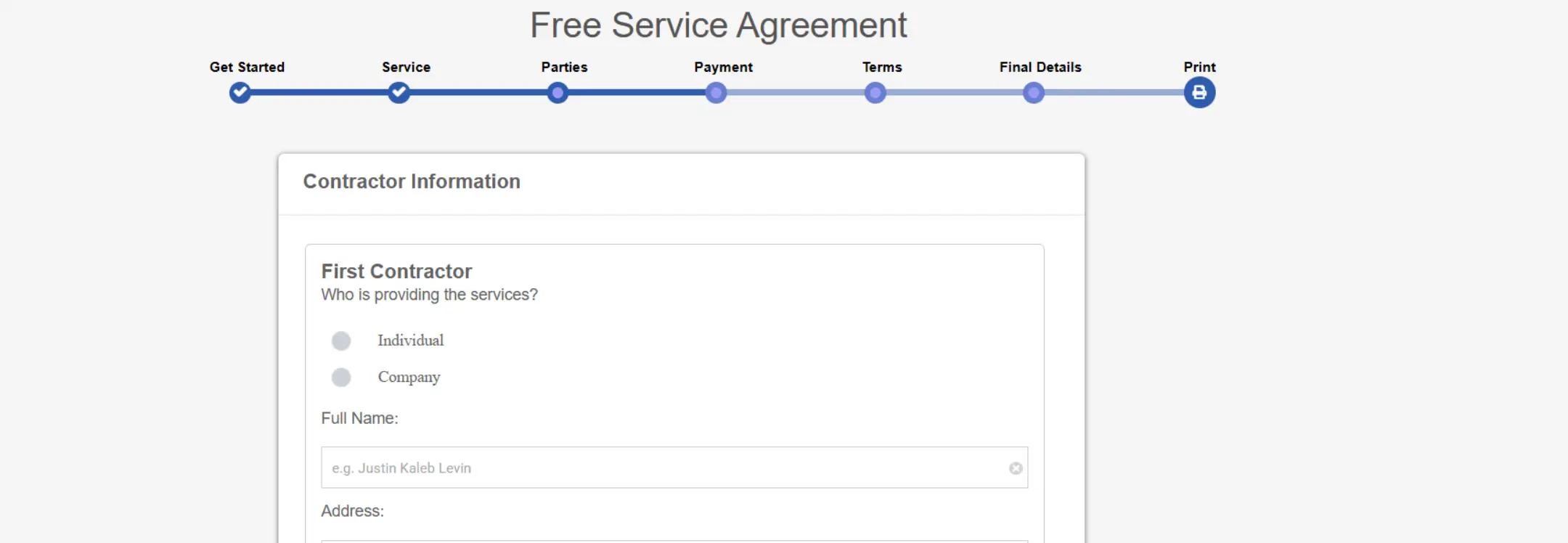
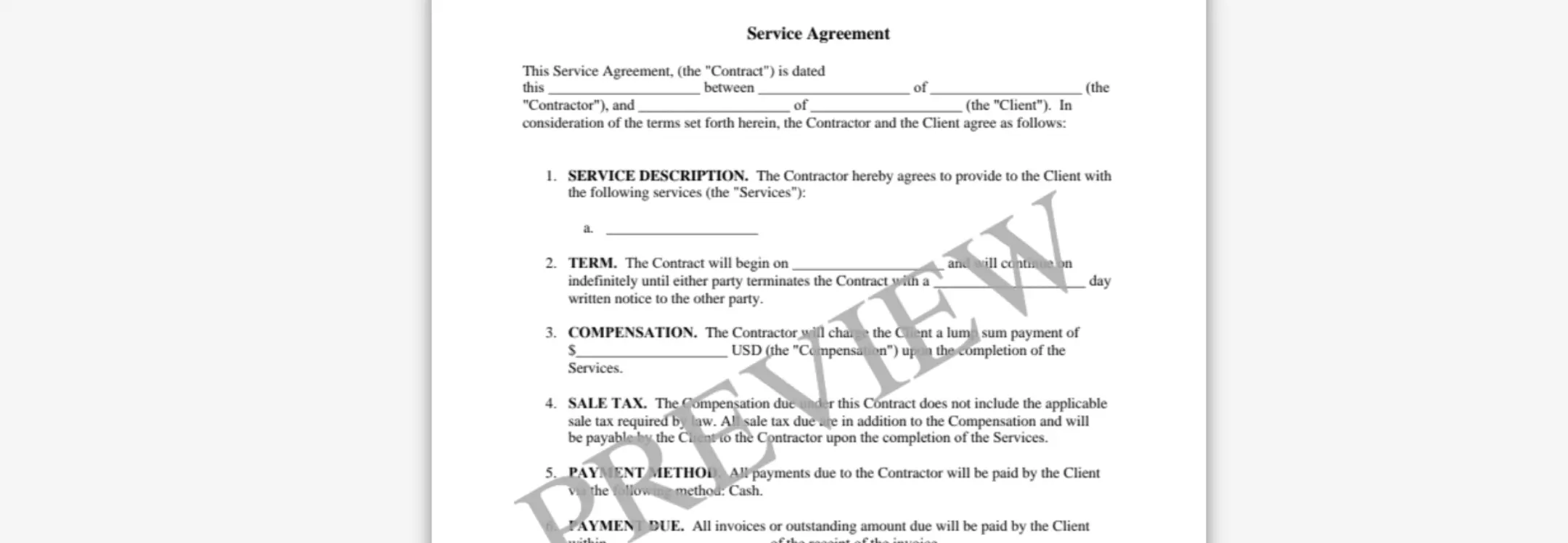
- Using Ziji Legal Forms' Service Agreement template ensures all essential financial and legal clauses are included.
Introduction
The stability of a professional relationship in the United States depends on the clarity of its financial foundation. Within commercial law, payment disputes are the most common issue arising in a Service Agreement today. These conflicts rarely stem from a simple refusal to pay. Instead, they emerge from poorly structured terms that fail to account for the complexities of modern service delivery.
In the current economic landscape, cash flow is the vital lifeblood of any enterprise. Data from 2025 indicates that the B2B payment environment is increasingly challenging. More than 55 percent of all commercial invoices in North America are now paid past their due date. This trend creates a ripple effect of financial instability, making it critical for service providers to sharpen their contract language.
Poor structuring leads to significant delays and interpersonal conflicts. When expectations are not aligned from the start, a minor misunderstanding can escalate into a business-critical crisis. For a professional operating in the USA, a robust Service Agreement template is the first line of defense against these systemic payment delays.
Why Poor Payment Terms Cause Problems
The primary reason poor payment terms lead to failure is the creation of a vacuum where expectations should be. When a contract fails to define exactly when and how a client must pay, it leaves the provider vulnerable to the client's internal financial pressures. Ambiguity is the enemy of a successful Service Agreement, and it is almost always the starting point for a legal dispute.
Undefined timelines are a common hallmark of poorly drafted contracts. If a contract relies on vague phrases like payment due upon completion or payment due shortly after delivery, it provides no firm anchor for the obligation to pay. Without a specific date or a clearly defined triggering event, the client has the freedom to define completion according to their own subjective standards.
Misaligned Expectations and Lack of Penalties
Many payment disputes are actually performance disputes in disguise. A client who is unhappy with a result, even if it meets the contractual specifications, may withhold payment as a form of protest. This happens most frequently when the criteria for acceptance are not defined. If the agreement does not state what constitutes a successful deliverable, the client can argue that the services were substandard.
Furthermore, a contract without penalties for late payments is essentially a request for payment rather than a mandate. In the absence of late fees or interest charges, a client has no financial incentive to pay on time. In fact, paying late becomes a rational financial decision for the client because there is no cost associated with the delay. A robust Service Agreement USA must include a late fee provision to signal that timely payment is a material term.
Choosing the Right Fee Structure
Selecting the appropriate fee structure is one of the most important decisions a professional makes during negotiations. The chosen model dictates not only how much the provider will earn but also how the risk is distributed between the parties. In the United States, three primary models dominate the professional services landscape: fixed fees, hourly rates, and retainers.
Fixed Fee vs Hourly vs Retainer
Fixed fee billing, also known as flat-rate billing, is highly effective for services with a clear and repeatable scope. This includes tasks like routine contract drafting or basic corporate formations. From the client's perspective, this model is attractive because it offers complete cost certainty. However, the primary risk for the provider is the potential for scope creep, where they perform more work than anticipated for no additional pay.
Hourly billing remains the standard for engagements where the full scope of work is impossible to determine at the outset. This is common in complex litigation or deep research projects. It ensures the provider is compensated for every hour of effort, protecting them from unexpected complications. The drawback is that clients face budget uncertainty, and it requires meticulous time-tracking which can lead to disputes over individual line items.
Retainer models are best for long-term relationships where the client requires consistent access to a professional's expertise. This structure provides the service provider with steady and predictable monthly income. The challenge is ensuring the agreement specifies a maximum number of hours included in the monthly fee. Without these caps, a client might demand an unreasonable amount of work, effectively turning the retainer into an under-priced fixed fee.
How to Structure Payment Schedules That Actually Work
A well-structured payment schedule is the primary mechanism for managing cash flow and reducing financial risk. Instead of waiting until the end of a project to collect the total amount, professional providers divide the payments into smaller and more manageable installments. This approach ensures the provider has the funds necessary to cover operational costs throughout the project's duration.
Upfront vs Milestone vs Completion-Based
The timing of payments shifts the risk from one party to the other. Completion-based billing, where the full payment is due only after all work is finished, is the riskiest for the provider. In this model, the provider is essentially extending an interest-free loan to the client. If the client fails to pay at the end, the provider has lost all the time and resources invested in the work.
Upfront payments or deposits are essential for securing a provider's commitment. In many professional industries, a deposit of 30 to 50 percent is standard. This upfront commitment ensures that the client is serious about the project and provides the provider with immediate liquidity to begin the work without straining their own reserves. It protects the service provider from early drop-offs and gives the project momentum.
Aligning Payments with Deliverables
For a payment schedule to be enforceable and fair, the payments must be clearly linked to specific deliverables. This linkage ensures that both parties are operating under a shared understanding of what progress looks like. This alignment reduces the likelihood of disputes because the trigger for payment is an objective fact rather than a subjective opinion.
A clear Online Service Agreement will always detail these milestones in an attached scope of work. Successful contracts maintain a steady balance where the cumulative payments made by the client always roughly match the cumulative value delivered by the provider. You should avoid front-loading the contract too heavily to stay fair, but you must also avoid back-loading the risk so you are not left unpaid at the end.
Designing Effective Milestone Payments
Milestone payments are only effective if they are built on a foundation of clear and measurable definitions. Many providers make the mistake of using vague milestones like research phase complete, which are open to interpretation. To ensure timely payment, every milestone must be defined with enough specificity that an outside observer could easily determine if it has been met.
Defining Clear Milestones
A well-defined milestone includes a description of the work, the specific output to be delivered, and the criteria for acceptance. For a web development project, a milestone might include the delivery of a sitemap and wireframes for ten specific pages. For a marketing campaign, it could be the launch of three finalized ad creatives. These measurable outputs shift the focus from whether the client likes the work to whether the provider has met the technical requirements.
The criteria for completion should also include a timeframe for client review. For example, the contract might state that the client has five business days to review the deliverable. If no response is received within that window, the milestone is deemed accepted and the payment becomes due immediately. This prevents the client from using silence as a tactic to delay payment while they continue to use your work.
Sample Milestone Breakdown
A standard milestone breakdown should follow the logical progression of the project. A common approach for a 10,000 dollar project involves a 10 percent payment upon project kickoff and contract signing. This is followed by 20 percent upon completion of the design phase and another 30 percent when the prototype or core deliverables are finished. The final 40 percent is typically due upon final delivery and acceptance.
In a consulting environment, the breakdown might look slightly different. You could charge 30 percent for the initial strategy and creative assets. Another 30 percent would be due once the campaigns are launched. The final 40 percent would be paid after the optimization checkpoint and final reporting are delivered. This ensures you are paid at every stage where your effort is most concentrated.
How to Handle Late Payments Professionally
Late payments are more than an inconvenience; they are a threat to the survival of a business. Research from 2025 indicates that the average delay for late B2B payments is roughly eight days, but many invoices extend well beyond sixty days. Handling these delays requires a combination of clear communication and firm contractual enforcement to protect your cash flow.
Setting Late Fees
Late fees are a standard and necessary component of a professional billing system. They compensate the provider for the administrative cost of chasing payments and for the lost opportunity cost of the delayed funds. Most businesses in the USA charge between 1 and 2 percent per month for late fees. It is essential to ensure that these rates do not violate state usury laws, which set maximum limits on the interest that can be charged on a debt.
Adding Grace Periods
A grace period is a short window of time after the due date during which no late fees are applied. This is a common industry norm that accounts for minor delays like bank processing times or mailing issues. In the United States, a grace period of five to seven days is standard for professional services. Including this in the contract is a goodwill gesture that demonstrates you are reasonable while still maintaining a firm deadline.
Right to Pause Services
The most powerful protection a provider has against non-payment is the right to pause or suspend services. This is a contractual clause that allows you to stop all work on a project if a payment becomes significantly overdue. It prevents the bleeding of resources and forces the client to resolve the payment issue before any more progress is made. This leverage is often much more effective than late fees at inducing a prompt payment.
Advanced Payment Protection Strategies
For high-value or complex contracts, standard payment terms may not provide enough security. Service providers should consider more advanced strategies to safeguard their income. Partial upfront payments are the first line of defense. However, in industries like construction, retainage is also common, where the client holds back a small percentage to be paid only at the very end after a final walkthrough.
Kill fees are another essential protection. A kill fee is a pre-negotiated payment that becomes due if the client cancels a project before completion through no fault of the provider. It is designed to compensate the provider for the time and resources they have committed to a project that they can no longer monetize. A common kill fee might be 25 to 50 percent of the remaining contract value.
For very high-value projects, using an escrow service is the ultimate form of protection. Escrow involves a neutral third party that holds the full contract funds and releases them to the provider only when pre-agreed conditions are met. This provides the benefit of neutral holding so that the provider knows the funds exist, and the client knows the money will only be released upon a successful quality check.
Alternative Dispute Resolution (ADR) for Payment Conflicts
When a payment bottleneck occurs, jumping straight to a lawsuit can drain more time and money than the invoice itself is worth. Including an Alternative Dispute Resolution (ADR) clause requires both parties to attempt mediation or binding arbitration before marching into a courtroom. In the United States, specifying a venue and governing law, usually the provider’s home state, keeps the home-court advantage in your court.
This clause sets a structured, private environment to negotiate settlement terms or payment plans, saving the professional relationship while avoiding public, expensive litigation.
Digital Payment Methods and Processing Fees
In a modern B2B ecosystem, relying solely on paper checks slows down your cash flow. A robust agreement must clearly outline accepted electronic payment methods, such as ACH transfers, credit cards, or wire payments. Crucially, the contract needs to state which party absorbs the processing fees.
Under US commercial standards, providers often pass credit card convenience fees (typically 2 to 3 percent) back to the client where state law permits. Setting these digital boundaries upfront removes friction at the checkout screen and shaves days off your average collection time.
Currency Fluctuations and International Transactions
If you are an American provider servicing international clients, or vice versa, ignoring cross-border payment logistics is a major financial risk. Volatile foreign exchange rates can quietly chip away at your profit margins between the invoice date and the actual settlement day. To protect your revenue, your agreement should explicitly state that all invoices are billed and must be paid in United States Dollars (USD).
Furthermore, the clause should clarify that the client is entirely responsible for any international wire transfer fees, intermediary bank charges, or local withholding taxes.
Common Payment Term Mistakes
Even experienced professionals make mistakes when drafting payment terms. One of the biggest errors is using the phrase payment due upon completion without further detail. This is too vague and allows the client to indefinitely extend the project. This phrase should always be replaced with a specific date or a trigger that is within your control, such as due within fourteen days of delivery.
Failing to include penalties or a link to deliverables is another critical pitfall. Without these, your invoice becomes a low priority for the client. Similarly, using ambiguous deadlines like promptly or in a timely manner creates legal landmines. Replacing these with concrete terms like within five business days provides the clarity needed to avoid disputes that could drag on for months in court.



 United States
 Canada