TL;DR- A warranty deed is the gold standard of property transfers, safeguarding buyers against past and future title issues through robust legal guarantees.
- There are two main types: the general warranty deed (full coverage) and the special warranty deed (covering only certain periods). Key protection comes from clauses obligating sellers to defend the title and ensure the property is free of undisclosed claims.
- Drafting and filing a warranty deed require accuracy, notarization, and compliance with county formatting and submission rules.
- Filing your deed means presenting it to the local county recorder, meeting margin/format rules, and paying required fees - all built into modern templates from Ziji Legal Forms.
Introduction: Understanding Warranty Deeds
Whether you’re selling, buying, or inheriting property, the role of the property deed is non-negotiable. The deed is your official receipt, a legal document transferring real estate from the “grantor” (seller) to the “grantee” (buyer), and it needs to stand up to public scrutiny years down the line. Not all deeds, however, are created equal.
A warranty deed stands out as the most protective form of property transfer available. Unlike its siblings, this deed provides binding guarantees from the seller about the property’s title history ensuring buyers that no hidden liens, unresolved claims, or unknown owners will pop up to challenge their rights. It is the method of choice for most arms-length real estate transactions and is respected by banks, investors, and title insurers.
Types of Property Deeds and What Sets Warranty Deeds Apart
Quitclaim Deed
A quitclaim deed transfers whatever ownership interest the seller holds, but makes no legal promises about clarity of title. If there are liens, unknown heirs, or boundary disputes, the buyer is left to resolve these issues without any help or compensation from the seller.
Special Warranty Deed
A special warranty deed offers a moderate level of protection. The seller confirms that there were no title issues during their ownership, but is not responsible for problems that originated before they acquired the property. Special warranty deeds are common in commercial transactions or foreclosures, where the transaction history might be less certain.
General Warranty Deed
The general warranty deed provides the highest level of protection. The seller guarantees, without restriction, that the property’s title is clean and has been free of defects or claims throughout its entire history, not just during their ownership. If any challenge arises related to a previous owner or old lien, the seller is bound to defend the buyer’s interest or compensate them for any loss.
Choosing a warranty deed means you want certainty in your ownership. The document offers legal assurance, establishes transparency, and minimizes risk for buyers, sellers, lenders, and title insurers.
Key Parties and Clauses in a Warranty Deed
The Main Parties
- Grantor: the person or entity selling and transferring the property
- Grantee: the person or entity purchasing and receiving the property
Both parties should be identified by their full legal names and current mailing addresses.
Important Clauses
A warranty deed will usually include the following covenants:
- Granting clause - transfers ownership rights to the buyer
- Habendum clause - specifies the scope of the transfer
- Covenant of seisin - confirms the seller owns the property and has the right to transfer it
- Covenant against encumbrances - guarantees the property is free from liens, loans, or other hidden claims
- Covenant of quiet enjoyment - protects the buyer’s use of the property from interference
- Covenant of further assurance - obligates the seller to correct paperwork or resolve issues if a problem arises
These clauses work together to make the ownership transfer enforceable and to give the buyer strong legal recourse if the promises are not honored.
How a Warranty Deed Works in a Real Estate Transaction: Step-by-Step Overview
1. Title Search
Before drafting the deed, the parties or their attorneys or title company perform a title search to confirm the seller truly owns the property and to reveal any unresolved liens or claims.
2. Drafting the Warranty Deed
Using a compliant template, the deed is prepared with correct names, legal property description, and all required covenants.
3. Notarized Signing
The grantor signs the deed in front of a notary public, who verifies the identities and ensures that the transaction is voluntary.
4. Delivery and Acceptance
The signed deed is delivered to and accepted by the grantee. Delivery is a legal act, signifying that the transaction is completed.
5. Recording with the County Office
The deed is then filed at the local county recorder or registrar, making the transfer a matter of public record and giving notice to the world of the new ownership.
Recording the deed is what secures legal rights for the buyer. Without this step, ownership is unprotected and the property may be vulnerable to competing claims.
The Filing Process for a Warranty Deed
Why Recording Matters
Recording is the official act that makes ownership visible to the public and legal authorities. It is essential because it provides priority over later claims and establishes the buyer as the recognized owner.
How to File a Warranty Deed
1. Prepare the Deed
- Use a warranty deed template that complies with county requirements, including layout, language, and margins. Most counties require:
- Standard paper size (often 8.5 x 11 inches)
- Margins of at least three inches at the top of the first page for stamps
- Margins of at least one inch around other edges
- Black or blue ink for legibility
- Printed names below all signatures
- Complete legal description, parcel number, and mailing addresses for both grantor and grantee
2. Have It Notarized
The seller signs the deed in front of a notary, whose seal authenticates the document. Notarization is critical; without it, the county office will reject the deed.
3. Submit to County Recorder
Deliver the original, notarized deed to the county office in person, by mail, or using electronic filing where available. Most county recorders require a filing fee.
4. Review and Record
The recorder checks for compliance with formatting and legal standards. If approved, the deed is indexed, recorded, and returned (with a stamp or certification) to the buyer or their agent.
5. Notify Tax Authorities and Others
Ownership details are updated in local property tax rolls. Sometimes, lenders or prior lienholders need notification as well.
Templates from Ziji Legal Forms automatically follow these technical requirements, preventing the most common reasons for rejection.
Benefits and Limitations of a Warranty Deed
Key Benefits
- Maximum legal protection for the buyer - if title issues surface, the seller is on the hook
- Creates permanent public record of ownership, which aids in resales, loans, or estate planning
- Preferred by mortgage lenders, making financing easier
Main Limitations
- Seller may be exposed to liability for defects that occurred before they even owned the property
- Drafting errors or missing clauses can weaken protection or void the deed
- More complex and costly to prepare than other deed types
Common Mistakes to Avoid
- Using inaccurate legal descriptions or failing to match county records. This can void the transfer or create disputes.
- Forgetting required covenants or omitting signature lines.
- Failing to notarize or record promptly. Unrecorded deeds are not legally effective and the buyer may lose priority in court.
- Ignoring margin or formatting rules, resulting in rejection or delays.
- Typing party names incorrectly. These must match property records and identification exactly.
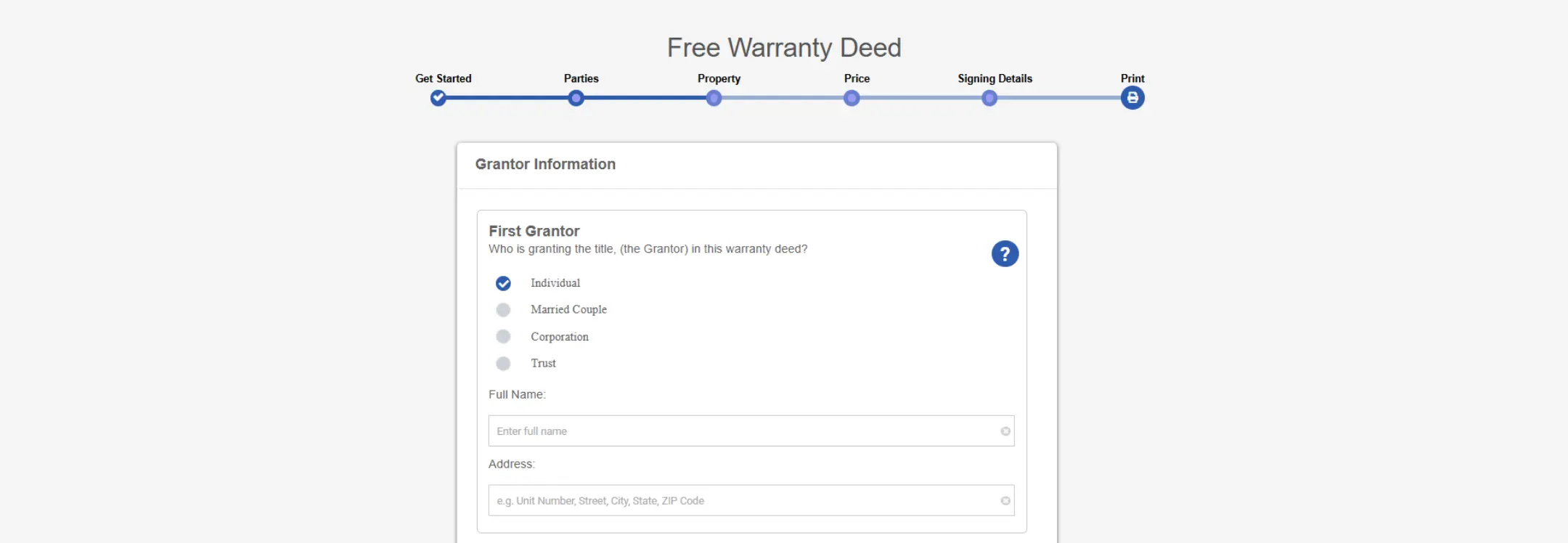
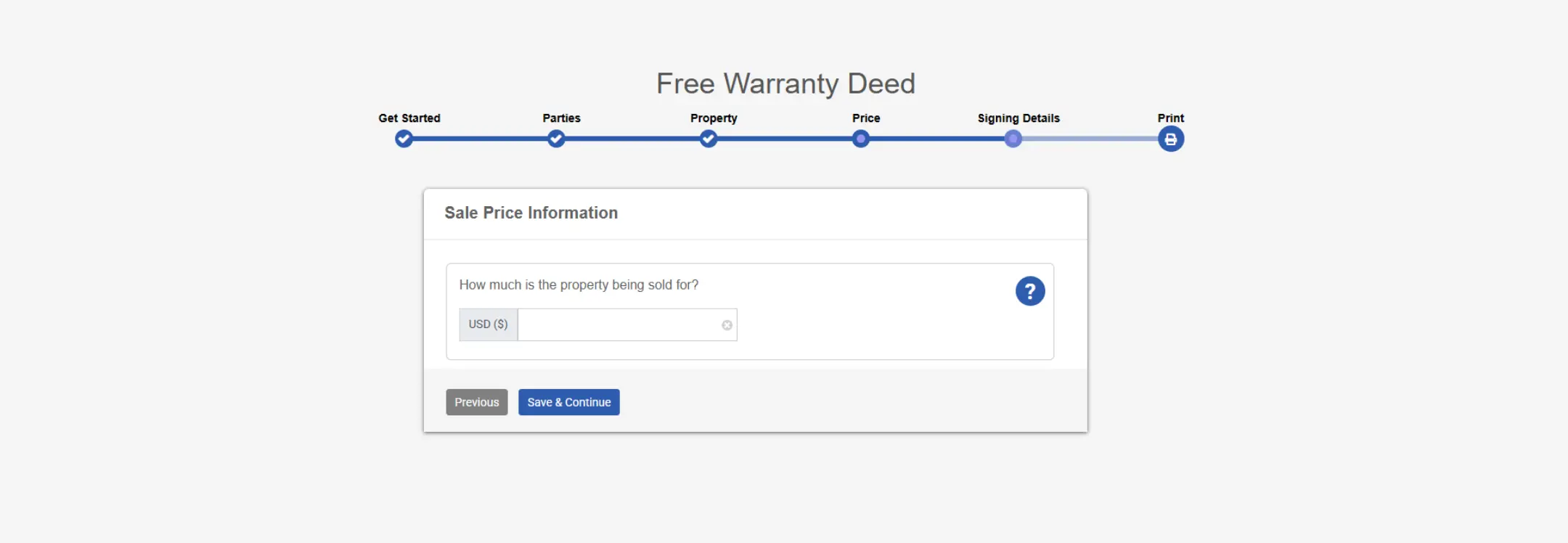
How to Create a Warranty Deed Using Ziji Legal Forms: Step-by-Step Guide
2. Enter the names, addresses, and legal description of both parties and the property
3. Answer easy prompts about the transaction type, price, and covenants to include
4. Download, review, and print the document. Check margin compliance, spelling, and all required fields
5. Sign the deed before a notary public, then submit for recording at the local county office
6. Confirm recording, store your certified copy, and notify any relevant parties (tax, lenders, etc.)
Templates from Ziji Legal Forms are designed to meet the requirements for layout, spacing, margins, and official blank spaces, so acceptance at the county office is fast and reliable.
General vs. Special Warranty Deed
| Feature |
General Warranty Deed |
Special Warranty Deed |
| Protection Scope |
Covers all ownership history |
Covers only seller’s ownership |
| Seller's Obligation |
Must address defects from any time |
Only obligated for their period |
| Buter's Security |
Highest Protection Available |
Only obligated for their period |
| Typical Use |
Conventional home sales, mortgages |
Commercial or special transactions |
A general warranty deed is usually best for homebuyers who need clear and unconditional ownership. A special warranty deed can be enough for less traditional transactions or unique property sales.
Why Warranty Deeds Build Trust
Warranty deeds are the backbone of trust in property sales. Buyers know they're protected, sellers demonstrate good faith, and financial institutions have confidence in the legal integrity of these transactions. The clear language and binding promises found in warranty deeds reduce future conflict and promote successful real estate investments.
Conclusion
A warranty deed, when drafted and filed correctly, ensures the strongest property protection available under U.S. law. The buyer receives peace of mind, the seller fulfills obligations transparently, and all rights are anchored in public record. Using Ziji Legal Forms’ templates guarantees compliance with county standards for margins, signatures, and legal formatting, and helps you avoid hassles and errors that can stall or complicate your property transfer.
Warranty Deed FAQs
1. Why is a Warranty Deed important?
It transfers ownership while assuring the buyer that the property's title is free from undisclosed claims or defects.
2. How does a General Warranty Deed differ from a Special Warranty Deed?
A General Warranty Deed covers the property's entire ownership history, while a Special Warranty Deed only covers the seller's period of ownership.
3. Do all Warranty Deeds require notarization?
Yes. The grantor's signature is generally required to be notarized before the deed can be officially recorded.
4. What happens after the deed is signed?
After signing and notarization, the deed should be filed with the county office responsible for maintaining land records.
5. Can I use a Warranty Deed to transfer property to a spouse?
Although possible in some situations, a Quitclaim Deed is generally the more appropriate document for adding or transferring property between family members.
6. In which jurisdictions can I use the Ziji Legal Forms Warranty Deed?
The Ziji Legal Forms Warranty Deed is designed for use in every jurisdiction across the United States.
Author
Mandar Sonavane
|
Legal Content Writer at Ziji Legal Forms Inc.
Symbiosis International University
Mandar is a legal content writer specializing in the development of clear, practical, and easy-to-understand legal resources. With a strong focus on legal research, content creation, and plain-language writing, he works closely with our legal professionals to ensure that legal documents and educational materials are accurate, accessible, and user-friendly. At Ziji Legal Forms Inc., Mandar is responsible for researching legal topics, drafting and reviewing content, and helping transform complex legal concepts into straightforward guidance that empowers individuals and businesses to confidently navigate their legal needs.
Reviewed By
Histon Shek
|
General Counsel and Co-Founder at Ziji Legal Forms Inc.
University of Alberta
Histon Shek was called to the Alberta Bar in 2006. He holds a BA in Sociology and Philosophy and an LLB from the University of Alberta. As co-founder of Ziji Legal Forms Inc., he focuses on making legal documents accessible and affordable, overseeing legal integrity and content development.







 United States
 Canada