
- A Warranty Deed is a property transfer document that includes legally enforceable promises about title quality and the seller’s right to convey the property
- Buyers care because those warranties shift some past ownership risks from the buyer to the seller and support future resale confidence.
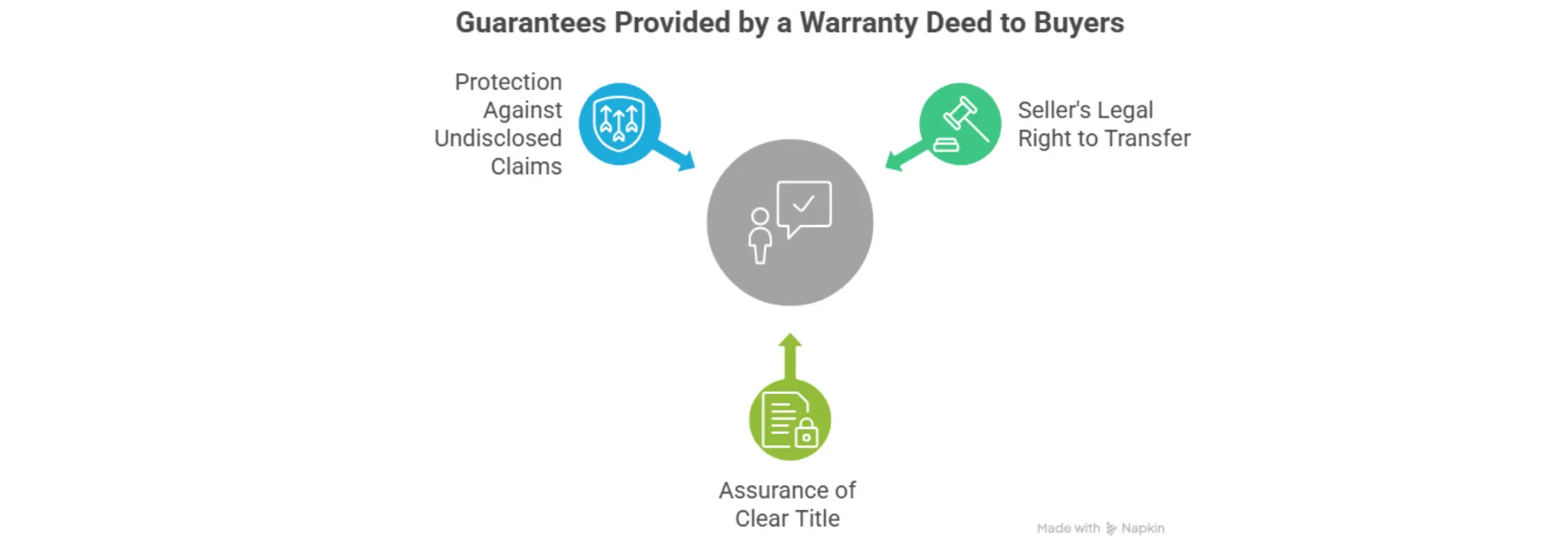
- The deed guarantees the seller’s authority to transfer, assures clear title apart from disclosed items, and offers protection against undisclosed ownership claims.
- A Warranty Deed does not replace title insurance, guarantee property condition, or protect against future legal or zoning changes.
- Guarantees focus on past title issues and usually benefit both the initial buyer and later owners who receive the property through the same deed chain.
- A clear online Warranty Deed template helps ensure the warranty language actually reflects the level of buyer protection everyone thinks they are getting.
What Is a Warranty Deed
Why Warranty Deeds Matter to Buyers
What Guarantees Does a Warranty Deed Provide to Buyers
Seller’s Legal Right to Transfer
Assurance of Clear Title
Protection Against Undisclosed Claims
What a Warranty Deed Does Not Guarantee
Not a Substitute for Title Insurance
No Guarantee of Property Condition
No Protection Against Future Legal Changes
How Long Do Warranty Deed Guarantees Last
Who Is Protected by a Warranty Deed
When Warranty Deeds Are Commonly Used
How Buyers Can Make Sure Their Warranty Deed Is Legally Sound
Understanding the Warranty Language
Knowing Who Provides the Guarantee
Matching Deed Protections to Transaction Risk
Using Ziji Legal Forms to Create a Buyer Friendly Warranty Deed
1. Choose template
2. Add Party Details
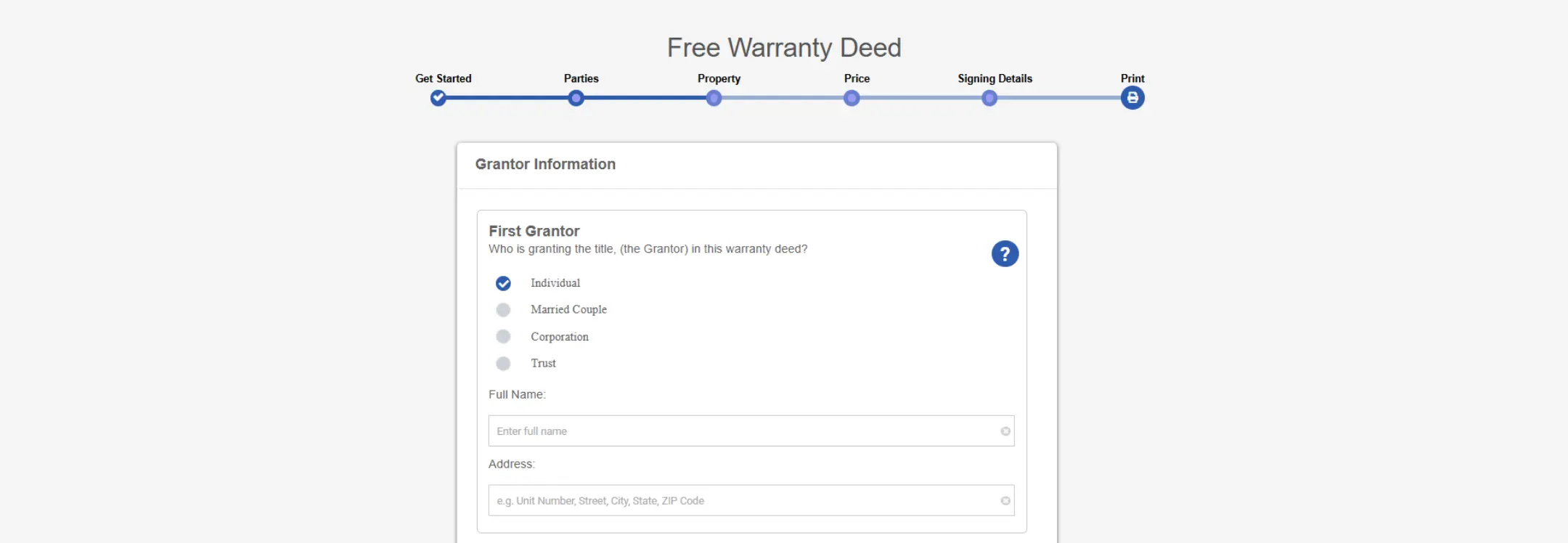
3. Add Property Details
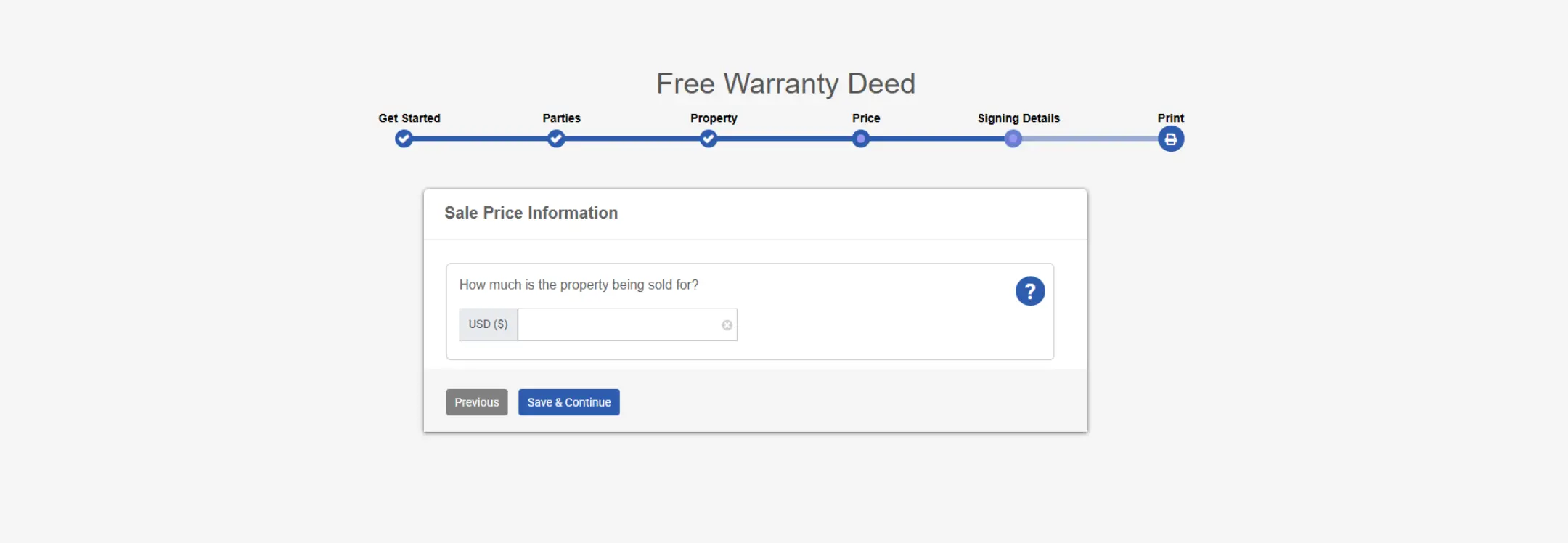
4. Add Pricing Details
5. Preview and print

Conclusion: Know What Your Warranty Deed Really Promises
Warranty Deed FAQs
What is a warranty deed?
A warranty deed is a document used to transfer ownership of real estate from the grantor to the grantee. It is where the grantor warrants, or promises, that the grantor owns the property free and clear and has the authority to transfer the title to the grantee. In essence, the grantor is guaranteeing that there aren’t any encumbrances like mortgages, liens or judgement against the title and the grantee will receive the ownership of the property.
Warranty deeds are typically used in most real estate transaction where the grantee is paying full market value for the property and the grantor is transferring the property to the grantee in the sale. There are two different types of warranty deeds: general warranty deed, and special warranty deed.
What is a general warranty deed?
A general warranty deed offers the highest level of protection for the grantee. The grantor guarantees that the grantor owns the property and can legally transfer it to the grantee. Secondly, the grantor represents that there are no outstanding encumbrances like mortgages, lies, judgements, or other claims against the property by creditors. Under a general warranty deed, the grantor will also compensate the grantee if there’s a defect or breach in the warranty. In essence, the general warranty deed covers the title during any time period and guarantees that there are no defects in the title.
What is a special warranty deed?
A special warranty deed offers less protection than the general warranty deed because it only guarantees that there are no defects in the title during the grantor’s ownership period. The time period before the grantor owned the property is not guaranteed in a special warranty deed.
Who is the grantor in a warranty deed?
The grantor is the person whose name is currently on title and is transferring the interest of the property to the grantee. Generally in a real estate transaction, the grantor is the seller.
Who is the grantee in a warranty deed?
The grantee is the person who is receiving the interest of the property from the grantor. Generally in a real estate transaction, the grantee is the buyer.
Please note in some cases a person can be both the grantor and the grantee in a real estate transaction. For example if you are the sole owner of the property and want to add your spouse to the title, you would list yourself as the grantor and list yourself and your spouse as the grantee. Essentially, you are transferring your interest of the property to yourself and your spouse in this way with the quitclaim deed. A warranty deed is generally not used for adding a spouse’s name to the property; it is more often done via a quitclaim deed.
What is the legal description of the property and how do I find it?
The legal description specifies the boundaries of a track of land that is generated by licensed land surveyors. The legal description is not the physical street address of the property.
The easiest way to find the legal description of the property is to look at the deed of the property, or the mortgage documents of the property. You can also consult the county register or the county recorder where the property is located and search through the county land records. The legal description will typically be listed in the document or be attached as an exhibit on the back of the document.
What is the property tax/assessor’s parcel number?
The property tax number is a number assigned to the property for the purpose of property taxes. Depending on the jurisdiction, the property tax number can also be referred to as follows:
- Assessor’s Identification Number, or AIN
- Property Identification, or PID
- Property Identification Number, or PIN
- Property Account Number
- Sidwell Number
- Tax Account Number
What is the consideration on a warranty deed?
The consideration is the money or anything of value the grantee gives to the grantor in exchange for the property. List the actual sale price paid to the grantor to create a valid agreement.
Do I have to notarize the warranty deed?
The transfer of property is an important act even when it’s done between family members via a warranty deed. Yes, the grantor must sign the warranty deed in the presence of a notary in the jurisdiction to make it a valid document.
What are the blank spaces on top margins of the warranty deed?
Once the warranty deed has been signed and notarized, it must be taken to the county register or county recorder to be registered in land records. Most county recorders need a space on the top page of the document to stamp and record the warranty deed. The blank spaces are left there intentionally for recording purposes and they are normal.
What needs to be done after getting the warranty deed notarized?
Once the warranty deed is signed by the grantors and notarized in front of a notary, the deed must be submitted to the county register or county recorder to be recorded into land/property records.
Can a warranty deed be used to add a new owner to the property?
Typically, warranty deeds are not used to add owners to a property. Instead, adding a co-owner is usually done via a quitclaim deed. Warranty deeds are primarily used in sale transactions where ownership is being transferred from seller to buyer with guarantees about the title.
What protections does a grantee have under a warranty deed?
A grantee under a warranty deed is protected by the grantor’s promise that the title is free of defects and claims. If a title issue arises, the grantor may be legally responsible to compensate the grantee for any losses resulting from defects or claims on the property.
How does title insurance relate to a warranty deed?
Title insurance often accompanies a warranty deed transaction to protect the buyer against any title defects that were not discovered during the title search. While the warranty deed provides certain guarantees from the grantor, title insurance offers an added layer of protection against unknown issues.
Can a warranty deed be used for properties with liens or mortgages?
A warranty deed can be used, but the grantor must disclose any existing liens or mortgages on the property. Typically, these encumbrances must be cleared or addressed during the closing process so the grantee receives the property free and clear as guaranteed by the warranty deed.
What should I do if I discover a title defect after receiving a warranty deed?
If a title defect is discovered, the grantee should notify the grantor immediately as the warranty deed guarantees clear title. Depending on the issue, the grantor may be required to resolve the defect or compensate the grantee for any losses caused by the defect.
What jurisdictions can use our warranty deed?
You can use our template to create a legal and valid warranty deed for the following jurisdictions:
Alabama Alaska Arizona Arkansas California Colorado Connecticut Delaware District of Columbia Florida Georgia Hawaii Idaho Illinois Indiana Iowa Kansas Kentucky Louisiana Maine Maryland Massachusetts Michigan Minnesota Mississippi Missouri Montana Nebraska Nevada New Hampshire New Jersey New Mexico New York North Carolina North Dakota Ohio Oklahoma Oregon Pennsylvania Rhode Island South Carolina South Dakota Tennessee Texas Utah Vermont Virginia Washington West Virginia Wisconsin Wyoming | AL AK AZ AR CA CO CT DE DC FL GA HI ID IL IN IA KS KY LA ME MD MA MI MN MS MO MT NE NV NH NJ NM NY NC ND OH OK OR PA RI SC SD TN TX UT VT VA WA WV WI WY |
Create your
Warranty Deed
in minutes
Get Started For Free Related Real Estate Blogs
If our legal documents helped you today, we’d truly appreciate your feedback.
Your review helps others make informed decisions and helps us improve our platform for everyone.


 United States
 Canada