TL;DR- Independent contractor agreements face common risks including scope creep, payment disputes, intellectual property conflicts, and confidentiality breaches that require proactive management
- Compliance and misclassification risks can trigger IRS audits, penalties, and back taxes if businesses fail to properly classify workers or maintain adequate documentation
- Proper documentation, clear contracts, change order procedures, and dispute resolution clauses help prevent most contractor relationship problems before they escalate
- Regular contract reviews, audit preparedness, and professional templates like those from Ziji Legal Forms reduce legal exposure and operational risks
- Well-structured independent contractor agreement templates protect both parties while ensuring compliance with federal regulations and industry best practices
Introduction
Independent contractor relationships continue rising across the United States as businesses seek specialized expertise, operational flexibility, and cost-effective solutions for project-based work. However, behind this growth lies a complex web of hidden risks that can expose companies to disputes, regulatory audits, and significant compliance issues if not properly managed.
The challenges extend far beyond simple contract drafting. Businesses face potential financial liability from misclassification penalties, intellectual property disputes, scope creep conflicts, and payment disagreements that can escalate into costly legal battles. The stakes have never been higher, with recent enforcement actions resulting in millions of dollars in penalties for companies that fail to properly structure their contractor relationships.
This comprehensive guide provides practical strategies to identify, assess, and mitigate the most common risks in independent contractor agreements while establishing systems that protect both your business and the contractors you engage. Understanding these risks and implementing proper safeguards transforms contractor relationships from potential liabilities into strategic business assets.
Common Risks in Independent Contractor Engagements
Successful contractor relationships require careful management of several recurring risk categories that can derail projects and create lasting business problems. Understanding these patterns helps businesses develop proactive strategies rather than reactive solutions.
Risk Gaps Caused by Unclear Contract Terms
Many independent contractor agreements fail not because they are missing, but because they lack precision in critical areas. Unclear definitions of scope, deliverables, or timelines often lead to disagreements over performance expectations. Missing or weak intellectual property clauses can expose businesses to long term ownership disputes, especially when contractors contribute to core products or content. Another frequent issue is misclassification risk.
Agreements that mirror employment terms through control, exclusivity, or fixed working hours can attract regulatory scrutiny. Without clear confidentiality, indemnity, and termination provisions, businesses may face financial loss and legal exposure. Addressing these gaps within the agreement itself is essential for managing contractor related risk effectively.
Scope Creep and Timeline Management
Scope expansion represents one of the most frequent sources of contractor disputes, occurring when projects gradually expand beyond their original parameters without corresponding adjustments to compensation or timelines. What begins as a simple request for "minor modifications" can evolve into substantial additional work that strains relationships and budgets.
Timeline slippage often accompanies scope creep, creating cascading effects on project delivery and business operations. Contractors may struggle to meet original deadlines when additional work is requested, while businesses face delays in product launches, service delivery, or internal milestones that depend on contractor deliverables.
Prevention strategies include establishing detailed project specifications upfront, implementing formal change order procedures, and creating clear boundaries between original scope and additional requests. Documentation of all scope changes protects both parties while ensuring fair compensation for expanded work requirements.
Payment Disputes and Financial Conflicts
Late payment issues create cash flow problems for contractors while potentially damaging business relationships and professional reputations. Industry research indicates that over 40% of independent contractors experience payment delays, with many waiting 30-60 days beyond agreed-upon terms for compensation.
Disputed work quality often triggers payment conflicts when businesses claim deliverables don't meet specifications or contractors assert that requirements changed during project execution. These disagreements can escalate quickly without clear quality standards and approval processes established in advance.
Invoice and billing conflicts arise from unclear payment terms, disputed hours, or disagreements about reimbursable expenses. Professional invoicing systems and detailed expense tracking help minimize these administrative disputes while providing clear documentation for resolution efforts.
Intellectual Property and Ownership Issues
Work product ownership conflicts can create serious legal and business complications when contracts fail to clearly establish who owns deliverables, code, creative content, or other intellectual property created during contractor engagements. Default assumptions about ownership often prove incorrect under applicable legal standards.
Pre-existing intellectual property complications arise when contractors incorporate their existing tools, methods, or content into client projects without clear licensing agreements. These situations can create ongoing obligations or restrictions that weren't anticipated during contract negotiation.
License and usage rights require careful definition to prevent future conflicts about how work products can be used, modified, or commercialized. Businesses need appropriate rights to use contractor deliverables for their intended purposes, while contractors may retain certain rights for portfolio use or future development.
Confidentiality and Data Security Breaches
Sensitive information exposure poses significant risks when contractors access proprietary business data, customer information, or strategic plans without adequate protection measures. Data breaches or unauthorized disclosure can damage competitive positions and violate regulatory requirements.
Third-party access risks emerge when contractors use subcontractors, work from shared spaces, or employ cloud-based tools that may compromise information security. These indirect access points require specific attention in confidentiality and security planning.
Ongoing confidentiality obligations need clear definition regarding duration, scope, and consequences of violations. Contractors may continue accessing confidential information long after projects end, requiring appropriate protective measures and monitoring systems.
Disputes and Breach of Contract: What You Need to Know
Contract disputes can take multiple forms, each requiring different approaches for resolution and prevention. Understanding these categories helps businesses respond appropriately while minimizing disruption and costs.
Types of Contract Breaches
Material breaches involve fundamental failures that defeat the contract's essential purpose, such as complete failure to deliver promised work or delivery of work so defective it cannot serve its intended purpose. These situations often justify immediate contract termination and pursuit of damages.
Minor breaches represent failures to meet specific contract terms without undermining the overall agreement's value. Examples include late delivery within reasonable tolerances or minor deviations from specifications that don't affect core functionality or business value.
Anticipatory breaches occur when one party indicates they will not perform future obligations before performance is due. This might involve contractor communications suggesting they cannot meet deadlines or business statements indicating they cannot provide promised resources or payments.
Escalation and Resolution Strategies
Direct negotiation should always be the first step in dispute resolution, focusing on understanding underlying interests rather than rigid position-taking. Many disputes arise from miscommunication or changed circumstances that can be addressed through collaborative problem-solving approaches.
Mediation services provide neutral third-party assistance in reaching mutually acceptable solutions while maintaining business relationships and avoiding public proceedings. Professional mediators skilled in business disputes often achieve faster, less expensive resolutions than formal legal proceedings.
Arbitration and litigation represent formal resolution mechanisms that may be necessary when negotiation and mediation fail to resolve significant disputes. Independent contractor agreement templates should specify which approach will be used and establish procedures for initiating formal dispute resolution processes.
Prevention Through Clear Contracts
Comprehensive dispute resolution clauses should outline step-by-step procedures for addressing conflicts, including notification requirements, informal resolution attempts, and formal proceedings if necessary. Clear processes reduce confusion and delay when problems arise.
Performance standards and acceptance criteria help prevent disputes by establishing objective measures for evaluating work quality and completion. These standards should be specific enough to guide contractor work while providing clear benchmarks for business acceptance decisions.
Communication and reporting requirements create regular opportunities to identify and address potential problems before they escalate into formal disputes. Structured check-ins and progress reviews help maintain project alignment and relationship health.
Compliance and Misclassification Risks
Worker classification represents one of the most serious legal risks facing businesses that engage independent contractors. Misclassification can trigger substantial penalties and ongoing obligations that extend far beyond the original contract relationship.
Federal Classification Standards
The
IRS test examines behavioral control, financial control, and relationship type to determine whether workers should be classified as employees or independent contractors. The test considers factors like work method control, tool provision, payment structures, and relationship permanence.
Department of Labor guidelines focus on economic dependence and control factors that may differ from IRS criteria, creating potential conflicts when businesses must satisfy multiple regulatory frameworks. Recent rule changes have increased enforcement focus on contractor relationships that may actually constitute employment.
Control and independence factors require careful documentation showing that contractors operate as independent businesses rather than integrated employees. This includes contractor control over work methods, schedule flexibility, use of their own tools, and ability to work for multiple clients simultaneously.
Misclassification Consequences
Tax penalties and back payments can include unpaid payroll taxes, interest charges, and penalties for each misclassified worker. The financial exposure often exceeds the original cost savings from contractor classification, particularly when violations affect multiple workers or extended time periods.
Employment law violations may trigger obligations for overtime payments, benefits coverage, workers' compensation, and unemployment insurance contributions. These obligations often apply retroactively, creating substantial unexpected costs for businesses.
Audit triggers and investigation processes can result from complaints, routine examinations, or coordinated enforcement efforts between agencies. Businesses need comprehensive documentation and response procedures to manage audit processes effectively while minimizing operational disruption.
Audit Preparedness for Contractor Engagements
Regulatory audits can occur with little warning, making advance preparation essential for businesses that regularly engage independent contractors. Proper documentation and internal systems protect against penalties while demonstrating good faith compliance efforts.
Common Audit Triggers
Tax filing patterns that show heavy reliance on contractor relationships or unusual payment structures may attract attention from revenue agencies. Businesses should understand how their contractor usage appears in their tax reporting and prepare explanations for legitimate business arrangements.
Industry-specific enforcement targets sectors with historical compliance problems or high contractor usage, such as construction, technology, transportation, and professional services. Businesses in these sectors should expect higher audit probability and maintain enhanced documentation standards.
Complaint-driven investigations often result from disgruntled contractors who claim employee status or competitors who report suspected violations. These situations require immediate response capabilities and comprehensive documentation to support classification decisions.
Essential Documentation Requirements
Written contractor agreements form the foundation of compliance documentation, but agreements alone don't determine classification. Businesses must demonstrate that actual working relationships match contract terms through ongoing documentation and management practices.
Financial records and payment documentation should clearly show contractor invoicing, business expense payments, and absence of employee-style benefits or reimbursements. Payment patterns must support independent business relationships rather than employee-like arrangements.
Work independence evidence includes documentation of contractor control over work methods, schedule flexibility, use of their own tools and equipment, and ability to work for multiple clients. This evidence must reflect actual practice rather than contract language alone.
Internal Best Practices
Regular compliance reviews help identify potential classification issues before they trigger audits or penalties. These reviews should examine actual working relationships rather than relying solely on contract terms to assess compliance status.
Training and awareness programs ensure that managers and project leads understand classification requirements and maintain appropriate contractor relationships. Human resource and legal oversight helps prevent inadvertent creation of employee-like arrangements.
Documentation maintenance systems should organize and preserve all contractor-related records in accessible formats that facilitate rapid response to audit requests. Electronic systems with search capabilities help manage large volumes of contractor documentation efficiently.
Best Practices to Reduce Risk Before It Starts
Proactive risk management prevents most contractor relationship problems while creating foundations for successful long-term business partnerships. These strategies require upfront investment but generate substantial returns through reduced disputes and improved project outcomes.
Comprehensive Contract Development
Detailed scope definition eliminates ambiguity about work requirements, deliverables, and performance standards while providing clear boundaries for project execution. Comprehensive scopes reduce disputes and provide frameworks for managing legitimate changes that may arise during project execution.
Payment term clarity should specify rates, payment schedules, invoice requirements, and expense policies to prevent financial disputes. Professional payment terms that respect contractor cash flow needs while protecting business interests help maintain positive working relationships.
Intellectual property provisions must clearly establish ownership rights, license terms, and usage permissions for all work products created during contractor engagements. These provisions should address both original creations and incorporation of pre-existing contractor intellectual property.
Change Management Procedures
Formal processes to change the terms of the agreement provide structured mechanisms for managing scope expansions, timeline adjustments, and compensation modifications that may become necessary during project execution. These processes protect both parties while maintaining project momentum.
Authorization and approval requirements ensure that only appropriate personnel can commit to contract modifications while creating clear documentation trails for all changes. Proper authorization prevents unauthorized commitments that can create liability exposure.
Documentation and communication standards for changes help prevent misunderstandings while creating records that support future reference and dispute resolution if necessary. Written confirmation of all changes protects both parties' interests.
Termination and Exit Planning
Clear termination procedures should specify notice requirements, work completion obligations, payment terms for partially completed work, and procedures for returning confidential information or materials. Well-defined exit procedures reduce complications when relationships end.
Work transition requirements help ensure smooth handovers when contractor relationships end, whether due to project completion, performance issues, or business changes. Proper transition planning protects business continuity while respecting contractor interests.
Final payment and settlement processes should address all outstanding obligations, expense reimbursements, and final deliverable acceptance to achieve clean relationship closure without ongoing disputes or obligations.
Insurance and Risk Transfer
Professional liability coverage helps protect against errors, omissions, or performance failures that may cause business damages. Appropriate insurance requirements should match project risk levels and potential exposure amounts.
Indemnification provisions can transfer certain liability risks to contractors while providing businesses with protection against third-party claims arising from contractor work or conduct. These provisions must be carefully drafted to ensure enforceability and fairness.
Risk assessment and management should evaluate potential exposure levels for each contractor engagement while implementing appropriate protective measures. Systematic risk evaluation helps optimize protection levels without creating unnecessary barriers to contractor relationships.
Creating Independent Contractor Agreements with Ziji Legal Forms
Professional legal form platforms provide essential tools for creating comprehensive independent contractor agreements that address modern business needs while ensuring regulatory compliance and risk mitigation.
1. Select the template
2. Input job details
Specify the location, scope of work, and give clear information on what the contractor will perform.
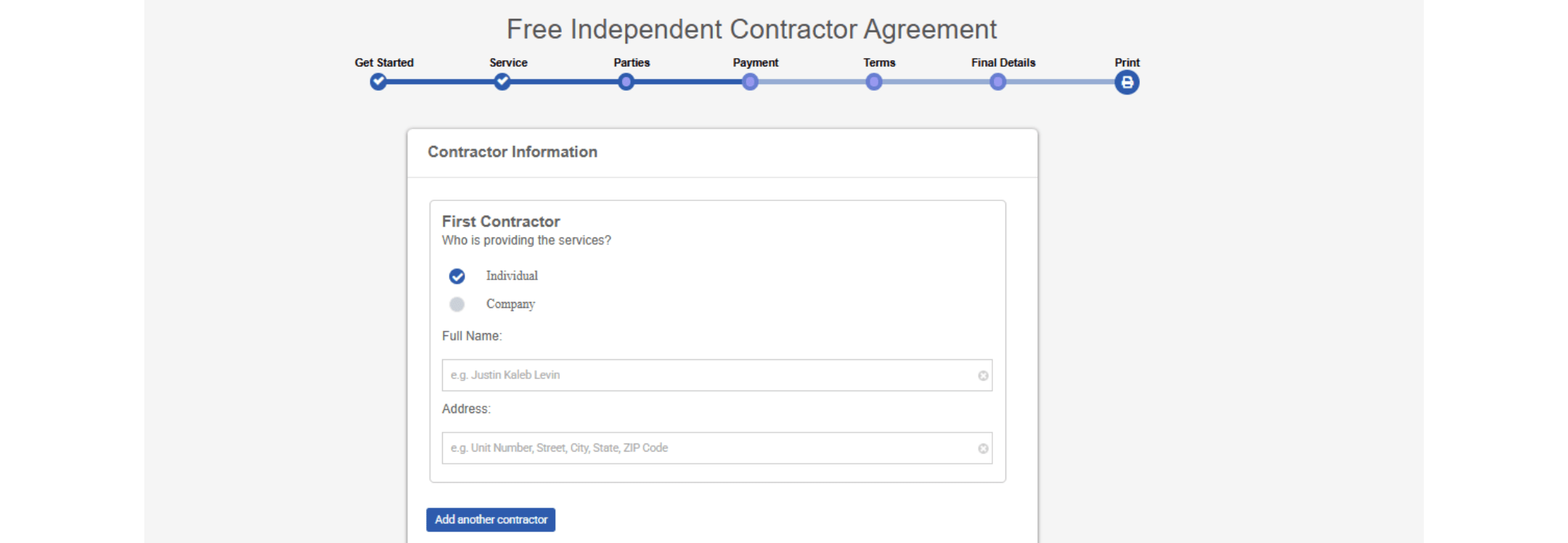
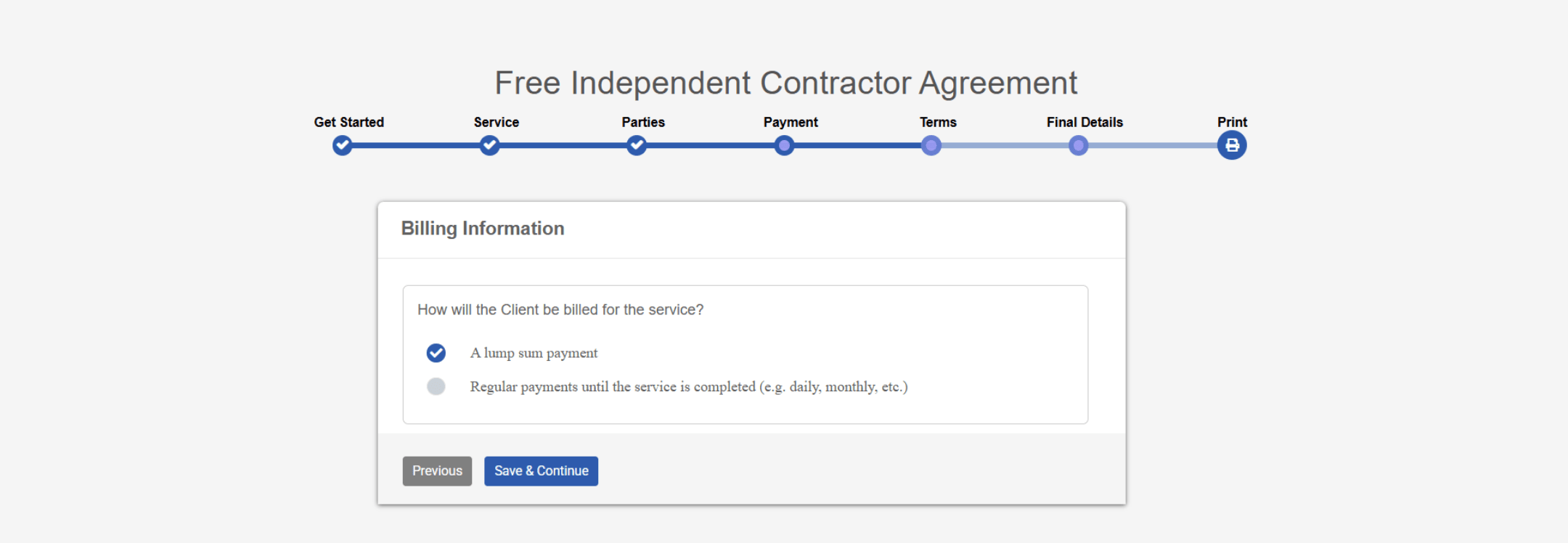
3. Add parties and payment info
Fill in both parties’ names/addresses and enter compensation details, payment structure, and any relevant schedule or expense terms.
4. Customize key clauses
Answer prompts to set confidentiality, intellectual property rights, and define term, termination, and any unique clauses needed.
5. Review and finalize
Preview the completed agreement, check all key fields and clauses for accuracy, then generate your ready-to-sign contract.
Benefits of using Ziji Legal Forms' Independent Contractor Agreement
Ziji Legal Forms supports businesses by structuring independent contractor agreements around real risk scenarios rather than generic templates. The platform helps clearly define scope of work, payment terms, confidentiality obligations, and intellectual property ownership, which reduces ambiguity between parties. Termination conditions and dispute related clauses are also addressed upfront, helping businesses avoid costly misunderstandings.
By using a purpose built legal document platform, companies can create agreements that are easier to review, easier to manage, and more consistent with standard U.S. business practices. This structured approach allows businesses to engage independent contractors with greater confidence while maintaining clarity, compliance, and operational control.
Conclusion
Managing risk in independent contractor agreements requires comprehensive understanding of potential challenges combined with proactive implementation of protective strategies and professional documentation standards. The investment in proper risk management pays dividends through reduced disputes, improved compliance, and stronger business relationships with valuable contractor partners.
The evolving regulatory environment demands continuous attention to classification requirements, documentation standards, and industry best practices that protect both businesses and contractors. Professional tools like Ziji Legal Forms provide essential support for meeting these challenges while maintaining operational efficiency and cost effectiveness.
Success in contractor relationship management comes from treating risk mitigation as an integral part of business strategy rather than an administrative burden. Well-structured agreements, clear processes, and professional support create foundations for contractor relationships that drive business success while protecting all parties involved.
Independent Contractor Agreement FAQs
1. How does an Independent Contractor Agreement protect both parties?
It clearly outlines the services, compensation, responsibilities, and other important terms before work begins.
2. Who benefits from an Independent Contractor Agreement?
Both contractors and clients benefit from having a written agreement that clearly defines their rights and obligations.
3. Is an Independent Contractor Agreement the same as an Employment Agreement?
No. It is specifically designed for independent contractors and does not establish an employer-employee relationship.
4. Should every contractor project have a written agreement?
Yes. A written agreement helps reduce misunderstandings and provides stronger legal protection if issues arise.
5. Can a signed Independent Contractor Agreement be modified?
Absolutely. Both parties may revise the agreement at any time by putting the changes in writing.
6. What jurisdictions are covered by the Ziji Legal Forms Independent Contractor Agreement?
The Ziji Legal Forms Independent Contractor Agreement can be used in all jurisdictions throughout the United States.
Author
Mandar Sonavane
|
Legal Content Writer at Ziji Legal Forms Inc.
Symbiosis International University
Mandar is a legal content writer specializing in the development of clear, practical, and easy-to-understand legal resources. With a strong focus on legal research, content creation, and plain-language writing, he works closely with our legal professionals to ensure that legal documents and educational materials are accurate, accessible, and user-friendly. At Ziji Legal Forms Inc., Mandar is responsible for researching legal topics, drafting and reviewing content, and helping transform complex legal concepts into straightforward guidance that empowers individuals and businesses to confidently navigate their legal needs.
Reviewed By
Histon Shek
|
General Counsel and Co-Founder at Ziji Legal Forms Inc.
University of Alberta
Histon Shek was called to the Alberta Bar in 2006. He holds a BA in Sociology and Philosophy and an LLB from the University of Alberta. As co-founder of Ziji Legal Forms Inc., he focuses on making legal documents accessible and affordable, overseeing legal integrity and content development.







 United States
 Canada