TL;DR- Child medical consent forms authorize temporary caregivers to make emergency medical decisions when parents are unreachable, preventing treatment delays that could harm children
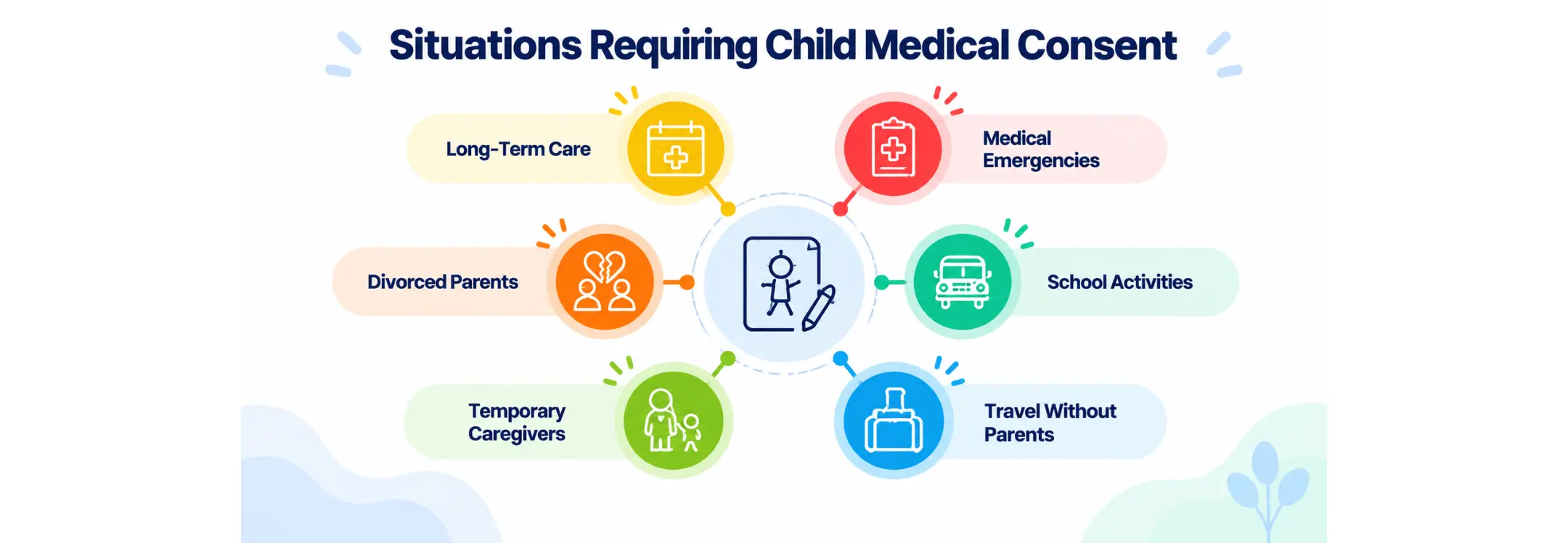
- Medical emergencies when parents cannot be contacted require written consent so caregivers can immediately authorize treatment without waiting for parental approval
- School field trips, overnight camps, and sports events typically require signed consent allowing school staff or coaches to authorize medical care if children become ill or injured
- Traveling without parents exposes children to medical emergencies where relatives or caregivers need written authorization to seek treatment from hospitals or urgent care facilities
- Babysitters, nannies, and temporary caregivers should carry consent forms allowing them to access medical care for children in their temporary care without being prevented by medical staff
- Divorced or separated parents with custody sharing need clear consent documentation specifying which parent has authority during the other parent's custody time to prevent treatment delays during disputes
- Ziji Legal Forms provides customizable child medical consent form templates that adapt to different custody situations, caregiver relationships, and medical decision-making authority levels
Introduction: Why Parents Assume Consent Is Only for Emergencies
Many parents incorrectly assume that child medical consent forms are only necessary for extreme emergencies or unusual circumstances. In reality, medical facilities routinely request written consent authorization in many ordinary situations that parents do not anticipate.
Without proper consent forms, children can experience treatment delays, medical professionals may refuse to treat children, and caregivers face impossible decisions about whether they have authority to authorize care. Understanding when consent forms are needed prevents these problems and ensures children receive timely medical attention when needed.
Situation 1 - Medical Emergencies When Parents Are Unreachable
When Immediate Treatment Cannot Wait
Medical emergencies occur without warning and often require immediate treatment before parents can be located and contacted. When children experience severe allergic reactions, traumatic injuries, chest pain, difficulty breathing, or other life-threatening conditions, hospitals cannot delay treatment waiting for parental contact.
Written consent forms enable caregivers and medical staff to authorize emergency treatment immediately, potentially saving lives. Without consent authorization, medical professionals face uncertainty about whether they can legally treat the child.
Why Verbal Consent Is Often Insufficient
Hospitals and emergency rooms prefer written advance consent over verbal authorization in emergencies because written documentation creates clear evidence of parental authorization. Emergency situations make obtaining immediate verbal consent difficult or impossible.
Verbal consent also lacks documentation that can be reviewed later if questions arise about what was authorized. Written forms provide objective proof of parental agreement.
Examples of Emergency Situations
A child suffers a severe asthma attack while with a relative and cannot breathe. The relative needs authorization to rush the child to the emergency room and approve breathing treatments. A child falls from playground equipment and may have fractured bones requiring X-rays and pain medication. A child develops symptoms of appendicitis and may need emergency surgery.
In each situation, written consent prevents treatment delays while verbal consent creates uncertainty about authorization.
Situation 2 - School, Daycare, and Educational Activities
Field Trips and Overnight Camps
Schools and camps require signed medical consent before children participate in field trips and overnight activities. These organizations need written authorization to arrange medical care if children become ill or injured during the activity.
Field trips involving travel, outdoor activities, or visits to potentially risky locations typically require more comprehensive consent documentation. Overnight camp stays require consent covering the entire camp period.
Sports Events and School Activities
Sports teams, marching bands, robotics clubs, and other school organizations require medical consent before children participate in competitions, travel events, or physically demanding activities. These organizations need authorization to make medical decisions when children are injured or become ill during activities.
Coaches and activity leaders need consent documentation showing they have parental authorization to seek medical care without waiting for family member contact.
School Policies and Requirements
Most school districts require medical consent forms before children can participate in field trips, sports, overnight activities, or other non-routine school functions. Schools develop policies requiring this documentation to protect themselves from liability and ensure they have proper authorization before making medical decisions.
Schools maintain consent forms in student health records and reference them during medical situations.
Situation 3 - Travel Without Parents or Legal Guardians
Domestic Travel Scenarios
When children travel domestically with relatives like grandparents or aunts without parents present, medical consent forms authorize these caregivers to make medical decisions during the trip. If a child becomes ill or injured while traveling, the caregiver can immediately authorize medical care.
Travel to regions far from home where children do not know local medical facilities makes consent even more important.
International Travel Situations
International travel demands more comprehensive consent documentation because children may be subject to different medical systems and legal requirements. Many countries require notarized consent forms before allowing medical treatment of minors whose parents are not present.
International medical facilities may be more reluctant to treat unaccompanied minors without clear written parental authorization.
Why Travel Insurance Does Not Replace Consent
Travel insurance covers costs if medical treatment becomes necessary but does not authorize caregivers to make medical decisions. Medical facilities still require parental consent regardless of insurance coverage.
Insurance addresses financial responsibility but does not address the legal authority question about who can make medical decisions for the child.
Situation 4 - Babysitters, Nannies, and Temporary Caregivers
Authorizing Care for Short-Term Caregivers
Babysitters and nannies caring for children need written consent authorizing them to arrange medical care if children become injured or ill. Without consent forms, babysitters cannot take children to hospitals or authorize medical treatment.
Medical facilities may refuse to treat children if the babysitter cannot provide parental authorization. This creates dangerous situations where children do not receive needed medical care because authorization is unclear.
What Medical Decisions Caregivers Are Permitted
Consent forms should specify what types of medical decisions caregivers can authorize. Some parents authorize only emergency care while prohibiting routine medical treatment or elective procedures.
Clear specifications prevent caregivers from exceeding their authority or creating misunderstandings about what decisions they can make.
Protecting Both Parents and Caregivers
Consent forms protect caregivers by giving them clear legal authority to act on the child's behalf. Caregivers with proper consent documentation can confidently arrange medical care without fear of being accused of overstepping authority.
Consent forms also protect parents by establishing clear boundaries about what medical decisions can be made.
Situation 5 - Divorced or Separated Parents
When One Parent May Not Have Full Authority
Divorced or separated parents with joint custody share medical decision-making authority, meaning both typically must agree to non-emergency medical decisions. In emergency situations, the parent with the child can authorize treatment, but custody orders may specify different authority levels.
Some custody orders grant one parent exclusive medical decision-making while the other maintains general custody. Understanding specific custody order language determines what authority each parent holds.
How Consent Forms Help Avoid Disputes
When one parent has the child during the other parent's scheduled time, consent forms clarify which parent has decision-making authority. This prevents disputes about whether medical decisions were properly authorized.
Consent forms also establish in advance what medical decisions can be made during scheduled custody time, preventing the other parent from claiming treatment was unauthorized.
Emergency Situations with Custody Disputes
If medical emergencies arise during one parent's custody time, consent forms previously prepared by both parents establish that both parents authorized emergency medical decisions. This prevents the other parent from later claiming medical treatment was done without proper authorization.
Situation 6 - Long-Term Care or Extended Absences
Parents Working Abroad or Extended Assignments
When parents work abroad or take extended assignments requiring long separations from children, grandparents or relatives caring for the children need comprehensive medical consent authority. These extended arrangements require more formal documentation than short-term babysitting.
Parents should establish clear authority levels and decision-making procedures for the extended period.
Children Staying with Relatives
When children stay with grandparents or other relatives for extended periods while parents travel or work, medical consent forms authorize relatives to make medical decisions throughout the period. These arrangements require more comprehensive consent than field trip permission.
Relatives need authority to make routine medical decisions like scheduling doctor appointments, authorizing vaccinations, and addressing chronic health conditions.
Why Informal Arrangements Are Risky
Informal verbal arrangements without documentation create serious problems if medical decisions are needed. Medical facilities may refuse to treat children without written parental authorization.
If disagreements arise about what medical decisions were authorized, the lack of documentation makes resolution difficult or impossible.
How to Create Child Medical Consent Forms Using Ziji Legal Forms
1. Choose template
2. Add Parties Details
Enter the child's full legal name, date of birth, address, and insurance information along with the parent or guardian's complete information and the caregiver's name, relationship, contact information, and address.
3. Add Medical Details
Specify the child's medical history including allergies, existing health conditions, current medications, vaccination status, and any special medical considerations medical providers should know about.
4. Add Consent Details
Establish what medical decisions the caregiver is authorized to make, what decisions require parental contact first, what medical treatments are prohibited, and any other limitations on the caregiver's decision-making authority.
5. Signing Details, Preview and print
Have the parent or guardian sign and date the form, have the caregiver acknowledge receipt and understand the limitations, consider having the form notarized for international travel or extended absences, and then download in PDF or Word format with multiple copies for the caregiver, child's physician, and school or organization if applicable.
Template Features for Different Situations
Ziji templates adapt to different caregiving scenarios from school field trips to international travel to extended family care. The templates include fields for medical history, allergies, medication information, and authorization limitations.
Templates provide language clarifying what emergencies justify caregiver decision-making versus situations requiring parental contact before treatment. These provisions prevent disputes about what the caregiver was authorized to do.
Conclusion: Protect Your Child with Proper Medical Consent Documentation
Properly completed child medical consent forms ensure children receive timely medical care when parents are unavailable while establishing clear boundaries about caregiver decision-making authority. Using Ziji Legal Forms' customizable medical consent templates adapted to your caregiving situation ensures comprehensive authorization documentation that prevents treatment delays and protects both children and caregivers.
Child Medical Consent FAQs
1. What is a Child Medical Consent?
A Child Medical Consent is a legal document that allows a parent or legal guardian to authorize another trusted adult to make medical decisions for a minor child when they are unavailable.
2. When should I use a Child Medical Consent?
You should use this document whenever your child will be under the care of another adult, such as during travel, summer camp, school trips, or an extended absence.
3. Who can make medical decisions for my child?
Any responsible adult aged 18 or older can be appointed to make medical decisions on your behalf during the period you specify.
4. Does a Child Medical Consent need to be notarized?
Notarization is not always required, but it is recommended because it helps healthcare providers verify the document's authenticity.
5. Can I cancel a Child Medical Consent?
Yes. You can revoke the consent at any time by notifying the temporary guardian and any healthcare providers who received a copy.
6. Which states can use our Child Medical Consent form?
Ziji Legal Forms' Child Medical Consent form can be used in every jurisdiction across the United States.
Author
Mandar Sonavane
|
Legal Content Writer at Ziji Legal Forms Inc.
Symbiosis International University
Mandar is a legal content writer specializing in the development of clear, practical, and easy-to-understand legal resources. With a strong focus on legal research, content creation, and plain-language writing, he works closely with our legal professionals to ensure that legal documents and educational materials are accurate, accessible, and user-friendly. At Ziji Legal Forms Inc., Mandar is responsible for researching legal topics, drafting and reviewing content, and helping transform complex legal concepts into straightforward guidance that empowers individuals and businesses to confidently navigate their legal needs.
Reviewed By
Histon Shek
|
General Counsel and Co-Founder at Ziji Legal Forms Inc.
University of Alberta
Histon Shek was called to the Alberta Bar in 2006. He holds a BA in Sociology and Philosophy and an LLB from the University of Alberta. As co-founder of Ziji Legal Forms Inc., he focuses on making legal documents accessible and affordable, overseeing legal integrity and content development.








 United States
 Canada