- A Promissory Note is a written promise to repay a specific sum with agreed terms, and non payment can trigger default, acceleration, and legal action.
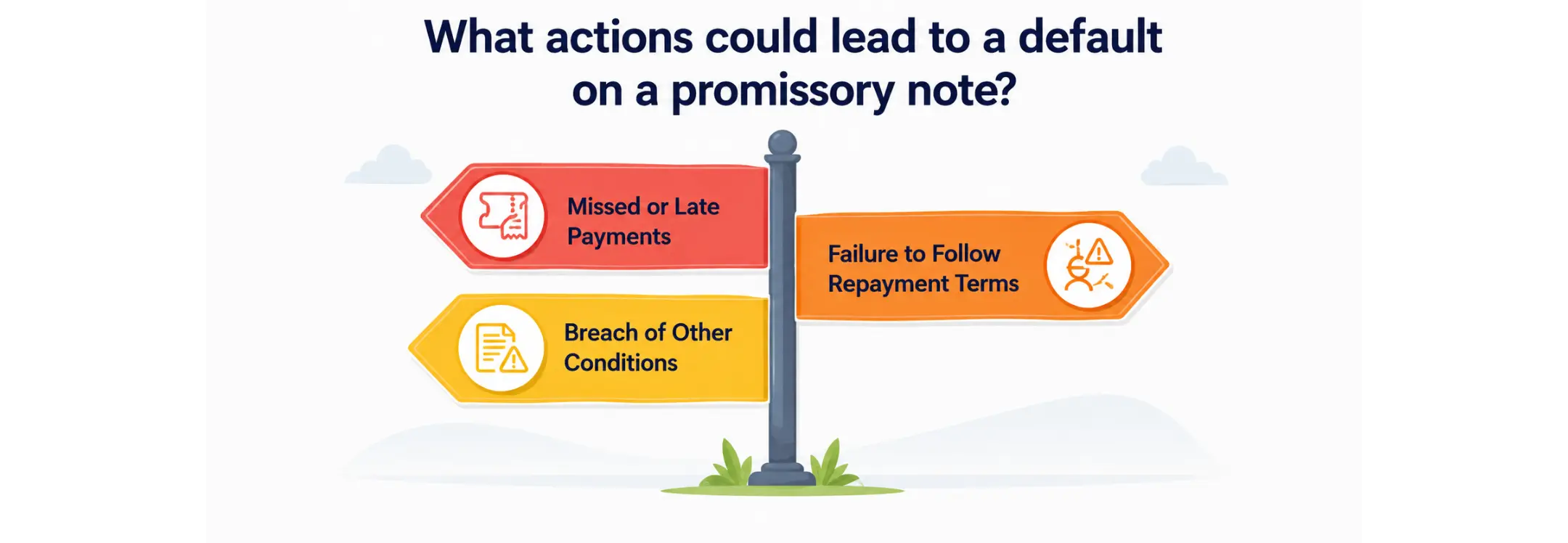
- Default can arise from missed or late payments, breaking repayment terms, or violating other conditions in the Promissory Note template, especially after any grace period expires.
- After default, lenders may send notices, demand full payment, negotiate new terms, or sue, with secured notes also allowing repossession or foreclosure on collateral.
- Secured Promissory Notes give lenders direct rights against specific assets, while unsecured notes require court judgments and collection steps to enforce.
- Borrowers who cannot pay should communicate early, seek modified schedules, and try to avoid judgments that can lead to garnishment and credit damage.
- A clear, well drafted Online Promissory Note with defined default and remedy clauses reduces disputes and makes enforcement more predictable for both sides.
- Creating a clear Online Promissory Note with Ziji Legal Forms helps both parties define payment terms, default triggers, and remedies in a way that is easier to enforce and harder to dispute.
Why Non Payment Consequences Matter Before You Sign
Many people treat a Promissory Note as a formality. They sign because they trust the other party or assume repayment will be easy. The legal reality is stricter. A signed note is enforceable as a contractual obligation and often as a standalone negotiable instrument, which gives the holder defined rights to demand payment and pursue remedies if the borrower does not pay.
Thinking through non payment consequences before signing forces both parties to test whether the payment schedule is realistic, whether interest is affordable, and whether any collateral or personal guarantees are really worth the risk. This is especially important for friends and family loans, where informal expectations collide with formal legal rights once someone misses payments.
What Counts as a Default on a Promissory Note
Missed or Late Payments
Default usually starts with missed or late payments. A typical Promissory Note template defines due dates, grace periods, and late charges. Failing to pay by the end of the grace period can count as default, even if the borrower intends to catch up later.
Some notes treat repeated chronic lateness as default even if payments are eventually made. Clear language about when a payment is considered late and when default begins helps prevent arguments later.
Failure to Follow Repayment Terms
Default does not only mean missing a due date. It can also include paying less than required, ignoring balloon payments, or failing to pay agreed interest. Any material breach of the repayment schedule described in the Online Promissory Note can be treated as default if the document is drafted that way.
Complex notes may also include covenants such as maintaining insurance on collateral or providing financial information. Violating these obligations can sometimes trigger technical default even if payments are current.
Breach of Other Conditions in the Note
Many Promissory Note templates include events of default clauses that list situations like bankruptcy filings, transfer of collateral without consent, or misrepresentation in the loan application. When those events occur, the lender may treat the note as defaulted even if no payment has yet been missed.
This framework allows lenders to act early when risk spikes rather than waiting until payments stop entirely.
Grace Periods and Acceleration Clauses
How Grace Periods Work
Grace periods give borrowers a short cushion after a due date to make payment without triggering full default. For example, a note might say that payments are due on the first of each month but not considered in default until after ten or fifteen days.
Grace periods are not guaranteed by law. They only exist if written into the Promissory Note. Without them, a payment can be considered late as soon as the due date passes.
What Acceleration Means
An acceleration clause allows the lender, after a default, to declare the entire unpaid balance immediately due. Instead of just being behind one installment, the borrower suddenly owes the full remaining principal and interest.
Acceleration raises the stakes quickly. If the borrower cannot pay the accelerated amount, the lender can move sooner toward repossession, foreclosure, or lawsuit, depending on whether the note is secured or unsecured.
What Happens After a Default Occurs
Notice of Default and Chance to Cure
Often the first formal step is a written notice of default telling the borrower which term was violated and how much is owed to bring the note current. Many notes and general best practices allow a cure period where the borrower can catch up and stop the default from escalating.
How generous this cure window is depends on what the parties agreed to and any applicable consumer protection requirements for particular loan types.
Loan Acceleration and Demand for Full Payment
If the borrower does not cure within the allowed time, the lender may accelerate the note. That means issuing a demand for full immediate payment of all outstanding principal and interest, plus any contractual fees and costs.
At this stage, some borrowers negotiate lump sum settlements or structured repayment plans to avoid harsher enforcement options. Others may ignore the demand, which usually pushes the lender toward more formal actions.
Enforcement Options Available to Lenders
Informal Negotiations and Demand Letters
Many lenders start with informal repayment discussions before heading to court. They may send demand letters, propose revised schedules, or offer interest only periods. These steps can be cost effective if the borrower is cooperative and simply needs short term flexibility.
Negotiation is often attractive because litigation is expensive and uncertain. Lenders may accept partial settlements if they believe it will yield more than a forced collection process.
Lawsuits and Judgment Enforcement
If negotiations fail, lenders can sue in court to enforce the Promissory Note. To win, they typically must show the signed note, proof of default, and the amount owed. If they succeed, they may obtain a judgment that can be enforced through tools like wage garnishment, bank account levies, or property liens, subject to applicable law and exemptions.
A judgment can remain on the borrower’s record for years, damage credit, and make future borrowing more difficult. For lenders, a judgment converts a private default into a publicly enforceable claim.
Secured Versus Unsecured Promissory Notes
Recovery of Collateral in Secured Notes
A secured Promissory Note is backed by specific collateral, such as real estate, vehicles, or business equipment. If the borrower defaults, the lender can seize or foreclose on that collateral, following applicable procedures, to satisfy the debt.
In practice, this means that non payment can lead directly to losing the pledged asset. For real estate, that could mean foreclosure. For vehicles or equipment, it may mean repossession and sale.
Court Based Recovery for Unsecured Notes
In an unsecured Promissory Note, no specific collateral is tied to the note. The lender must rely on court judgments and collection tools rather than directly taking an asset. That often makes enforcement slower and riskier for the lender, even though the borrower still faces serious legal and credit consequences.
Because risk is higher, unsecured loans may carry stricter terms or higher interest to compensate, or they may depend more on personal trust between the parties.
Can a Promissory Note Be Enforced in Court
Conditions for Enforceability
For a Promissory Note to be enforceable, it generally must be in writing, signed by the borrower, state a definite promise to pay a specific amount, and set out clear repayment terms such as due dates and interest rate. If critical details are missing or ambiguous, courts may treat the note as incomplete or limit enforcement.
Importance of Clear Terms and Valid Signatures
Unclear or conflicting terms lead to disputes over whether a default occurred and how much is owed. A good Promissory Note template avoids this by spelling out principal, interest, payment timing, late fees, default triggers, and remedies in plain language.
Valid signatures from all obligated parties, including any co signers or guarantors, are also essential. Without them, enforcement efforts can stall or fail.
What Borrowers Should Do If They Cannot Pay
Communicate Early with the Lender
Silence usually makes things worse. Borrowers who anticipate trouble should contact the lender before default and explain the situation. Many lenders are more willing to work with borrowers who are proactive than with those who vanish until a lawsuit appears.
Seek Modified Terms
Borrowers can ask about extending the term, temporarily reducing payments, changing interest rates, or agreeing on a structured workout. While lenders are not required to agree, many prefer partial recovery through modified terms over expensive litigation and potential losses.
Avoid Escalation and Legal Action
Ignoring notices can quickly turn a manageable problem into a judgment, garnishment, or loss of collateral. Borrowers should read all communications, respond promptly, and seek professional guidance if they do not understand their options.
How a Well Drafted Promissory Note Reduces Disputes
Clear repayment schedules, defined default events, and detailed remedy clauses reduce room for argument once something goes wrong. Both sides know what constitutes default, what notice must be given, and what steps can follow. That clarity can encourage realistic negotiation because each party understands the legal baseline.
A good Online Promissory Note also separates secured and unsecured obligations, describes collateral clearly when used, and avoids inconsistent terms that might give courts reasons to limit enforcement. This structure protects lenders by making their rights easier to prove and protects borrowers by preventing surprise terms they never intended to accept.

 United States
 Canada