TL;DR- A structured checklist prevents the omission of critical legal clauses and ensures full compliance with federal and state regulations.
- Landlords face high risks such as litigation for privacy violations or uninhabitable conditions when they fail to include specific protections.
- Pre-drafting requirements include verifying ownership and performing consistent tenant screening to avoid Fair Housing Act violations.
- Essential lease components must cover rent details, security deposit limits, and clear maintenance responsibilities for both parties.
- Federal law mandates lead-based paint disclosures for pre-1978 properties while local ordinances often require specific rental licenses or inspections.
- Risk management clauses like joint and several liability protect the income stream by making all tenants responsible for the total rent.
- Utilizing professional residential lease templates from Ziji Legal Forms helps streamline the creation process while ensuring the inclusion of updated legal provisions.
The creation of a residential lease agreement is the most significant step in establishing a professional and legally protected relationship between a landlord and a tenant. A checklist is not merely a piece of paper: it is a comprehensive risk management strategy designed to shield the property owner from various liabilities. For many landlords, the excitement of finding a new tenant can lead to a rushed process where essential details are overlooked. This oversight often results in disputes that could have been easily avoided with a structured approach.
Missing a single clause or a mandatory disclosure can have catastrophic financial consequences. For instance, failing to provide a lead-based paint disclosure can result in federal fines reaching thousands of dollars. Similarly, an ambiguously worded maintenance clause can leave a landlord liable for repairs that the tenant should have covered. By viewing the checklist as a practical safeguard, a landlord ensures that the document serves as a clear roadmap for the tenancy.
This guide provides a step-by-step framework for property owners operating within the United States. It focuses on general federal requirements and widely accepted legal principles. While every rental situation is unique, the core elements of a strong lease remain consistent across most jurisdictions. A landlord who follows this structure can be confident that they are protecting their investment while treating their tenants fairly and professionally.
Why Having a Lease Agreement Checklist Is Important
The primary function of a lease checklist is the avoidance of legal disputes. Most disagreements between landlords and tenants stem from a lack of clarity in the written agreement. When a lease fails to specify who is responsible for lawn care or how long a guest can stay, it creates a vacuum that is often filled by conflict. A checklist forces the landlord to address these potential flashpoints before the keys are even handed over.
Ensuring compliance with state and local laws is another critical reason for using a checklist. Landlord-tenant law is a patchwork of federal mandates, state statutes, and municipal ordinances. A checklist helps the property owner verify that their document satisfies every layer of the legal hierarchy. This is especially important for financial matters like security deposit limits and return timelines, which are strictly regulated in almost every state.
A well-crafted lease protects the landlord's rights and their rental income. Research shows that unpaid rent is the top concern for the vast majority of independent landlords. A checklist ensures that the lease includes robust late fee provisions, clear payment instructions, and the legal right to pursue eviction for non-payment. Without these specific clauses, a landlord may find themselves unable to enforce the rules when a tenant fails to fulfill their financial obligations.
Finally, a checklist creates clarity for the tenant. A transparent lease sets expectations from the very beginning. When a tenant understands their obligations regarding noise, smoking, and property care, they are more likely to comply. This leads to a more harmonious living environment and reduces the turnover that often happens when tenants feel blindsided by unexpected rules. A checklist ensures that the lease is a tool for communication rather than just a legal weapon.
Pre-Drafting Checklist
Verify Property and Ownership DetailsBefore putting pen to paper, a landlord must confirm the exact physical details of the property. The address must be verified down to the specific unit or apartment number to ensure the document is legally enforceable. An error in the property description can lead to significant delays in court proceedings if an eviction or a dispute ever arises. The lease should also detail any non-residential areas included in the agreement.
Ownership and Management Structure
It is equally important to provide proof of ownership especially when multiple parties are involved in the title. If the property is owned by a corporation or a trust, the lease must identify the correct legal entity as the landlord. For properties with co-owners, all parties should ideally be aware of the lease terms. Providing clear contact information for the owner or the authorized management agent is a requirement in many jurisdictions.
Understand State and Local Rental Laws
State laws provide the broad framework for the landlord-tenant relationship. These statutes cover everything from the maximum amount of a security deposit to the number of days required for a notice to vacate. A landlord must understand these rules because state law almost always overrides a conflicting clause in a lease. For example, if a state caps deposits at one month of rent, a lease clause asking for two months would be considered illegal and unenforceable.
Local ordinances can be even more restrictive than state laws. Major cities often have their own rent control measures or specific licensing requirements for landlords. In places like Denver or Boulder, a landlord may need to pass a city inspection and obtain a license before they can legally rent out a unit. Failing to check these local requirements can lead to daily fines and the inability to collect rent through the court system.
Mandatory State Disclosures
Many states require landlords to inform tenants about specific property conditions before they move in. Common examples include disclosures about mold, bed bugs, or the presence of radon gas. Some states also require a notice if the property is currently in foreclosure. A checklist ensures that the landlord identifies all required disclosures for their specific location so they can be included as addendums to the main lease.
Screen and Finalize Tenant Details
The screening process is the landlord's best defense against future problems. It begins with collecting the full legal names of every adult who will be living in the unit. Every adult occupant should be named as a tenant and sign the lease. This ensures that every person is jointly and severally liable for the rent and the condition of the property. Skipping this step can make it difficult to hold someone accountable for damages if they are not officially part of the contract.
Verification and Background Checks
Identity verification is the first step in screening to prevent fraud. This is followed by a thorough review of the applicant's credit history and criminal record. Landlords should also check for past evictions as this is a strong indicator of future payment reliability. Employment and income verification are essential to ensure the tenant can afford the rent. A standard rule of thumb is that a tenant's gross monthly income should be at least three times the monthly rent.
Consistency in Screening
A critical part of the pre-drafting phase is ensuring that the screening standards are applied equally to every applicant. Inconsistent screening is a major red flag for Fair Housing Act investigators. A landlord should have a written set of criteria that they use for everyone. If one applicant is required to show three months of pay stubs, every applicant should be required to do the same. This documented consistency protects the landlord against claims of discrimination.
Essential Clauses Checklist for Residential Lease Agreements
Lease Term and Type
The lease must clearly define the nature of the tenancy. A fixed-term lease is a commitment for a specific period, usually twelve months. It provides the landlord with a guaranteed income stream and the tenant with housing security. A month-to-month lease, also known as a periodic tenancy, offers more flexibility but less stability. It typically renews automatically at the end of every month unless one party gives a notice of termination.
Start and end dates must be included to avoid any confusion about when the tenant's responsibility begins. The lease should also specify what happens when the fixed term expires. In many states, if a tenant stays past the end date and the landlord accepts rent, the lease automatically converts to a month-to-month agreement. To prevent this, the lease can include a clause that requires a new written agreement for any extension beyond the initial term.
Rent Details
The rent amount is the core of the financial agreement. It should be stated as a clear monthly figure. The lease must also specify the due date, which is almost always the first of the month. To prevent payment disputes, the landlord should list all accepted payment methods. While many modern landlords prefer online portals or direct deposits, some still accept personal checks or money orders. The lease should also state the consequences of a bounced check.
Grace Periods and Late Fees
Late fees serve as an incentive for tenants to pay on time. The lease must outline exactly when a fee will be assessed and the amount of the charge. It is also important to define any grace period. For example, a landlord might agree not to charge a fee if the rent is paid by the fifth day of the month. However, the landlord should be careful not to set fees that are so high they could be viewed as a penalty by a court.
Security Deposit Terms
The security deposit is one of the most frequent sources of friction between landlords and tenants. To minimize conflict, the lease must be extremely specific. It should state the total amount of the deposit and where it will be held. Some states require landlords to place deposits in interest-bearing accounts and pay the interest to the tenant. The lease should also list exactly what the deposit can be used for, such as unpaid rent or repairs for damage.
Return Timelines and Itemization
State law dictates how long a landlord has to return the security deposit after a tenant moves out. This period is typically between fourteen and sixty days. The lease should acknowledge this timeline and explain the process for itemizing deductions. If a landlord keeps any part of the deposit, they must provide a written list of the specific damages and the cost to repair them. Providing this clarity in the lease helps prevent the tenant from taking legal action later.
Maintenance and Repair Responsibilities
A clear division of maintenance tasks is essential for the long-term health of the property. The lease should state that the landlord is responsible for keeping the unit in a habitable condition. This includes maintaining the roof, walls, and floors as well as ensuring the plumbing, heating, and electrical systems are functional. If the landlord provides appliances like a refrigerator or a stove, the lease should clarify who is responsible for their repair.
Reporting Duties and Emergency Access
The tenant should have a clear duty to report any leaks or dangerous conditions immediately. This helps the landlord address small problems before they become major expenses. The lease should also outline the procedures for emergency repairs. For example, it should tell the tenant who to contact if a pipe bursts in the middle of the night. By documenting these rules, the landlord protects the asset and ensures the safety of the residents.
Utilities and Services
The lease must explicitly state which party is responsible for each utility. In some apartment settings, the landlord may cover water and trash while the tenant pays for electricity and gas. In single-family homes, the tenant usually pays for everything. The agreement should also cover services like internet, cable, and security systems. Being specific here prevents disputes over unpaid bills that could lead to service shutoffs and property damage.
Exterior Maintenance and Services
For many properties, exterior maintenance is just as important as interior care. The lease should define who is responsible for lawn mowing, leaf raking, and snow removal. If there are common areas, the landlord usually manages them, but the tenant may still have rules to follow regarding their use. Clearly assigning these tasks in the lease ensures the property maintains its curb appeal and stays compliant with local blight ordinances.
Occupancy Limits
To prevent excessive wear and tear, a landlord should limit the number of people who can live in the rental unit. This clause should state that the property is only for the residence of the named tenants and their minor children. It is important to note that these limits must be reasonable and cannot be used to discriminate against families. Most landlords follow the HUD guideline of two persons per bedroom as a baseline.
Guest Policies
A good lease also addresses the presence of guests. While tenants have a right to have visitors, those visitors should not become permanent residents without the landlord's approval. The lease can set a limit on how long a guest can stay, such as no more than fourteen days in a six-month period. This gives the landlord the legal right to take action if a tenant tries to move in an unauthorized person whom the landlord has not screened.
Rules and Restrictions
House rules are necessary to ensure that all tenants can enjoy the property in peace. A pet policy is one of the most common restrictions. The lease should state whether pets are allowed and if so, what kind and how many. Landlords often charge a pet deposit or monthly pet rent to cover the increased risk of damage. However, these rules must allow for service animals as required by federal law.
Smoking and Noise
A smoking policy is critical for protecting the property from fire hazards and odors that are difficult to remove. The landlord can choose to ban smoking entirely on the premises or limit it to specific outdoor areas. Noise restrictions are also important, especially in multi-unit buildings. The lease should establish quiet hours and prohibit activities that disturb the neighbors. If there are HOA rules, the lease should incorporate them by reference.
Legal Compliance Checklist
Mandatory Disclosures
The Lead-Based Paint Disclosure is a federal requirement for nearly all housing built before 1978. Landlords must provide tenants with an EPA-approved pamphlet and a disclosure form that lists any known lead hazards. Both the landlord and the tenant must sign this form before the lease begins. Failing to comply with this rule can result in significant legal trouble and expensive fines from the EPA.
Other Required Notifications
Beyond lead paint, there are several other disclosures that may be required by state or local law. Some areas require landlords to provide a handbook of tenant rights. Others require notice if the property has a history of bed bug infestations or if it is located in a high-crime area. A landlord should check with a local real estate attorney or a property management association to ensure they are including every mandatory notification in their lease package.
Fair Housing Compliance
The Fair Housing Act is the most important federal law governing the rental process. It prohibits discrimination based on race, color, religion, sex, national origin, familial status, and disability. Landlords must be careful with the language they use in their advertisements and their leases. For example, using a phrase like "perfect for a quiet couple" can be seen as discriminatory against families with children.
Accommodations and Modifications
Fair housing also means providing reasonable accommodations for tenants with disabilities. This might include allowing a service animal even if there is a "no pets" policy. It also means allowing the tenant to make reasonable modifications to the physical unit, such as installing a ramp or widening a doorway. Landlords cannot charge an extra fee for these accommodations, although they can require the tenant to restore the unit to its original condition when they move out.
Local Ordinances and Regulations
Many local jurisdictions have their own unique set of rules for rental properties. Rent control is a major factor in cities like New York, San Francisco, and Los Angeles. In these areas, the landlord is limited in how much they can increase the rent and may be required to follow specific eviction procedures. Some cities also require a "just cause" for ending a tenancy, meaning the landlord cannot simply decide not to renew a lease without a valid reason.
Licensing and Safety Inspections
Local governments often use licensing as a way to ensure that rental housing meets basic safety standards. A landlord might be required to register their property with the city and pay a small annual fee. Some cities also require a professional inspection every few years to check for things like working smoke detectors and safe electrical systems. A landlord who skips these steps may find themselves facing fines or being unable to use the court system to settle disputes with tenants.
Financial and Risk Protection Checklist
Late Fees and PenaltiesA well-drafted lease must include specific language about late fees to be enforceable. It should state the exact dollar amount of the fee and the date it becomes due. For example, the lease might say that a fee of fifty dollars is charged if the rent is not received by the third day of the month. Landlords should ensure their fees are consistent with state law, as some states place a percentage cap on late charges.
Bounced Checks and Other Charges
In addition to late fees, the lease should list the cost for a returned or bounced check. This fee covers the bank charges and the administrative hassle the landlord faces when a payment fails. Other common penalties include fees for unauthorized pets, smoking violations, or calls to the police due to noise complaints. By listing these penalties clearly, the landlord establishes a financial deterrent for lease violations.
Entry and Inspection Rights
The tenant's right to privacy is balanced against the landlord's need to protect the property. The lease should specify that the landlord has a right to enter for inspections, repairs, and showings. Most states require the landlord to give at least twenty-four hours' notice before entering. The lease should also state that the landlord can enter without notice in a true emergency, such as a fire or a major water leak that is threatening other units.
Protecting the Right to Entry
To avoid claims of harassment, the landlord should document every time they enter the unit and the reason for doing so. A lease clause that clearly outlines these rights and the required notice period protects both parties. It ensures the landlord can maintain the property's value while respecting the tenant's right to "quiet enjoyment" of their home. This transparency is a key part of maintaining a professional relationship.
Termination and Eviction Terms
The lease must provide a clear exit strategy for both the landlord and the tenant. It should state how much notice is required to end the tenancy at the end of the term. For most year-long leases, a sixty-day notice is standard. For month-to-month leases, thirty days is usually required. The lease should also explain what happens if a tenant needs to move out early, including any early termination fees or the tenant's duty to pay rent until a new tenant is found.
Eviction Procedures
While no landlord wants to think about eviction, the lease must provide the legal grounds for it. Common reasons include non-payment of rent, illegal acts on the property, or a major violation of house rules. The lease should state that the landlord will follow state law in providing a notice to "pay or quit" or "cure or quit." Having these procedures in the written agreement ensures that the landlord has a clear path to regain possession of their property if the tenant fails to perform.
Final Review Checklist Before Signing
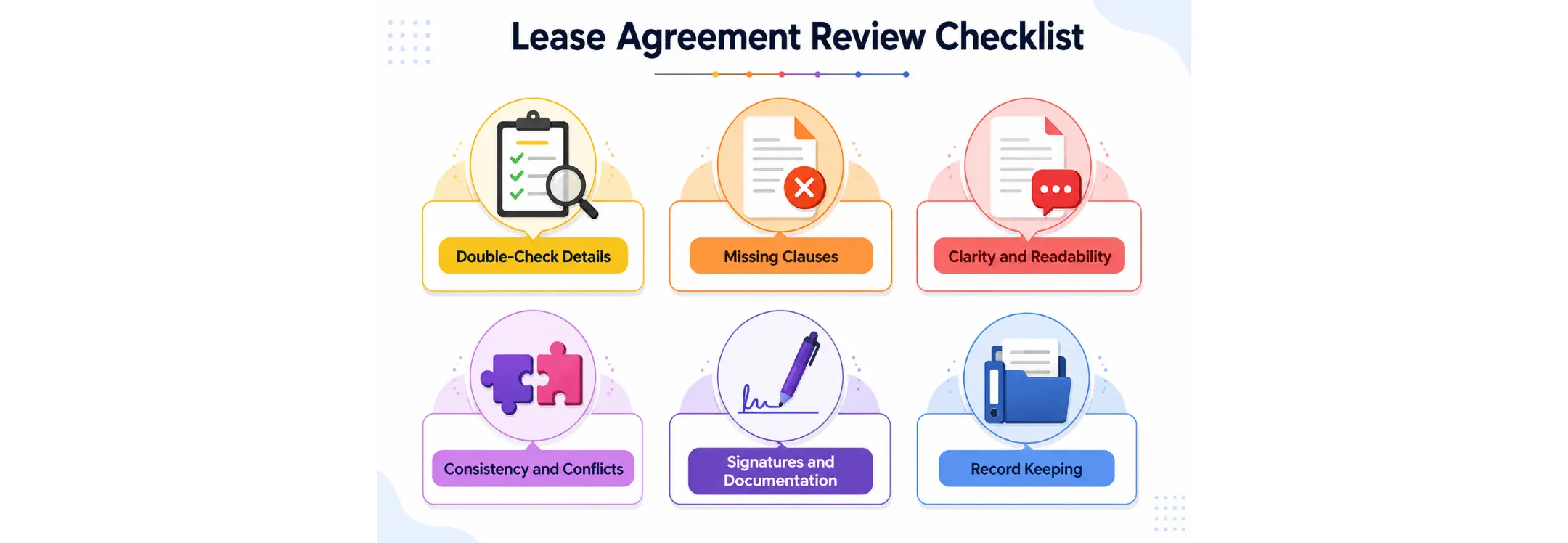
Double-Check All Details
The final review is the time to ensure that all basic information is correct. This includes the legal names of all parties, the property address, and the financial terms. A typo in the rent amount can be a disaster if it goes unnoticed. The landlord should also check the dates for the lease term to make sure they align with the intended move-in and move-out schedule.
Ensuring No Missing Clauses
The landlord should go through their checklist one last time to make sure every mandatory disclosure and protective clause is included. This is especially important for things like the lead paint disclosure and the pet policy. A complete lease is a landlord's best defense against future litigation. If a section is missing, it should be added before anyone signs the document.
Ensure Clarity and Readability
A lease does not have to be written in complicated "legalese" to be valid. In fact, using simple and clear language is often better because it reduces the chance of a misunderstanding. The document should be organized with clear headings and numbered sections. This makes it easy for both the landlord and the tenant to find information about their rights and duties.
Consistency and Conflict Removal
During the final review, the landlord should check for any conflicting terms. For example, if one section says the tenant pays for water but another says the landlord does, it will cause a dispute. Conflicts in a lease are usually interpreted in favor of the person who did not write the document, which is almost always the tenant. Removing these errors before signing is a vital step in the process.
Signatures and Documentation
A lease is not a binding contract until it is signed and dated by all adult tenants and the landlord. In some cases, a co-signer or a guarantor may also need to sign. Once everyone has signed, the landlord should provide the tenant with a complete copy of the document. The landlord must also keep an original copy in a safe place, along with all screening materials and a record of the initial move-in inspection.
Record Keeping for Compliance
Effective record keeping is a legal necessity for landlords. Most jurisdictions require that signed disclosures and lease agreements be kept for several years. This documentation is essential for tax purposes and for protecting the landlord if a tenant later claims they were not informed of certain rules or property conditions. A digital backup is a highly recommended practice for modern property owners.
Common Mistakes Landlords Should Avoid
Using a generic template without any customization is one of the most common mistakes made by new landlords. While these templates are easy to find, they often fail to account for the specific laws of the state where the property is located. For instance, a generic lease might include a late fee that is illegal in the landlord's city. This can make the entire clause unenforceable and leave the landlord with no way to collect late charges.
Missing State-Specific Clauses
Every state has its own unique set of requirements for residential leases. Some states require a specific font size for certain disclosures while others require language about a tenant's right to receive a copy of the lease. If a landlord uses an outdated document or one intended for a different state, they are essentially operating without a valid contract. This makes it much harder to win a case in small claims court or to carry out an eviction.
Not Documenting Agreements Properly
Many landlords make the mistake of making verbal agreements during the tenancy. If a tenant asks for permission to get a dog and the landlord says yes, it should be documented in a written pet addendum. If it is not in writing, it can be very difficult to enforce rules about pet damage later. Every change to the original lease should be recorded in a signed amendment to ensure that both parties stay on the same page.
When to Use a Professional or Legal Template
There are certain situations where a landlord should always consider using a professional legal template. This is especially true for complex rental situations, such as multi-unit buildings or properties that are part of an estate. A professional template service ensures that the document is updated with the latest changes in the law, which is something that a free online template cannot guarantee.
Multi-State and First-Time Landlords
Landlords who own property in more than one state face a significant challenge in keeping their leases compliant with different sets of laws. Using a professional service that provides state-specific templates can save them a massive amount of time and legal risk. For first-time landlords, these templates also serve as an educational tool, showing them what clauses are standard and what they need to think about before they sign a tenant.
Creating a Residential Lease Agreement with Ziji Legal Forms
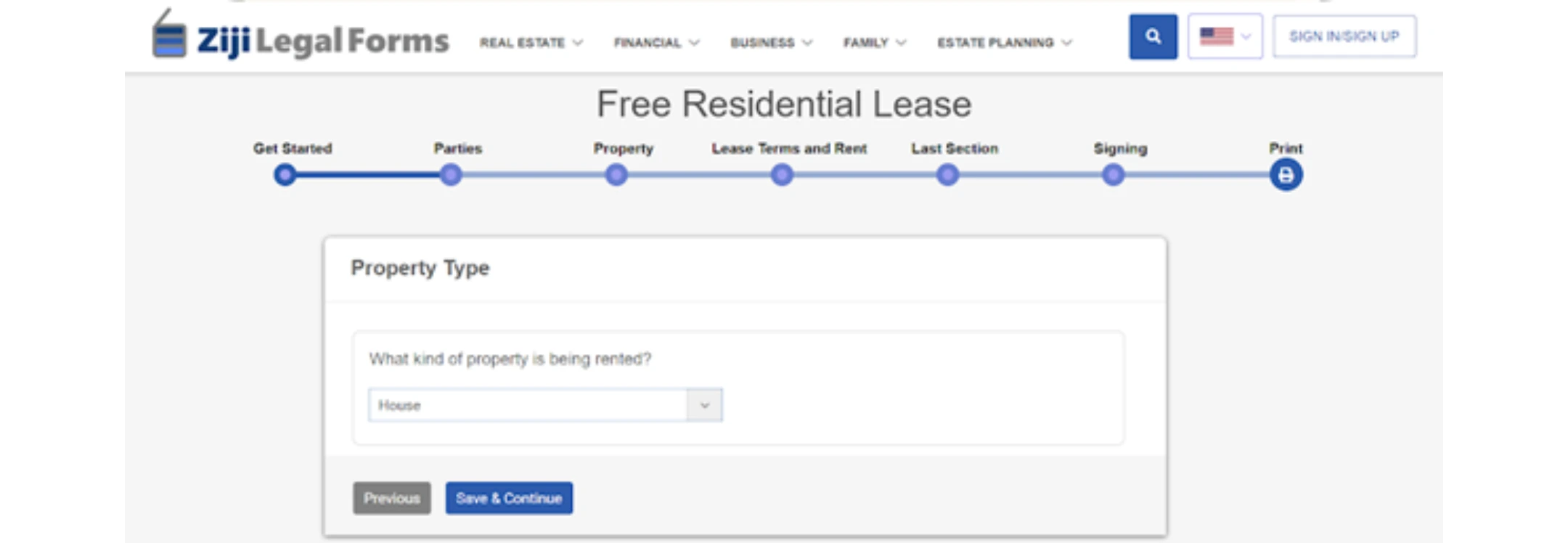
The Ziji Legal Forms platform is designed for efficiency, allowing landlords to generate a ready-to-use lease in just a few minutes. The process is intuitive and guides the user through five simple steps to ensure all critical information is captured. This is especially helpful for landlords who need a fast and reliable solution to secure a high-quality tenant who is ready to move in right away.
Once the process is complete, the document is available for instant download and printing. This provides immediate access to a professional lease that is ready for signatures. For many landlords, this speed and reliability are the keys to maintaining a successful and profitable rental business while minimizing the time spent on administrative paperwork.
1. Choose Template
2. Add Party Details
Enter the legal party details for both the landlord and all adult tenants.
3. Add Property Details
Provide property details including the full address and any included amenities.
4. Add Term Details
Input the lease term details such as rent, deposit, and start and end dates.
5. Preview Lease Agreement
Perform a final preview of the generated document and print it for signing.
You can also check out our guide on the 9 Essential Tennant Rights Every Landlord Should Understand Before Drafting a Lease
Conclusion
A structured checklist is an indispensable tool for any landlord who wants to manage their property with professionalism and legal security. By following a clear process, a property owner can prevent most common disputes and ensure they are fully compliant with federal, state, and local regulations. Using a reliable platform like Ziji Legal Forms further enhances this protection by providing the templates and guidance needed to create a robust and effective residential lease.
Residential Lease FAQs
1. What does a Residential Lease Agreement do?
A Residential Lease Agreement establishes the rental terms, including rent, lease duration, and the obligations of both the landlord and tenant.
2. Who should use a Residential Lease Agreement?
Anyone renting a house, apartment, condo, townhouse, or other residential property should use a written lease agreement.
3. Which lease term should I choose?
A fixed-term lease offers greater stability, while a month-to-month lease provides more flexibility for both landlords and tenants.
4. Can landlords prohibit pets?
Yes. Landlords may establish pet rules in the lease, although legal protections for service and assistance animals may still apply.
5. Does a lease automatically renew?
Some leases automatically continue as month-to-month tenancies, while others require a new agreement before renewal.
6. Where can the Ziji Legal Forms Residential Lease Agreement be used?
The Ziji Legal Forms Residential Lease Agreement is valid for use throughout all U.S. jurisdictions.
Author
Mandar Sonavane
|
Legal Content Writer at Ziji Legal Forms Inc.
Symbiosis International University
Mandar is a legal content writer specializing in the development of clear, practical, and easy-to-understand legal resources. With a strong focus on legal research, content creation, and plain-language writing, he works closely with our legal professionals to ensure that legal documents and educational materials are accurate, accessible, and user-friendly. At Ziji Legal Forms Inc., Mandar is responsible for researching legal topics, drafting and reviewing content, and helping transform complex legal concepts into straightforward guidance that empowers individuals and businesses to confidently navigate their legal needs.
Reviewed By
Histon Shek
|
General Counsel and Co-Founder at Ziji Legal Forms Inc.
University of Alberta
Histon Shek was called to the Alberta Bar in 2006. He holds a BA in Sociology and Philosophy and an LLB from the University of Alberta. As co-founder of Ziji Legal Forms Inc., he focuses on making legal documents accessible and affordable, overseeing legal integrity and content development.






 United States
 Canada