TL;DR- A Warranty Deed is a property transfer document that includes legally binding promises about the quality of the title being conveyed.
- General Warranty Deeds offer the broadest protection to buyers by covering the entire ownership history, not just the current seller’s period.
- Special Warranty Deeds limit the seller’s responsibility to problems that arose while that seller owned the property, increasing the buyer’s risk.
- The right choice depends on whether you are the buyer or seller, your tolerance for title risk, and the level of due diligence done through title searches and insurance.
- An online Warranty Deed template through Ziji Legal Forms helps you select the right deed type and avoid wording errors that weaken protections.
What Is a Warranty Deed
A Warranty Deed is a written instrument that transfers real property from a grantor to a grantee and includes promises about the status of the title. Those promises usually state that the seller owns the property, has the right to transfer it, and will defend the buyer against certain claims from others. These promises are often called covenants of title.
Unlike a Quitclaim Deed that only passes whatever interest the seller might have, a Warranty Deed is about allocation of risk. It tells the buyer whether they can look back to the seller for protection if an undisclosed lien, boundary dispute, or ownership claim appears later.
Why There Are Different Types of Warranty Deeds
Not every transaction has the same risk profile. A long owned family home with clear history is very different from a foreclosed property or an asset acquired in a complex commercial deal. Because of this, the law and practice have developed more than one type of Warranty Deed so that parties can tailor how much the seller is promising to cover.
The two core types are the General Warranty Deed and the Special Warranty Deed. Each uses similar mechanics to transfer ownership but draws a different line about which title problems remain the seller’s responsibility and which become the buyer’s burden.
General Warranty Deed Explained
Scope of Protection
A General Warranty Deed offers the strongest form of title protection for the buyer. The seller promises that the title is clear of defects and encumbrances except those disclosed, and that this promise covers the entire chain of title, not just the time the seller owned the property.
If an earlier owner granted a hidden easement or failed to pay a tax that later becomes a lien, the buyer can potentially seek protection from the seller under the General Warranty Deed. This broad protection is why it is often preferred in traditional residential transactions.
Seller Responsibility Across Ownership History
Because the seller’s covenants reach back through prior owners, the seller takes on broader liability. Even if the seller did nothing wrong, they may still be responsible to defend the buyer against claims arising from older defects. To manage this risk, sellers commonly rely on title searches and title insurance when giving a General Warranty Deed.
Typical Use Cases
General Warranty Deeds are common in standard home purchases where the buyer expects maximum assurance that they are receiving good title. They are frequently used when the seller has long term ownership, clear records, and confidence that prior issues have been resolved or insured against.
Special Warranty Deed Explained
Limited Protection and Time Bound Warranties
A Special Warranty Deed also transfers ownership but narrows the seller’s promises. Instead of covering the entire history, the seller only warrants that no title defects were created or allowed during that seller’s period of ownership. Problems that arose before that time are not covered by the seller’s covenants. From the buyer’s perspective, this means that protection is narrower. If a defect comes from a prior owner’s actions, the buyer may not be able to claim against the seller under the Special Warranty Deed.
How Seller Liability Differs
Because the seller only promises against defects they caused or allowed, their exposure is more limited. They are not adopting responsibility for the behaviour of all prior owners and can focus their risk management on their own period of ownership. This can make Special Warranty Deeds more palatable for institutional sellers who did not manage earlier title issues.
Common Use Cases
Special Warranty Deeds are often used in commercial property deals, bank owned property sales, and transfers by entities that acquired property through foreclosure or other distressed channels. In these scenarios, the seller is often unwilling to guarantee the distant past, and buyers rely more heavily on title insurance and due diligence.
Key Differences Between General and Special Warranty Deeds
Scope of Title Protection
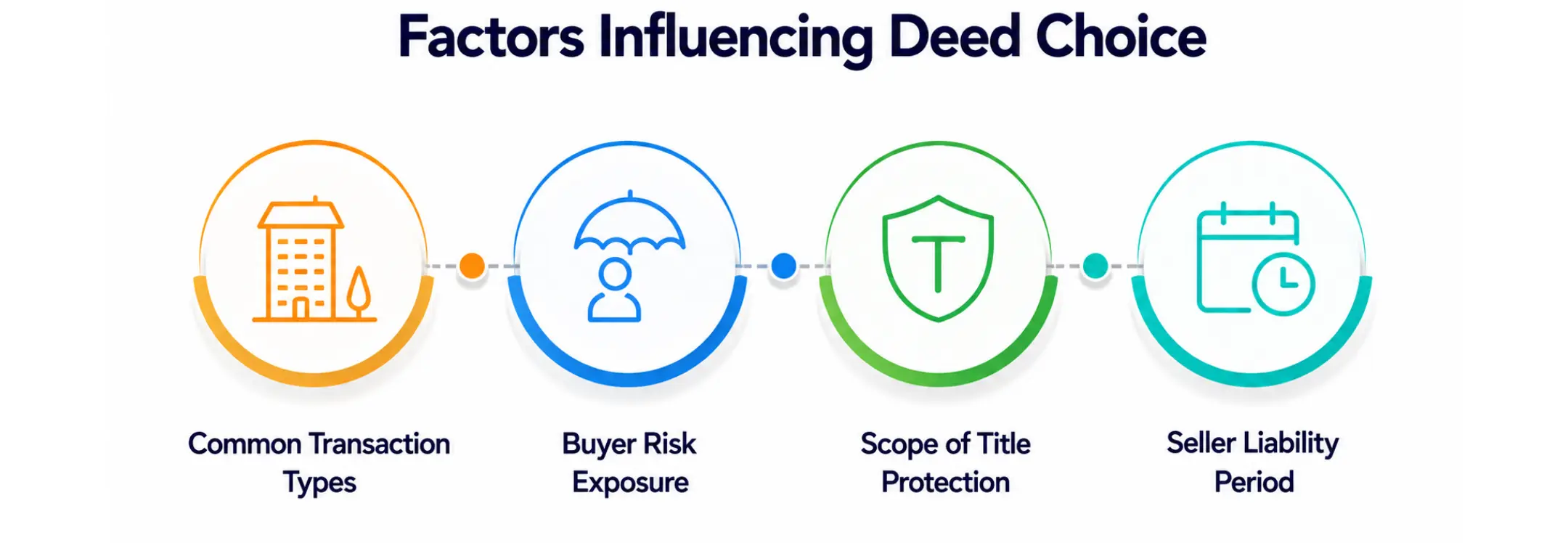
The biggest difference is the scope of protection. General Warranty Deeds cover the full history of the property, while Special Warranty Deeds cover only the seller’s ownership period. Buyers who want maximum protection often view this as a decisive factor.
Seller Liability Period
Under a General Warranty Deed, the seller’s covenants can be triggered by defects arising at any time in the chain of title. Under a Special Warranty Deed, the seller is only on the hook for defects tied to their own tenure. This affects how sellers evaluate their risk and whether they are willing to provide broad warranties.
Buyer Risk Exposure
General Warranty Deeds shift more risk away from the buyer to the seller, whereas Special Warranty Deeds leave more risk in the buyer’s hands. In both cases, buyers often obtain title insurance to cover certain losses, but the deed type still influences who must respond first if a defect surfaces.
Common Transaction Types
General Warranty Deeds are more common in mainstream residential sales. Special Warranty Deeds are more likely in institutional or commercial contexts and in transactions where the seller’s relationship with the property has been brief or indirect.
Which Warranty Deed Should You Choose
Buyer Perspective
From a buyer’s standpoint, a General Warranty Deed offers a stronger safety net because the seller stands behind the title across its full history. Buyers may push for this form when paying market value for a home, especially if they have limited tolerance for legal risk or unexpected claims.
If only a Special Warranty Deed is available, buyers should weigh this narrower protection against the strength of the title search, the coverage provided by title insurance, and the purchase price. In some cases, buyers accept a Special Warranty Deed but negotiate other protections.
Seller Perspective
Sellers look at their risk exposure. Providing a General Warranty Deed can make a property more attractive and may support stronger pricing, but it also takes on broader obligations. Sellers who did not own the property long or obtained it in a complex transaction may prefer a Special Warranty Deed that limits their covenants.
Ultimately, the choice reflects how confident the seller is about the title history and how much risk they are willing to carry after closing.
Risk Tolerance and Due Diligence
Regardless of deed type, thorough due diligence is critical. A careful title search, review of recorded documents, and appropriate title insurance can mitigate many risks associated with past defects. Parties should consider their risk tolerance, the quality of available information, and the nature of the property before settling on a Warranty Deed structure.
How to Create the Right Warranty Deed with Ziji Legal Forms
1. Choose template
Select the online Warranty Deed template on Ziji Legal Forms by choosing either a General Warranty Deed or a Special Warranty Deed format that matches your transaction.
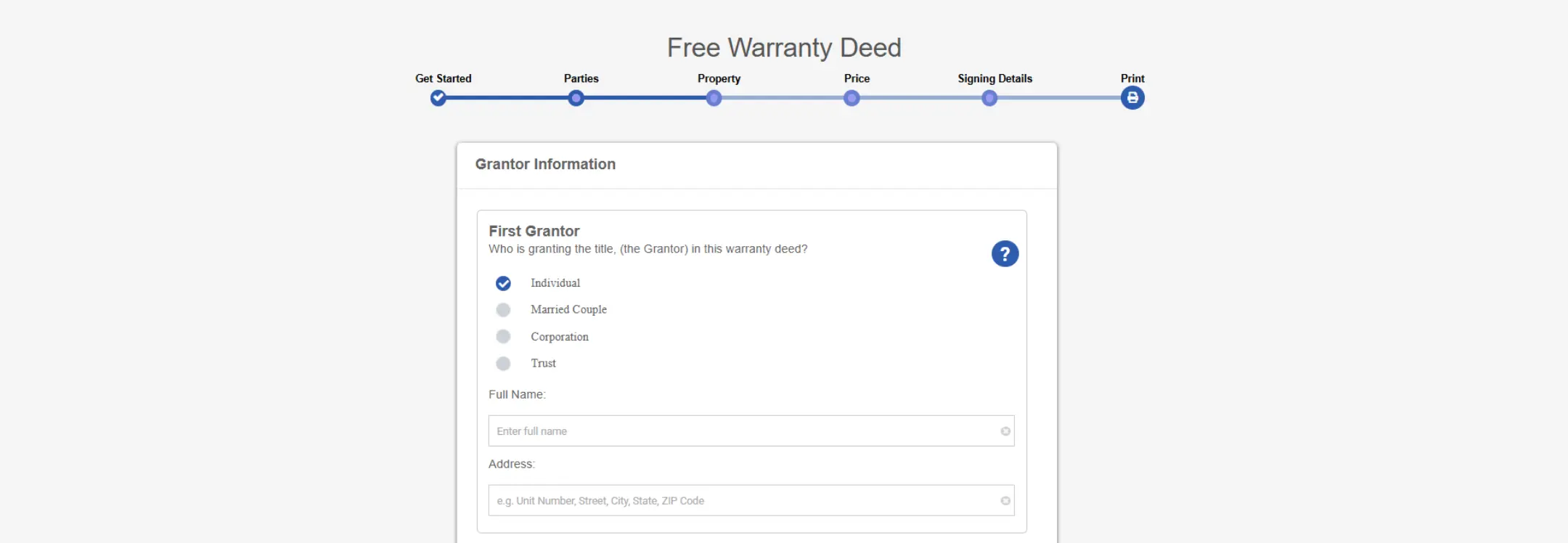
2. Add Party Details
Enter the full legal names and contact details of the grantor and grantee so that the deed clearly identifies who is giving and receiving title.
3. Add Property Details
Insert the property’s legal description, address, and any identifying information such as parcel numbers to ensure the correct real estate is being conveyed.
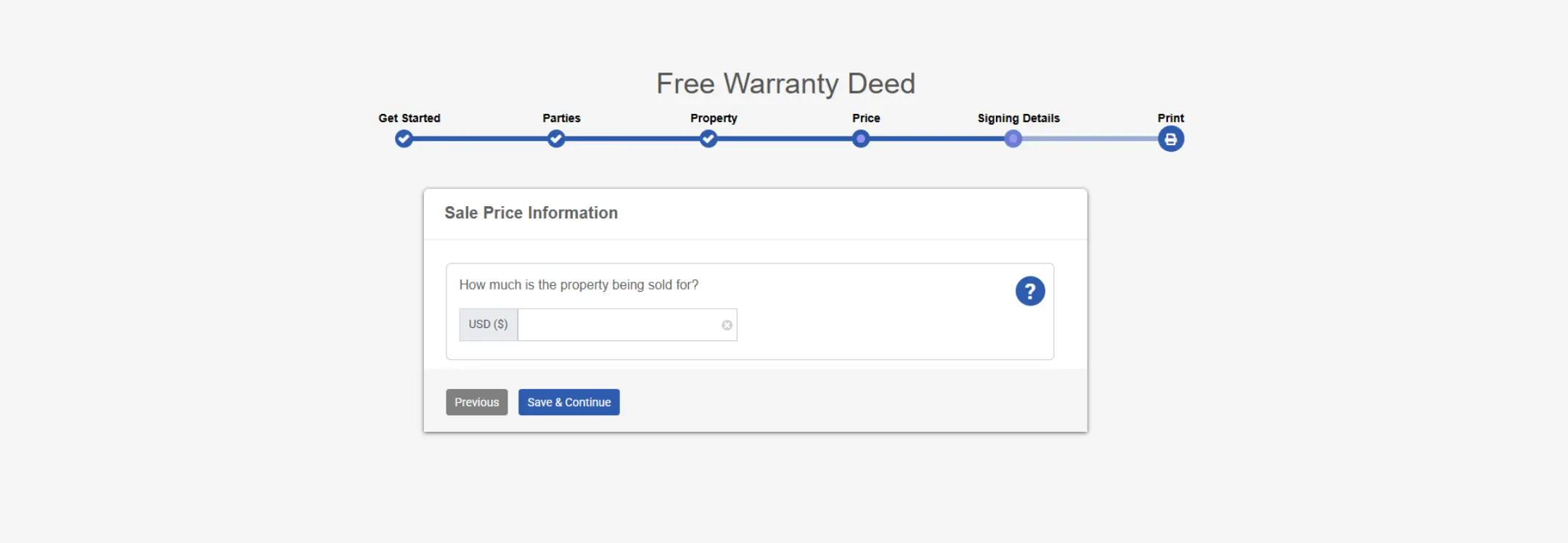
4. Add Pricing Details
State the consideration being paid or other value exchanged, along with any relevant wording required to reflect the purchase price or other agreed transfer terms.
5. Preview and print
Review the completed Warranty Deed for accuracy, confirm that the chosen template reflects the desired level of protection, then download as a PDF for signing, witnessing, and notarization as required.
Using an online Warranty Deed template with guided fields makes it easier to avoid missing key clauses, to choose between general and special warranties, and to produce a document that reflects the intended risk allocation between buyer and seller.
Conclusion: Choose the Warranty That Matches Your Risk
General and Special Warranty Deeds serve the same basic purpose but allocate title risks differently between buyer and seller. Understanding those differences helps both sides align expectations with the realities of the property’s history and the transaction structure. With a carefully chosen Warranty Deed template and solid title due diligence, you can transfer ownership with clearer protections and fewer surprises.
Warranty Deed FAQs
1. How does a Warranty Deed protect a buyer?
It guarantees that the seller owns the property and has the legal right to transfer ownership free from undisclosed title defects.
2. When should I use a General Warranty Deed instead of a Special Warranty Deed?
A General Warranty Deed is typically preferred when the buyer wants the highest level of protection against title defects.
3. Should every Warranty Deed be notarized?
Yes. Notarization is generally required before a Warranty Deed can be recorded and recognized.
4. Why should I record a Warranty Deed?
Recording the deed provides public notice of the ownership transfer and helps protect the new owner's rights.
5. Can I use a Warranty Deed to add someone to my home's title?
Usually not.
A Quitclaim Deed is commonly used for adding a spouse, family member, or another co-owner.
6. What jurisdictions are covered by the Ziji Legal Forms Warranty Deed?
The Ziji Legal Forms Warranty Deed can be used in all jurisdictions throughout the United States.
Author
Mandar Sonavane
|
Legal Content Writer at Ziji Legal Forms Inc.
Symbiosis International University
Mandar is a legal content writer specializing in the development of clear, practical, and easy-to-understand legal resources. With a strong focus on legal research, content creation, and plain-language writing, he works closely with our legal professionals to ensure that legal documents and educational materials are accurate, accessible, and user-friendly. At Ziji Legal Forms Inc., Mandar is responsible for researching legal topics, drafting and reviewing content, and helping transform complex legal concepts into straightforward guidance that empowers individuals and businesses to confidently navigate their legal needs.
Reviewed By
Histon Shek
|
General Counsel and Co-Founder at Ziji Legal Forms Inc.
University of Alberta
Histon Shek was called to the Alberta Bar in 2006. He holds a BA in Sociology and Philosophy and an LLB from the University of Alberta. As co-founder of Ziji Legal Forms Inc., he focuses on making legal documents accessible and affordable, overseeing legal integrity and content development.





 United States
 Canada