- A Warranty Deed is a property transfer document that includes legally enforceable promises about title quality and the seller’s right to convey the property
- Buyers care because those warranties shift some past ownership risks from the buyer to the seller and support future resale confidence.
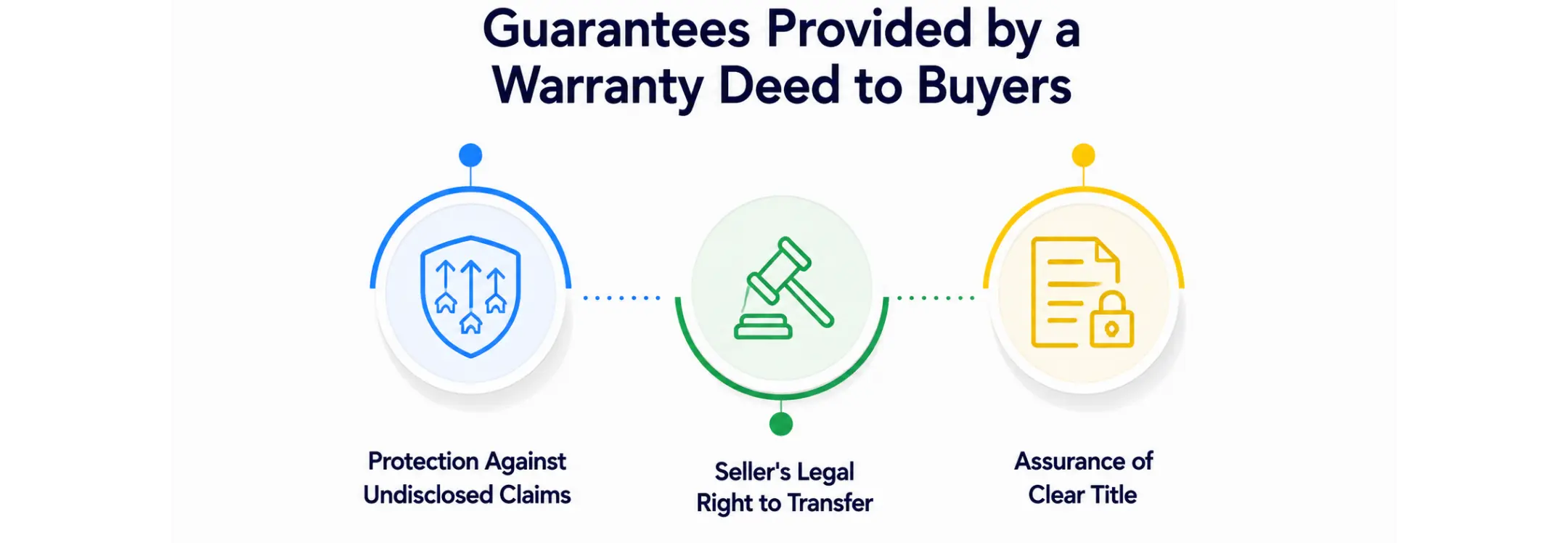
- The deed guarantees the seller’s authority to transfer, assures clear title apart from disclosed items, and offers protection against undisclosed ownership claims.
- A Warranty Deed does not replace title insurance, guarantee property condition, or protect against future legal or zoning changes.
- Guarantees focus on past title issues and usually benefit both the initial buyer and later owners who receive the property through the same deed chain.
- A clear online Warranty Deed template helps ensure the warranty language actually reflects the level of buyer protection everyone thinks they are getting.
What Is a Warranty Deed
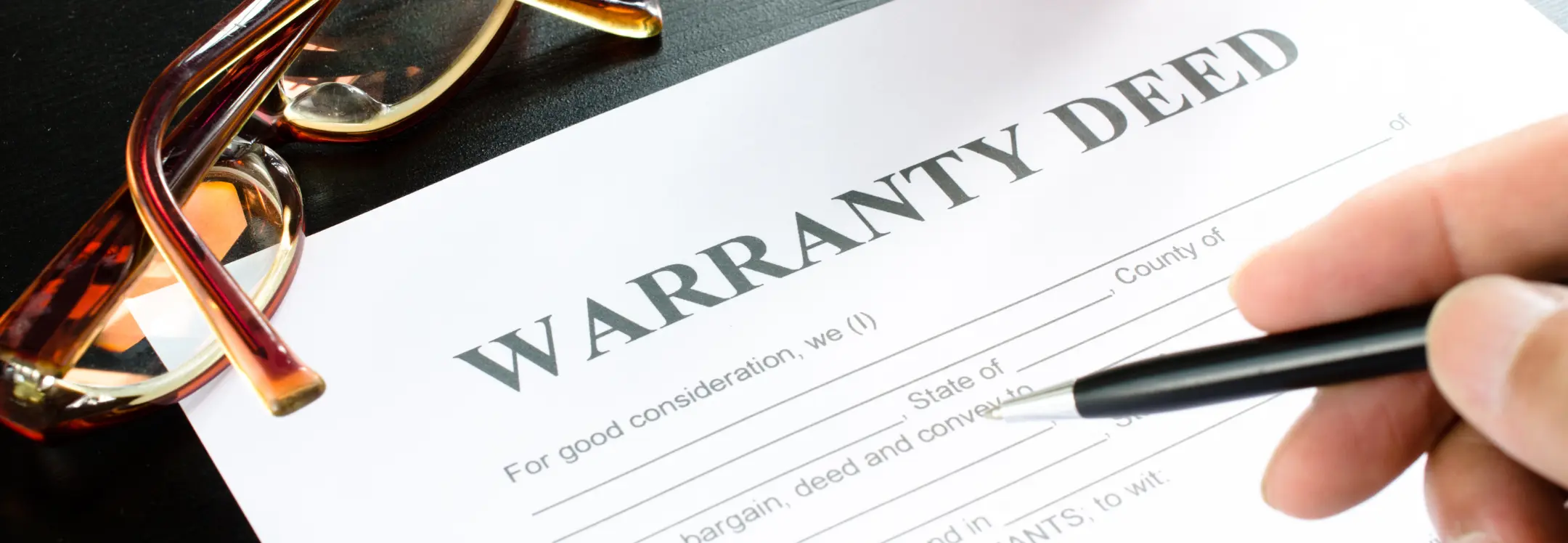
A Warranty Deed is a legal document that transfers real estate from a seller, called the grantor, to a buyer, called the grantee, and includes specific promises about the quality of the title being transferred. Unlike a bare bones deed that just says a transfer happened, a Warranty Deed adds covenants that the seller truly owns the property, has the right to convey it, and will defend the buyer against certain competing claims.
In simple terms, it is both a vehicle for ownership transfer and a risk shifting tool. It tells the buyer how much confidence they can place in the seller’s assurance that no hidden liens, competing owners, or undisclosed restrictions will undermine their ownership later.
Why Warranty Deeds Matter to Buyers
For buyers, a home or investment property is often the largest purchase they will ever make. Without warranties, they would bear most of the risk that an old tax lien, boundary dispute, or prior owner’s mistake could disrupt their ownership after closing. A Warranty Deed gives buyers legal leverage to look back to the seller if certain problems arise that should have been avoided or disclosed.
A strong Warranty Deed also supports future resale. When buyers later become sellers, their ability to give clear title depends in part on how clean the title was when they received it. Warranties make it easier for the new owner to assure future buyers that the property’s legal history has been addressed.
What Guarantees Does a Warranty Deed Provide to Buyers
Seller’s Legal Right to Transfer
One core guarantee is that the seller actually holds the interest they are transferring and has lawful authority to convey it. This gives buyers confidence that they are not dealing with someone who lacks full ownership or who is barred from selling because of another agreement.
Assurance of Clear Title
A Warranty Deed typically assures that the title is free from undisclosed encumbrances, such as liens or easements, other than those specifically listed in the deed or related closing documents. If a previously unknown mortgage or judgment surfaces that predates the buyer’s purchase and was not disclosed, the buyer may be able to rely on the warranty to seek protection or reimbursement from the seller.
Protection Against Undisclosed Claims
The deed usually includes a promise that the seller will defend the buyer’s title against lawful claims from third parties that are inconsistent with the ownership interest conveyed. This does not mean every dispute disappears, but it does mean the seller has an obligation tied to certain prior claims that emerge after closing.
These guarantees give buyers a legal framework for recourse if the property’s past was not as clean as the seller represented.
What a Warranty Deed Does Not Guarantee
Not a Substitute for Title Insurance
A Warranty Deed and title insurance solve related but different problems. The deed is a promise from the seller. Title insurance is a contract with an insurer that may cover certain losses even if the seller cannot pay or is no longer available. A Warranty Deed does not replace the need for a careful title search and appropriate insurance coverage.
No Guarantee of Property Condition
Warranty Deeds address legal title, not physical condition. They do not guarantee that the roof will not leak, that systems will work indefinitely, or that the property is free from defects like mold or structural issues. Those matters are usually handled through inspections, repair negotiations, and separate contract clauses, not the deed itself.
No Protection Against Future Legal Changes
A Warranty Deed does not protect against changes in zoning, new regulations, or future assessments that arise after the buyer takes title. Its focus is on past issues and the state of the title at the time of transfer, not on legal or regulatory developments that may come later.
Setting these expectations clearly helps buyers rely on the deed for what it actually promises while looking to other tools for different risks.
How Long Do Warranty Deed Guarantees Last
The guarantees in a Warranty Deed are tied to past events, not to a short expiration window like a typical consumer warranty. If a qualifying title problem that existed before closing comes to light years later, the buyer may still have a claim under the deed, subject to any applicable statutes of limitation and other legal rules.
From a practical standpoint, the deed’s warranties extend as long as the legal system allows claims of that type to be brought and as long as the warranty covenants continue to run with the land. They do not expire just because a set number of years have passed since recording. Instead, they remain relevant whenever past title defects tied to the covered period are discovered.
Who Is Protected by a Warranty Deed
The immediate beneficiary of a Warranty Deed is the buyer who receives the property at closing. That buyer can rely on the seller’s covenants if qualifying title issues emerge that fall within the scope of the warranties.
In many cases, these covenants are understood to run with the land, which means that later owners who receive the property through the same chain of title may also benefit from the protection, at least for certain claims. This reinforces why getting a strong Warranty Deed is not just about the moment of purchase but also about the long term resilience of the property’s title.
When Warranty Deeds Are Commonly Used
Warranty Deeds are most common in standard arm’s length real estate transactions where a buyer pays market value and expects strong assurances about ownership. Typical examples include purchases of primary residences, vacation homes, and many investment properties where there is no special distress or unusual structure.
In these settings, buyers assume that the seller will stand behind the quality of their ownership history. Where sellers are unwilling to provide such guarantees, the nature of the transaction often changes, and buyers may perceive higher risk or adjust the price and due diligence accordingly.
How Buyers Can Make Sure Their Warranty Deed Is Legally Sound
Understanding the Warranty Language
Buyers should read or have the key warranty language explained in plain terms. They need to know what type of deed they are receiving, what level of protection it offers, and whether there are any clauses that narrow the scope of the seller’s promises.
Knowing Who Provides the Guarantee
In some transactions, the grantor is an individual seller, while in others it is a bank, company, or other entity. Buyers should pay attention to who is actually making the warranties because that affects both enforcement and practical collectability if a claim must be made later.
Matching Deed Protections to Transaction Risk
Higher risk properties, such as those with complex histories or distressed backgrounds, may warrant stronger deed protections or more extensive title insurance. Buyers should consider whether the Warranty Deed they are receiving is appropriate for the property’s history and the level of risk inherent in the deal.
Even a strong Warranty Deed works best when paired with a thorough title search and appropriate professional guidance.
Using Ziji Legal Forms to Create a Buyer Friendly Warranty Deed
1. Choose template
Select the online Warranty Deed template on Ziji Legal Forms that matches the type of warranty and level of buyer protection you want in your transaction.
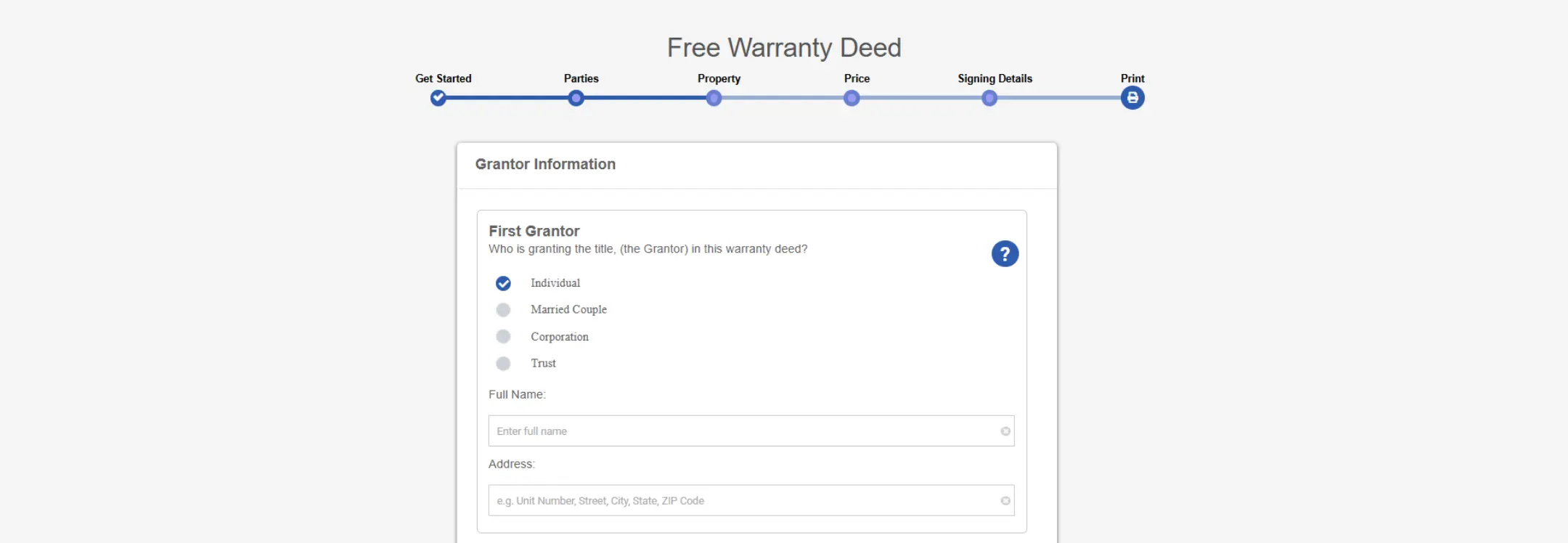
2. Add Party Details
Enter the full legal names and contact information of the seller and buyer so it is clear who is giving and who is receiving the warranties.
3. Add Property Details
Insert the property’s legal description, street address, and any parcel or tax identifiers to ensure the correct real estate interest is being conveyed.
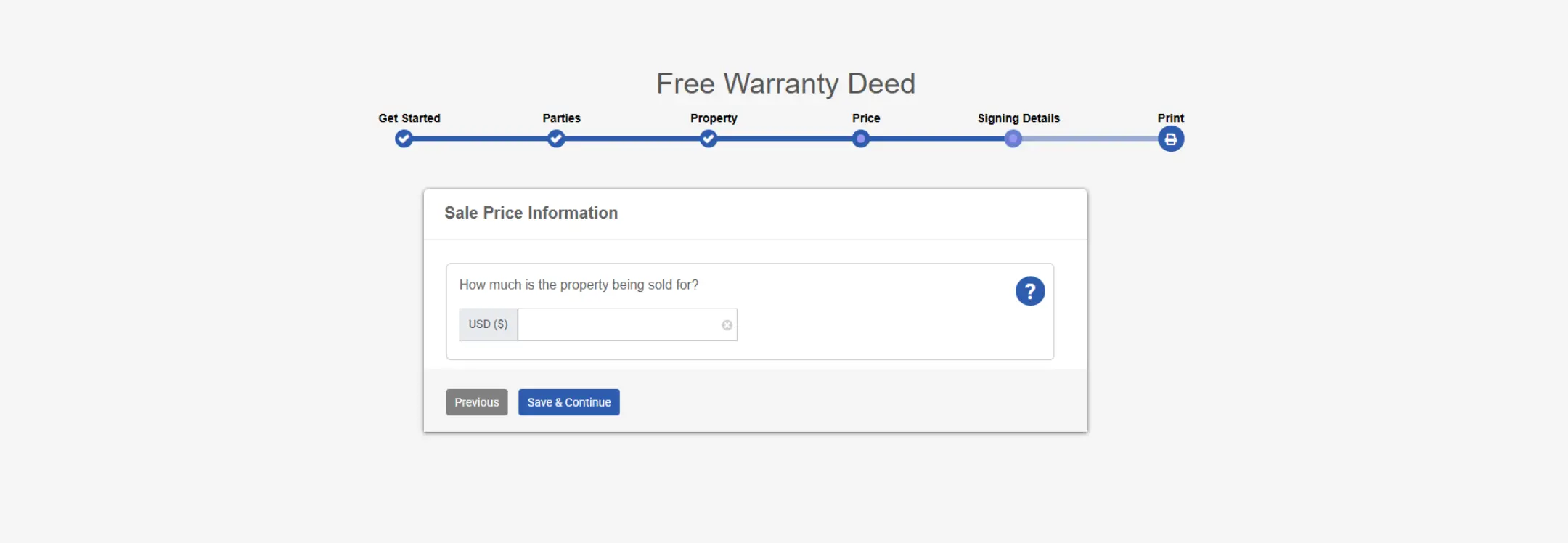
4. Add Pricing Details
State the purchase price or other consideration in the deed language that corresponds with the underlying sale agreement for clarity and consistency.
5. Preview and print
Review the Warranty Deed for accurate names, descriptions, and warranty terms, then download a final version in PDF for signing, notarization, and recording.
An online Warranty Deed template with guided fields helps both sides avoid vague or inconsistent language that could weaken buyer guarantees, while still reflecting the specific risk allocation agreed in the purchase deal.




 United States
 Canada