TL;DR- Scope of work defines exactly what services will be provided, what deliverables clients will receive, what timelines apply, and what activities fall outside the agreement boundaries
- Vague scope language like "provide marketing support" creates scope creep disputes where clients continuously request additional work assuming it was already promised
- Clear scope statements prevent disputes by specifying exact deliverables, completion dates, revision allowances, client responsibilities, and processes for handling change requests
- Missing scope definitions leave clients and service providers with different expectations about what work is actually included leading to payment disputes and damaged relationships
- Ziji Legal Forms provides service agreement templates with guided scope of work fields that help both parties clearly define deliverables, timelines, and boundaries reducing disputes and ensuring project success
Introduction: Why Scope of Work Is Critical to Service Agreements
In the United States, service agreements form the legal backbone of relationships between independent contractors, consultants, agencies, and their clients. While payment terms and general responsibilities often receive attention, the most important section of any service agreement is the scope of work. A clearly defined scope determines what services will be provided, what results are expected, how performance will be measured, and when obligations are fulfilled.
Under U.S. contract law, ambiguity creates risk. Courts interpret unclear contract terms against the drafting party in many cases. When a scope of work lacks precision, disagreements over deliverables, deadlines, and compensation can escalate into disputes, nonpayment, or even litigation. Defining the scope properly ensures both parties understand their obligations from the beginning and reduces misunderstandings that can damage professional relationships.
A well-drafted scope of work protects business interests, clarifies expectations, and supports enforceability. Without it, even a signed agreement may fail to prevent costly disagreements.
What Scope of Work Means in a Service Agreement
Definition and Core Purpose
The scope of work is the section of a service agreement that describes exactly what services will be performed and what outcomes are expected. It establishes the boundaries of the engagement and clarifies what is included and what is excluded. From a legal standpoint, it defines the measurable duties that each party agrees to undertake.
The core purpose of the scope is to create certainty. A contract requires mutual agreement on essential terms. When services are described precisely, both parties can clearly understand the nature of the obligation. This clarity reduces the likelihood of conflicting interpretations later.
The scope also provides a benchmark for performance. If a dispute arises over whether the work was completed properly, the written scope becomes the primary reference for evaluation.
Scope of Work Versus General Service Description
A general service description simply identifies the type of service being offered. For example, stating that a provider will deliver consulting services or marketing support only identifies the category of work. It does not explain the extent, frequency, or measurable outputs associated with that service.
A scope of work, by contrast, goes deeper. It specifies the tasks to be performed, the number of deliverables, timelines, formats, revision policies, and completion standards. Without these details, disagreements are more likely to arise over what was promised.
When language is broad or undefined, interpretation becomes subjective. Courts rely on the plain meaning of contract language, so precision is critical. Separating a general description from a structured scope ensures the agreement remains enforceable and practical.
Protecting Both Client and Service Provider
A clearly defined scope protects both sides of the relationship. For service providers, it prevents clients from requesting additional work beyond what was agreed without adjusting compensation. This gradual expansion of responsibilities, often called scope creep, can significantly increase workload without corresponding payment.
For clients, a detailed scope ensures that the provider is accountable for specific results within defined time frames. It establishes measurable performance standards and supports payment decisions tied to completion of deliverables.
Balanced drafting promotes fairness. By defining duties on both sides, the agreement minimizes misunderstandings and strengthens legal protection in the event of disagreement.
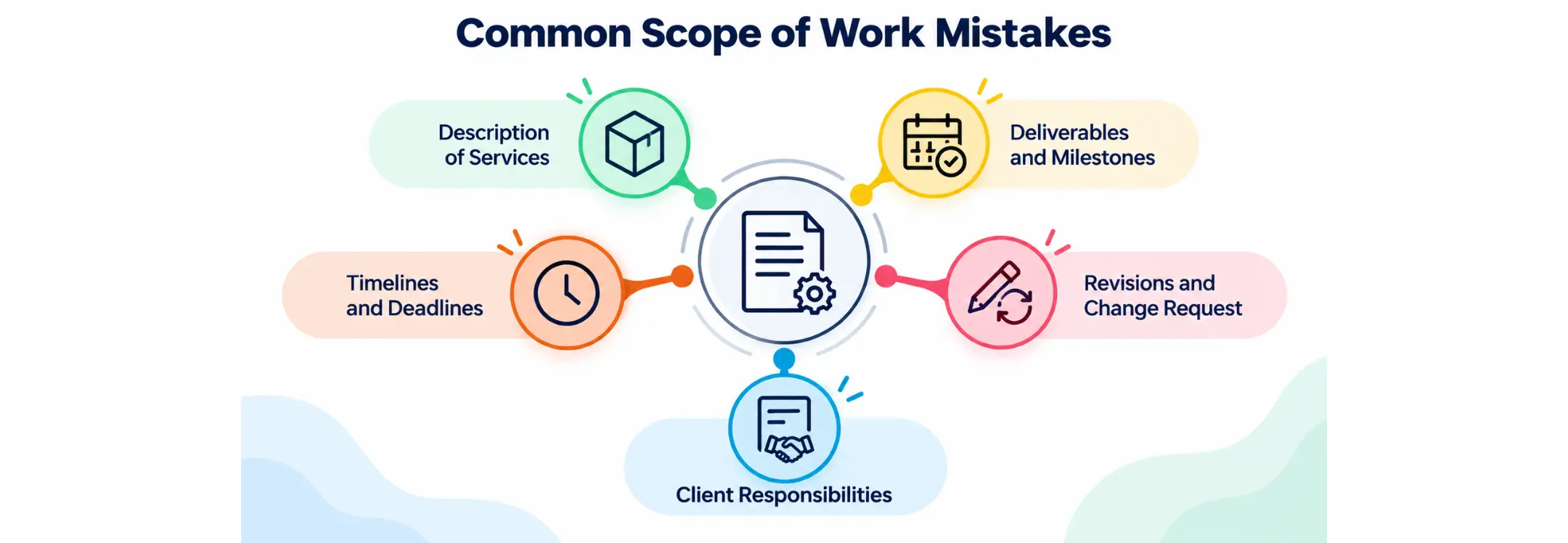
Common Scope of Work Mistakes
Using Broad or Generic Language
One of the most common drafting errors is relying on vague phrases such as provide support as needed or perform related services. These expressions may appear flexible, but they create ambiguity. Ambiguity invites conflicting expectations.
Broad language allows one party to assume a wide range of services are included, while the other may interpret the obligation narrowly. This difference in understanding often leads to disputes about whether work falls within the original agreement.
Clear drafting requires specificity. Instead of using general language, the scope should define concrete tasks, measurable outputs, and objective standards. Precision strengthens enforceability and reduces interpretive risk.
Failing to List Deliverables
Deliverables represent the tangible outputs the client expects to receive. Failing to list them explicitly leaves room for disagreement about whether the work has been completed satisfactorily.
For example, agreeing to create branding materials does not clarify how many designs will be provided, whether source files are included, or what format final materials will take. Without this information, performance becomes difficult to measure.
Listing deliverables in detail provides structure. It allows both parties to confirm completion and reduces disputes over sufficiency. Clear deliverable language also strengthens claims of performance if a breach dispute arises.
Not Defining Timelines or Deadlines
Time is often a material element of a service agreement. Without defined deadlines, parties may disagree over what constitutes reasonable timing. Delays can disrupt operations and damage business objectives.
Specifying start dates, milestone deadlines, and final completion dates provides clarity. It also helps align payment obligations with performance. If timing is critical, the agreement should clearly state that deadlines are essential terms.
Clear timelines promote accountability. They also provide a structured framework for determining whether performance has been delayed or breached.
Ignoring Revision Limits and Approval Steps
Many conflicts arise from undefined revision expectations. Clients may expect unlimited modifications, while providers assume only minor adjustments are included.
Defining the number of revisions included within the agreed fee prevents excessive unpaid labor. Establishing approval procedures at key stages of the project also reduces confusion. Once a deliverable is approved in writing, it becomes less likely that substantial changes will be demanded later.
Documented approval steps create structure and finality. They protect the service provider from repeated rework and provide transparency for the client.
Key Elements of a Strong Scope of Work
Description of Services
The description of services should outline what will be done and how it will be performed. It should explain the methodology, the nature of the engagement, and any limitations. If services are ongoing, the agreement should clarify frequency and duration. If project based, it should describe phases of performance.
Clarity in this section ensures both parties understand the practical expectations. Detailed descriptions reduce ambiguity and provide a measurable standard for evaluating whether services were delivered properly.
Deliverables and Milestones
Deliverables should be described in specific and measurable terms. Milestones break larger projects into structured phases tied to defined outputs. This approach promotes transparency and allows performance to be evaluated progressively.
Milestone specifications also support structured payment arrangements. By linking payment to completion of defined outputs, the agreement balances risk and accountability. Clear milestone language provides objective benchmarks for determining performance. For example, "Phase One Milestone: Completion of research and competitive analysis by January 15, deliverable being comprehensive written analysis document."
Timelines and Deadlines
Timelines should include commencement dates, interim deadlines, and final completion dates. If delays depend on client cooperation, that condition should be stated clearly.
Explicit deadlines reduce uncertainty and improve project management. They also provide a clear basis for assessing delay or nonperformance if disputes arise. When timing matters significantly, the agreement should emphasize its importance.
Revisions and Change Requests
The scope should define how revisions are handled and what constitutes a change request. If additional work is requested beyond the defined scope, the agreement should require written approval before proceeding.
Requiring documentation for changes protects both parties. It ensures that compensation reflects expanded work and prevents misunderstandings about whether tasks were included originally. Written change procedures are one of the most effective tools for controlling scope creep.
Client Responsibilities
The agreement should clearly outline what the client must provide, such as access to information, timely approvals, materials, or cooperation. Delays often occur because client obligations are not defined.
Defining client responsibilities creates balance. If performance depends on client input, the agreement should state that deadlines adjust accordingly. This protects the service provider from claims of delay caused by missing information or approvals.
Practical Scope of Work Examples
Example of Vague Scope and Why It Fails
Poorly Drafted Scope Example:
- The Consultant will provide business advisory services for six months.
- The Consultant will assist the Client with strategy and operational improvements.
Why This Fails:
- It does not define how often services will be delivered.
- It does not list specific deliverables.
- It does not include deadlines or completion standards.
- It does not clarify whether written reports are required.
Because the obligations are undefined, either party can interpret the scope differently. If a dispute arises, there is no measurable benchmark to determine whether performance occurred. Courts rely on the written contract language, and broad wording like this creates ambiguity that weakens enforceability.
Example of Well-Defined Scope for a Consultant
Clear and Structured Scope Example:
- The Consultant shall conduct two virtual strategy sessions per calendar month, each lasting approximately ninety minutes.
- The Consultant shall deliver one written Strategic Growth Plan within thirty days of the Effective Date.
- The Consultant shall provide two Performance Review Reports during the term of the Agreement.
- All deliverables shall be submitted electronically in PDF format.
- The Client shall provide required financial data within five business days of written request.
Why This Works:
- It defines frequency of service.
- It lists specific deliverables.
- It includes measurable deadlines.
- It clarifies format and submission method.
- It outlines client responsibilities.
This structure creates objective performance standards. If a dispute arises, performance can be evaluated directly against the listed obligations.
Example of Project-Based Scope for Agency
Project-Based Scope Example:
- The Agency shall design five custom social media graphics for the Client’s Spring campaign.
- The Agency shall create two branded email marketing templates.
- Draft concepts shall be delivered within twenty business days of receiving required branding materials.
- The Client is entitled to two rounds of revisions per graphic and one round per email template.
- Final deliverables shall be provided in PNG format and editable source files.
- The Agency shall deliver one monthly analytics report during the ninety-day campaign period.
Why This Works:
- It clearly defines quantity of work.
- It limits revisions.
- It includes deadlines.
- It specifies deliverable formats.
- It defines reporting obligations.
By defining measurable outputs and boundaries, the scope prevents expansion of responsibilities beyond what was agreed.
How to Handle Changes Without Disputes
Using Written Change Requests
A well drafted agreement should include language such as:
Any services requested by the Client that are outside the Scope of Work described in this Agreement shall require a written Change Request signed by both parties. No additional services shall be performed until the Change Request has been approved in writing. The Change Request shall describe the additional services, revised timelines, and any additional fees.
This type of clause prevents informal expansion of obligations. Verbal requests, text messages, or informal emails can create confusion about whether new work was authorized. A written change requirement establishes clear documentation and mutual consent. It also protects the service provider from performing unpaid work and protects the client from unexpected billing.
Updating Scope and Fees Properly
When additional work is approved, the agreement should reflect how fees will be adjusted. A structured provision may state:
Upon approval of a Change Request, the Scope of Work shall be deemed amended accordingly, and the Client shall pay additional fees calculated at the rate of $150 per hour or at a mutually agreed fixed fee as stated in the Change Request.
This ensures that compensation aligns with the expanded scope. Without documented fee adjustments, disputes often arise over payment expectations. Clear written updates provide transparency and reduce financial misunderstandings.
Avoiding Scope Creep Through Documentation
Scope creep frequently occurs when small additions accumulate over time. A preventive clause may read:
The parties acknowledge that the Scope of Work defines the complete services to be provided. Any tasks not expressly described in the Scope of Work shall be considered outside the scope unless added through a written amendment.
This language reinforces boundaries. It clarifies that the written scope controls the engagement. By maintaining consistent documentation and referencing the agreed scope when new requests arise, both parties preserve clarity and reduce conflict.
Legal and Compliance Considerations
Why Clear Scope Protects Against Disputes
In a breach of contract claim, the central issue is whether a party failed to perform its obligations. A detailed scope of work provides a clear checklist of duties. Courts analyze contract language to determine whether there was substantial performance or material breach.
If the scope defines measurable deliverables and deadlines, it becomes significantly easier to prove performance or nonperformance. Without clear language, courts may need to interpret intent, which increases uncertainty. Detailed drafting reduces litigation risk and strengthens a party’s legal position if enforcement becomes necessary.
Managing Client Expectations
Many service disputes arise from unmet expectations rather than bad faith. A clearly written scope ensures that expectations are aligned from the beginning. It defines what the client will receive, when it will be delivered, and how revisions are handled.
When expectations are managed through precise drafting, professional relationships are more stable. Both parties operate within defined boundaries. This transparency reduces friction, improves cooperation, and promotes long term success in service engagements.
How to Create Clear Scope of Work Using Ziji Legal Forms
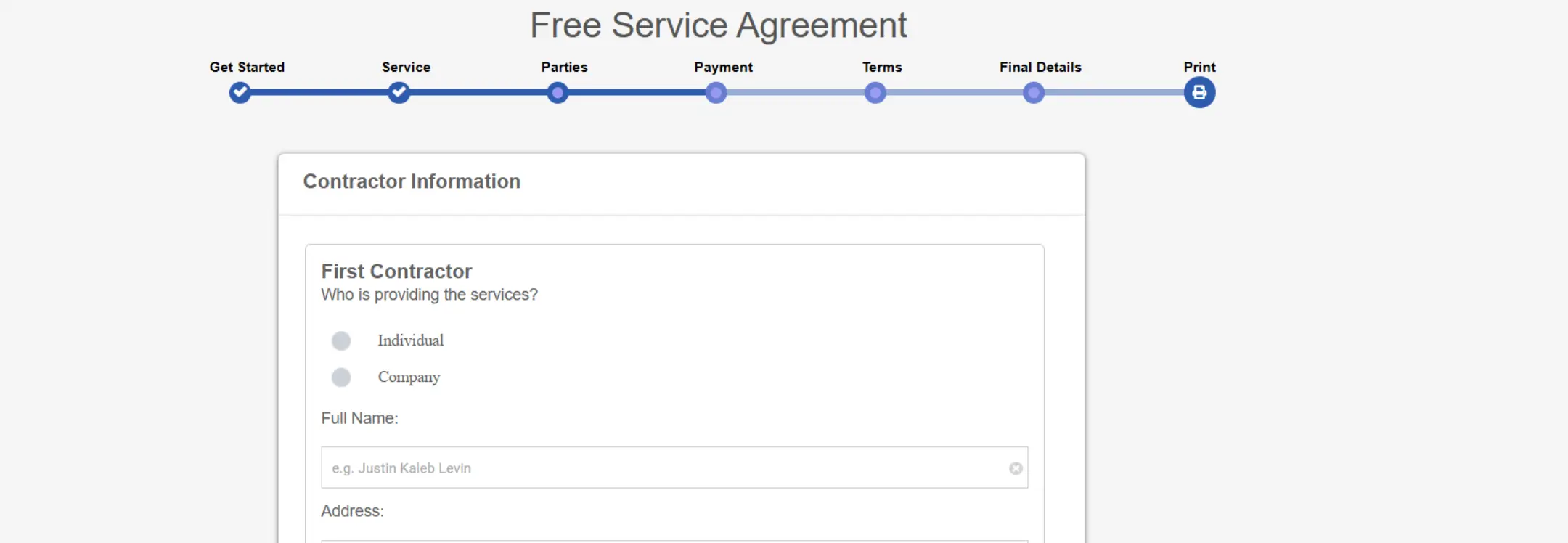
1. Choose template
2. Add Parties Details
Enter the service provider name and business information along with the client name and contact details to clearly identify both parties to the agreement.
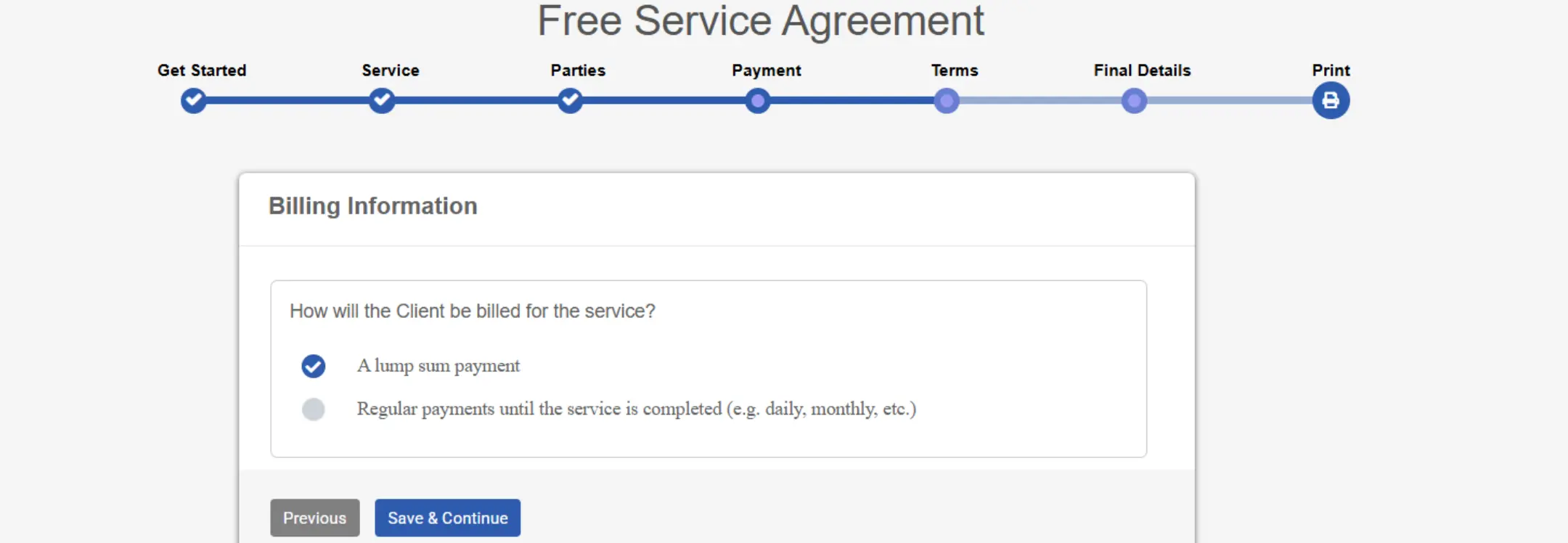
3. Add Payment Details
Specify service fees, payment schedule, invoicing procedures, and any additional cost provisions for revisions, changes, or scope additions to establish clear financial terms.
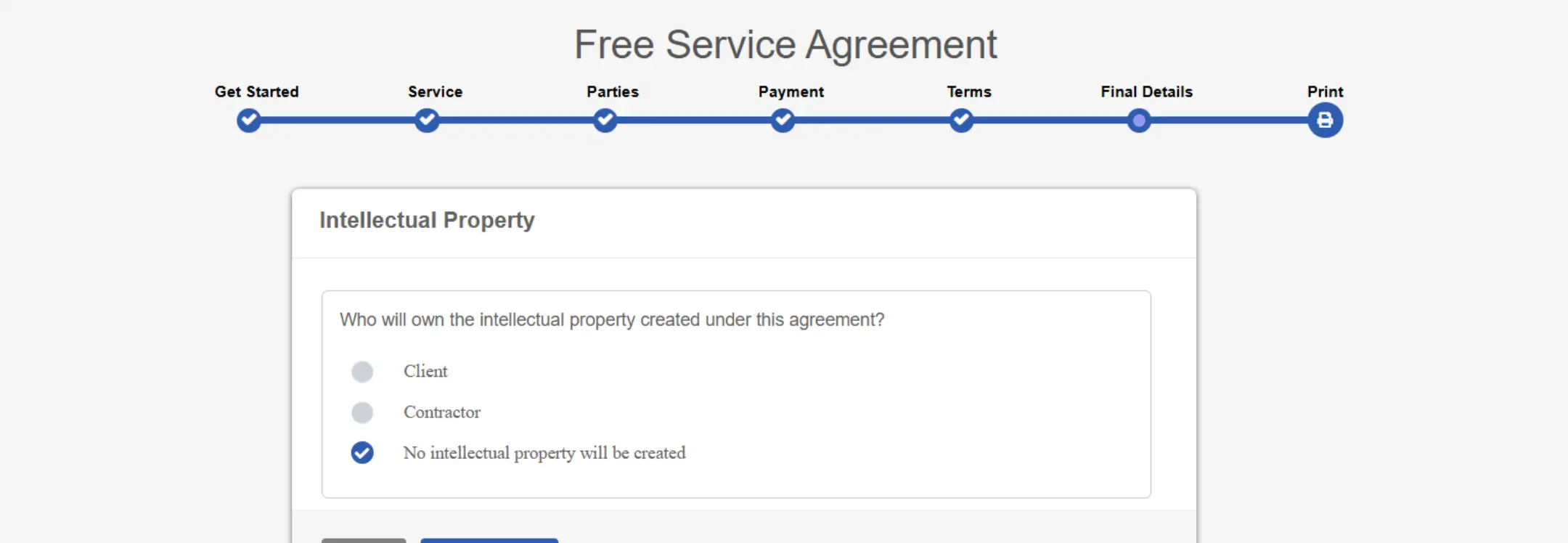
4. Add Terms Details
Define the scope of work with detailed descriptions of services, specific deliverables with completion dates, revision allowances, client responsibilities, change request procedures, and any other terms governing the service engagement.
5. Preview and print
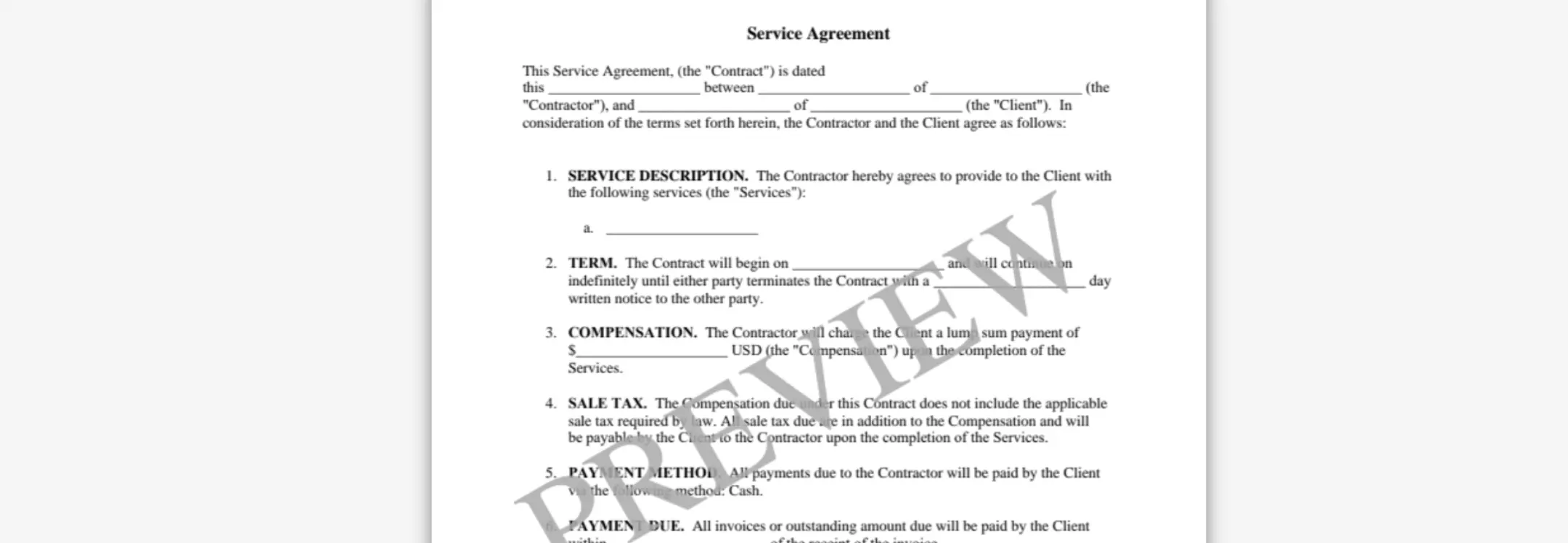
Review the completed service agreement thoroughly to verify scope definitions are clear and specific, then download in PDF or Word format for signature by both parties.
Template Features Supporting Clear Scope Definition
Ziji templates include dedicated scope of work sections with guided fields prompting detailed descriptions of services, specific deliverable lists, timeline information, and revision specifications. The structured format helps users think through all critical scope elements.
Pre-built language clarifies what is included versus excluded from scope, establishes clear change request procedures, and specifies how timeline changes are handled. These provisions prevent common scope disputes while remaining flexible for different service types.
Conclusion: Clear Scope Creates Successful Service Relationships
Detailed, specific scope of work definitions create successful service engagements by establishing mutual understanding about what will be delivered, when it will arrive, and what clients will receive. Using Ziji Legal Forms' structured service agreement templates with guided scope definition fields ensures both parties clearly understand boundaries and deliverables while preventing the scope creep disputes that damage professional relationships and projects.
Service Agreement FAQs
1. What is the purpose of a Service Agreement?
Its purpose is to define the scope of services, payment terms, responsibilities, and legal obligations between a client and contractor.
2. When should businesses use a Service Agreement?
Businesses should use one whenever they hire an independent contractor to perform services.
3. Can a Service Agreement replace an Employment Agreement?
No. Service Agreements are intended for contractors, while Employment Agreements are used for employees.
4. Is it better to have a written agreement?
Yes. A written Service Agreement provides clear evidence of the agreed terms and protects both parties.
5. Can changes be made after the agreement is signed?
Yes. The agreement can be updated if both parties approve the changes in writing.
6. Can the Ziji Legal Forms Service Agreement be used anywhere in the United States?
Yes. The Ziji Legal Forms Service Agreement is applicable across all U.S. jurisdictions.
Author
Mandar Sonavane
|
Legal Content Writer at Ziji Legal Forms Inc.
Symbiosis International University
Mandar is a legal content writer specializing in the development of clear, practical, and easy-to-understand legal resources. With a strong focus on legal research, content creation, and plain-language writing, he works closely with our legal professionals to ensure that legal documents and educational materials are accurate, accessible, and user-friendly. At Ziji Legal Forms Inc., Mandar is responsible for researching legal topics, drafting and reviewing content, and helping transform complex legal concepts into straightforward guidance that empowers individuals and businesses to confidently navigate their legal needs.
Reviewed By
Histon Shek
|
General Counsel and Co-Founder at Ziji Legal Forms Inc.
University of Alberta
Histon Shek was called to the Alberta Bar in 2006. He holds a BA in Sociology and Philosophy and an LLB from the University of Alberta. As co-founder of Ziji Legal Forms Inc., he focuses on making legal documents accessible and affordable, overseeing legal integrity and content development.





 United States
 Canada