TL;DR
- Review the scope of work carefully to ensure services, deliverables, and responsibilities are clearly defined.
- Verify payment terms, fees, milestones, and late payment provisions before signing.
- Confirm ownership of intellectual property, confidentiality obligations, and liability limitations.
- Check termination rights, dispute resolution procedures, and governing law provisions.
- Watch for vague language, missing clauses, or one-sided terms that could create future disputes.
- Generate detailed Rental Inspection Reports with Ziji Legal Forms to document property conditions and protect tenant and landlord rights during move-in and move-out.
Introduction
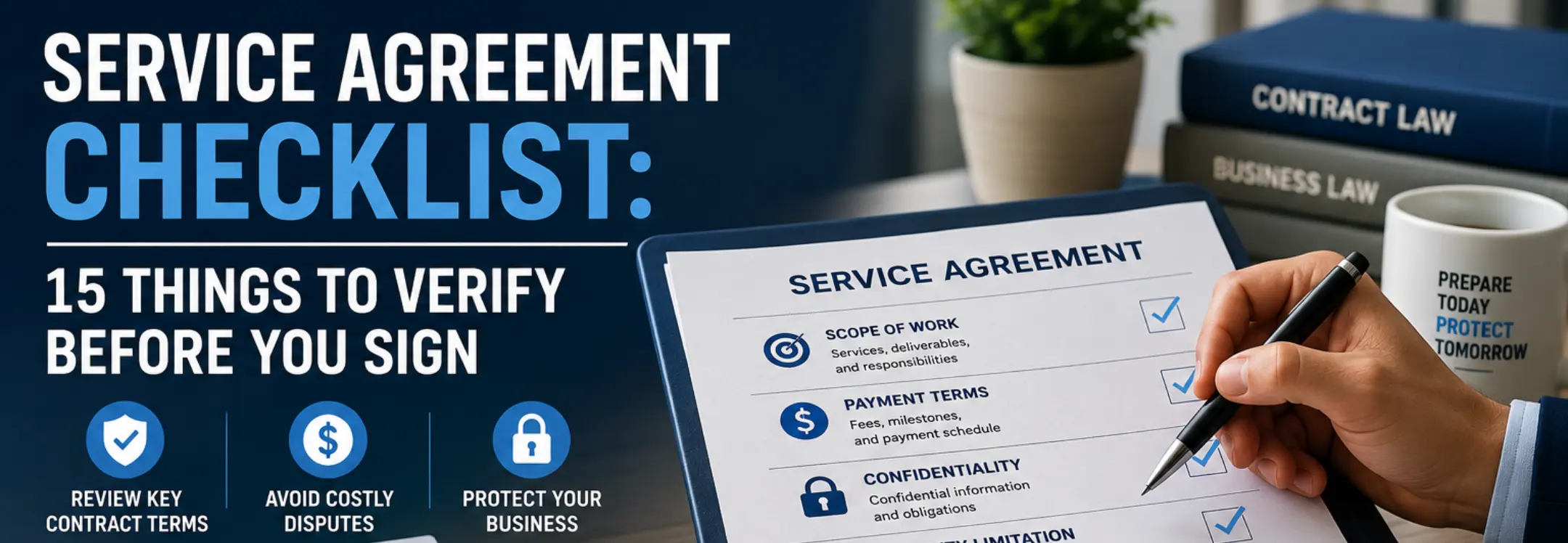
Signing a new business contract is exciting. It marks a fresh start for your commercial goals. However, you must check the terms carefully before you sign. Many business fights arise from unclear terms. People often argue about payment issues or undefined duties. A detailed review protects your interests and avoids costly delays.
This guide provides a practical Service Agreement Checklist. It is a helpful review tool for both service providers and clients. It helps you spot risks and secure your commercial deals. Using a proper Service Agreement template ensures your deal is safe and clear. Let us examine how a detailed review can protect your business.
Why Reviewing a Service Agreement Matters
Prevents Misunderstandings
Written contracts prevent major misunderstandings. When people talk about a project, they often have different goals. A provider might assume some tasks are extra. Meanwhile, the client expects them for free. Clearly documented expectations reduce these disputes. They ensure that both sides share a single source of truth. The contract defines what complete work means. It also shows how to handle unexpected project changes.
Protects Both Parties
A balanced contract protects both sides. It divides risks and duties in a fair way. For example, it ensures the provider gets paid for their labor. It also ensures the client gets the quality of work they expect. The contract shows what happens if a party fails to meet their obligations. By addressing these issues early, both parties can minimize financial risk. This leads to a stable business relationship.
Improves Enforceability
A reviewed contract is much easier to enforce. Contract law in the United States and Canada requires key elements for validity. These include an offer, acceptance, and consideration. A clear intent to create legal relations is also essential. Putting terms in writing ensures compliance with these laws. This makes your contract a robust tool in a legal proceeding. It provides clear proof of your business deal if a dispute arises.
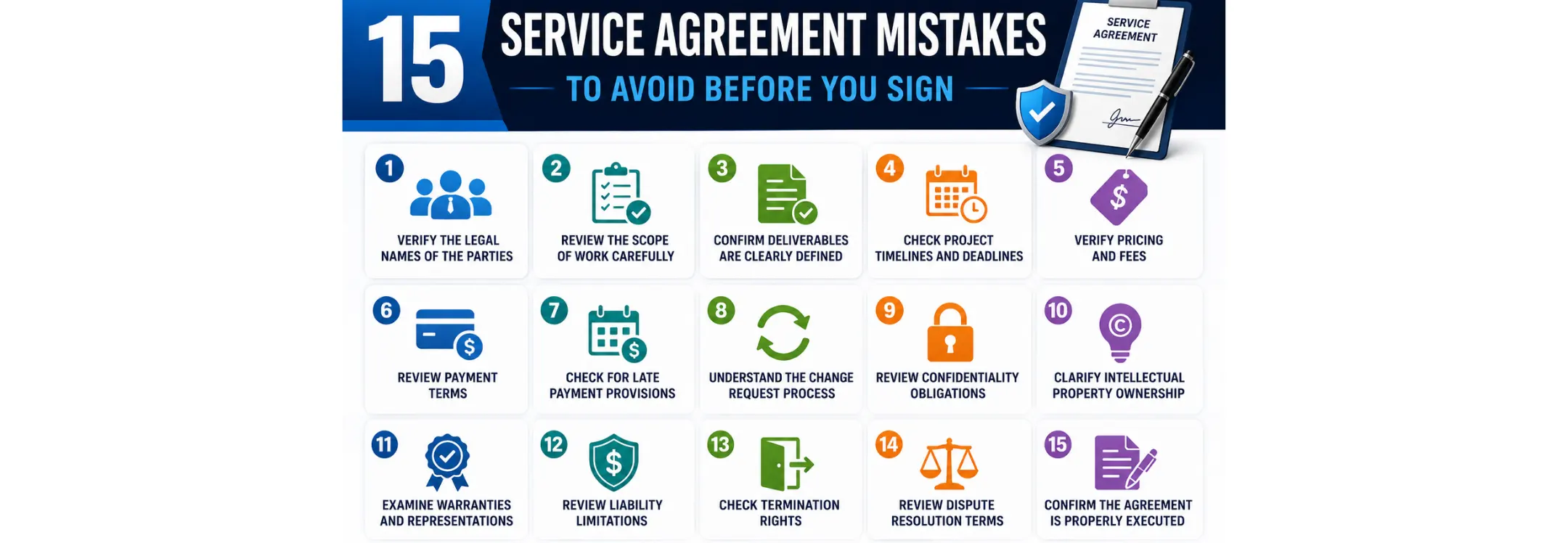
Service Agreement Checklist: 15 Things to Review Before Signing
1. Verify the Legal Names of the Parties
Always verify the legal names of both parties first. Check business names, physical addresses, and authorized signatories. If a party is a corporation, use its exact registered corporate name. Do not use a casual trade name. Contracting with an incorrect entity can make the contract invalid. This leaves you with no recourse if a breach occurs later. Always confirm who is actually signing the document.
2. Review the Scope of Work Carefully
The scope of work is the core of any contract. Review this section to ensure it defines all services. It must list every single duty and project boundary. Specify what is excluded to prevent scope creep. Creep happens when a project grows without more pay. A detailed scope keeps the project on track. It ensures fair compensation for the provider.
3. Confirm Deliverables Are Clearly Defined
Deliverables are the outputs the provider must deliver. They must be clearly defined. List exact specifications, formats, and acceptance rules. For example, do not just write that a report is required. State that the provider will deliver a digital report of twenty pages. Measurable deliverables make it easy to check if work is complete. This ensures the client gets what they paid for.
4. Check Project Timelines and Deadlines
Every successful project relies on firm deadlines. Check the start dates, completion dates, and milestones. Review periods are also crucial. Timelines establish accountability and help you plan your resources. The contract should state what happens if client delays cause a missed deadline. This protects the provider from unfair lateness penalties.
5. Verify Pricing and Fees
Clear pricing is vital for maintaining trust. Verify if the fees are fixed or hourly. Check for retainers, reimbursable costs, and taxes. The document must show these details clearly. Under both American and Canadian laws, transparent pricing prevents arguments. It ensures the client knows exactly what they will pay before work begins.
6. Review Payment Terms
Payment terms affect your business cash flow. Check the payment schedule and due dates. Look for accepted payment methods and deposit rules. A clear schedule ensures the provider gets paid as they hit milestones. It also helps the client manage their budget. Aligning on these terms before signing prevents future payment delays.
7. Check for Late Payment Provisions
Late payment clauses encourage timely payments. Check for interest charges and late fees. Look at suspension rights and collection costs. A standard clause allows the provider to stop work if payments are late. This protects your cash flow and enforces business discipline. It keeps the project moving smoothly.
8. Understand the Change Request Process
Projects often change as work progresses. You must understand the change request process. This shows how to request, approve, and price updates. Without this process, changes cause disputes over fees and deadlines. A structured clause ensures that all changes are written and signed. This keeps both parties in agreement as the project evolves.
9. Review Confidentiality Obligations
Protecting sensitive data is crucial in business. Review the confidentiality terms carefully. They must define what data is private. Look for exceptions and the duration of the rules. This clause prevents the sharing of trade secrets or customer lists. A strong confidentiality promise builds trust and protects commercial assets.
10. Clarify Intellectual Property Ownership
Who owns the work is a vital question. Clarify intellectual property ownership and licensing rights. Under Canadian and USA laws, independent contractors own their work by default. They must sign a written transfer to hand over ownership. Clarifying these terms prevents disputes over who owns the project assets.
11. Examine Warranties and Representations
Warranties are promises about the quality of work. Check the quality commitments and compliance rules. For example, the provider should promise to work professionally. They should meet standard industry benchmarks. These promises give the client legal options if the work is poor. They also set clear performance expectations.
12. Review Liability Limitations
Liability clauses limit financial exposure if things go wrong. Examine liability caps and excluded damages. Many agreements cap liability at the total fees paid. Courts in the USA and Canada check these clauses closely. Under American law, a cap may fail if it denies a minimal remedy. Clear wording is vital to protect your business.
13. Check Termination Rights
Every business deal needs a clear exit strategy. Check the termination events and notice periods. Look at post-termination duties as well. The clause should show how to end the deal for convenience or for cause. Knowing your exit rights ensures you are not locked into a bad business relationship.
14. Review Dispute Resolution Terms
When disputes arise, a clear path to resolve them is helpful. Check the governing law and local jurisdiction clauses. Look for mediation or binding arbitration rules. These terms show where disputes are heard and which laws apply. Choosing these terms early saves time and lowers legal costs.
15. Confirm the Agreement Is Properly Executed
An agreement is only binding if executed correctly. Confirm that authorized people sign and date the document. Ensure all exhibits and schedules are attached. Check that you are signing the final version. Proper execution makes the contract binding, giving both sides legal security.
Common Red Flags to Watch For
Unclear Scope of Work
A vague scope of work is a major risk. If the service description is unclear, the provider may face extra work without pay. The client may also get poor results. Always demand detailed, measurable descriptions. This keeps the project boundaries clear and prevents disputes.
Missing Payment Terms
Entering a deal without clear payment rules is risky. If there are no set due dates or milestone plans, you will face cash flow issues. The client will also struggle to track their project budget. Never start work until all financial terms are written and signed.
One-Sided Liability Clauses
Contracts must divide risk fairly. Watch for one-sided clauses that shift all risk to you. They completely protect the other party while exposing you to high loss. Insist on mutual liability limits. Realistic caps ensure a fair and balanced professional relationship.
No Termination Provision
An agreement with no exit clause is dangerous. If the deal goes bad, you could be stuck in it forever. Every contract needs clear termination rules and notice periods. This gives both sides a safe way to end the partnership. It prevents costly court battles.
Undefined Ownership of Work Product
A silent clause on work ownership causes big disputes. The client might assume they own everything, but the provider disagrees. Always define intellectual property rights before work starts. This protects your designs, writing, or software.
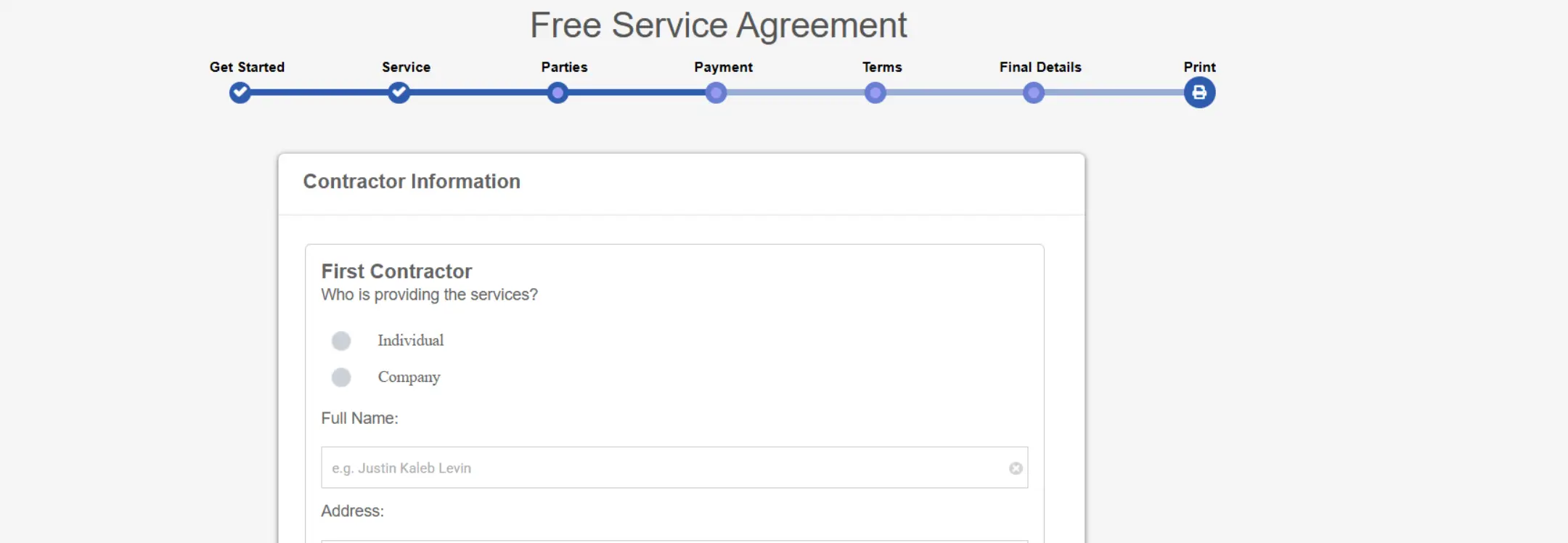
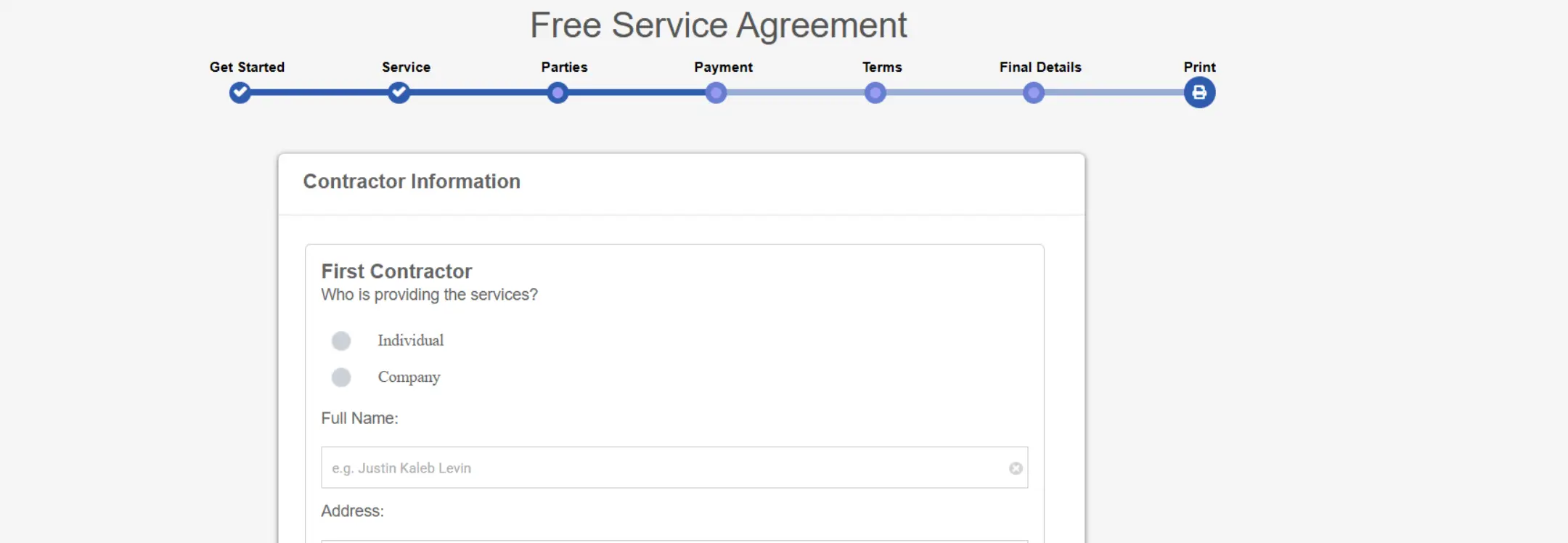
How to Create a Service Agreement with Ziji Legal Forms
Step 1: Select Template
Step 2: Enter Party Information
Next, enter the legal names and business details of both sides. This identifies the parties in a clear way. It ensures the document is legally binding. This protects both businesses if a dispute happens later.
Step 3: Provide Payment Information
Then, enter the pricing details, schedules, and late fees. You can add deposit rules and milestones. This makes the financial deal transparent. It reduces payment delays and ensures everyone knows their duties.
Step 4: Enter Term Information
After that, specify the start date, duration, and exit rules. Setting these details gives you a clear timeline. It also provides a secure exit plan. This ensures you are never trapped in an ongoing contract.
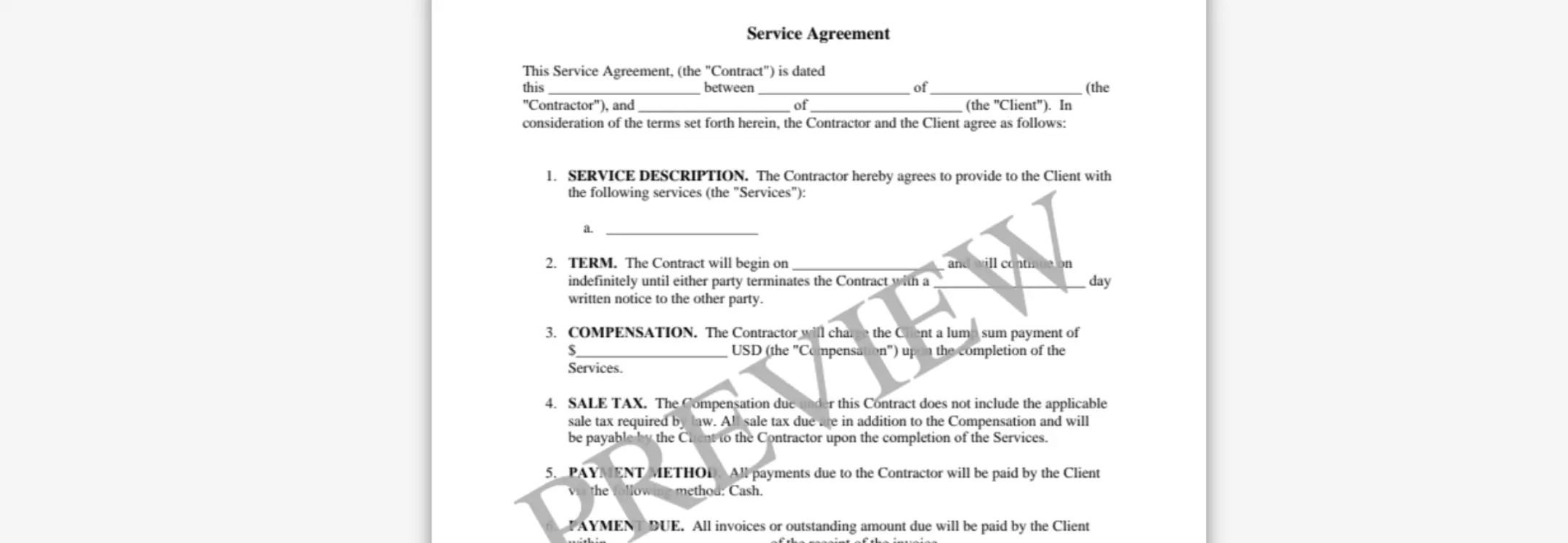
Step 5: Preview Document
Finally, check the draft for accuracy and download the PDF. Ziji Legal Forms allows unlimited edits. This makes it easy to Create Service Agreement documents that fit your needs. You get a reliable Online Service Agreement in minutes.
Conclusion
Reviewing your business contract is a critical step to ensure success. A proper Service Agreement Checklist helps you spot risks and verify key terms. This ensures both parties are aligned before work starts. In the United States and Canada, written contracts provide vital legal safety. Using Ziji Legal Forms, you can quickly build professional contracts. Protect your business and draft your agreement with absolute confidence today.
Service Agreement FAQs
1. How does a Service Agreement protect both parties?
It clearly documents the services, payment arrangements, and expectations, helping prevent disputes throughout the project.
2. Who benefits from a Service Agreement?
Both clients and independent contractors benefit by having a clear understanding of their respective rights and obligations.
3. Is a Service Agreement the same as an Employment Agreement?
No. Service Agreements are for independent contractors, while Employment Agreements govern employer-employee relationships.
4. Should every service project have a written agreement?
Yes. A written agreement helps minimize misunderstandings and provides valuable legal protection.
5. Can a signed Service Agreement be modified?
Absolutely. Any changes should be agreed upon by both parties and recorded in writing.
6. What jurisdictions are covered by the Ziji Legal Forms Service Agreement?
The Ziji Legal Forms Service Agreement can be used in all jurisdictions throughout the United States.
Author
Mandar Sonavane
|
Legal Content Writer at Ziji Legal Forms Inc.
Symbiosis International University
Mandar is a legal content writer specializing in the development of clear, practical, and easy-to-understand legal resources. With a strong focus on legal research, content creation, and plain-language writing, he works closely with our legal professionals to ensure that legal documents and educational materials are accurate, accessible, and user-friendly. At Ziji Legal Forms Inc., Mandar is responsible for researching legal topics, drafting and reviewing content, and helping transform complex legal concepts into straightforward guidance that empowers individuals and businesses to confidently navigate their legal needs.
Reviewed By
Histon Shek
|
General Counsel and Co-Founder at Ziji Legal Forms Inc.
University of Alberta
Histon Shek was called to the Alberta Bar in 2006. He holds a BA in Sociology and Philosophy and an LLB from the University of Alberta. As co-founder of Ziji Legal Forms Inc., he focuses on making legal documents accessible and affordable, overseeing legal integrity and content development.


 United States
 Canada