TL;DR- A bill of sale legally documents ownership transfer between buyer and seller, requiring accurate party information and detailed item descriptions
- Essential elements include purchase price, payment terms, transfer date, and clear warranties or "as-is" clauses to prevent future disputes
- Proper signatures from both parties are mandatory, with notarization recommended for added legal protection and required in some states
- Vehicle bill of sale documents require specific elements like VIN numbers, odometer disclosures, and compliance with federal and state regulations
- Professional platforms like Ziji Legal Forms ensure all critical elements are included with state-compliant bill of sale templates
Introduction
A bill of sale serves as legal proof of ownership transfer from seller to buyer, creating a documented record that protects both parties in any transaction involving personal property. Whether you're selling a car, boat, trailer, or other valuable items, this document establishes the essential facts of your transaction while providing legal protection against future disputes or claims.
An incomplete or poorly drafted bill of sale form can lead to serious complications, including invalidation of the transfer, disputes over payment terms, or liability issues that persist long after the transaction is complete. Courts regularly see cases where inadequate documentation creates expensive legal battles between parties who thought they had clear agreements.
Understanding the key elements that every bill of sale template must include ensures your document provides proper legal protection while meeting all state and federal requirements. This comprehensive guide examines each critical component that makes a bill of sale legally valid and enforceable.
Parties to the Sale
The foundation of any effective car bill of sale or general bill of sale begins with accurate identification of all parties involved in the transaction. This section establishes who is transferring ownership and who is receiving it, creating clear legal accountability for both sides of the agreement.
Complete Legal Information Required
Full legal names must appear exactly as they appear on government-issued identification documents. Using nicknames, abbreviated names, or informal variations can create problems during title transfers or if legal disputes arise later. Include middle names or initials when they appear on official identification to ensure complete accuracy.
Contact information for both buyer and seller should include current addresses, phone numbers, and email addresses when available. This information proves essential if questions arise about the transaction or if one party needs to contact the other regarding warranty issues, recalls, or legal requirements.
Business entity details require additional care when either party represents a company, corporation, or other legal entity. Include the complete registered business name, tax identification numbers when appropriate, and the name and title of the person authorized to sign on behalf of the organization.
Detailed Description of the Item
Accurate item description prevents misunderstandings and protects against fraud claims by establishing exactly what is being transferred. This section requires specific details that uniquely identify the property being sold.
Vehicle-Specific Requirements
Vehicle identification information must include the complete Vehicle Identification Number, make, model, year, body style, color, and current odometer reading. The VIN serves as the primary identifier that distinguishes your specific vehicle from others with similar characteristics.
Condition documentation should note any significant damage, mechanical issues, or modifications that affect the vehicle's value or operation. While detailed condition reports aren't always required, noting major issues provides protection against claims of misrepresentation. To know more about vehicle specific requirements, read our blog on Car Bill of Sale Templates: How To Use and Customize Them
General Property Descriptions
Serial numbers and unique identifiers help establish the specific item being transferred when available. For electronics, appliances, or equipment, include model numbers, serial numbers, and manufacturer information that clearly identifies the exact item.
Physical characteristics such as size, color, age, or distinguishing features help prevent confusion when similar items exist. Detailed descriptions become especially important for handmade items, antiques, or custom property without standard identification numbers.
Sale Price and Payment Terms
Clear financial terms prevent disputes about payment amounts, methods, or schedules while establishing the transaction's monetary value for tax and legal purposes.
Purchase Price Documentation
Written and numerical amounts should state the purchase price in both formats to prevent confusion or alteration. For example, write "$5,000 (Five Thousand Dollars)" to ensure clarity about the agreed-upon amount.
Currency specification becomes important for international transactions or when accepting alternative payment methods. Specify whether payment is in U.S. dollars, foreign currency, or other valuable consideration like trade goods and services or even bitcoin.
Payment Method Details
Accepted payment forms should clearly state whether payment will be made by cash, certified check, bank transfer, or other approved methods. This specification protects both parties by establishing exactly how the financial transaction will occur.
Installment arrangements require detailed schedules when buyers will pay over time. Include payment amounts, due dates, interest rates if applicable, and consequences for late or missed payments. Complex payment arrangements may require additional documentation beyond the basic bill of sale.
Date of Sale and Transfer of Ownership
The transfer date establishes exactly when ownership legally changes hands, affecting liability, insurance requirements, and tax obligations for both parties.
Legal Transfer Moment
Precise timing should specify not just the date but the time when ownership transfers if relevant to your situation. For vehicles, this timing affects liability for accidents, traffic violations, or other incidents that occur after the sale.
Conditional transfers may require different handling when ownership depends on completing specific requirements like inspections, financing approval, or delivery arrangements. Document any conditions that must be met before ownership actually transfers.
Registration and Title Implications
DMV notification requirements vary by state but generally require prompt notification of ownership changes. The transfer date established in your bill of sale pdf becomes the official record used by government agencies to track ownership changes.
Insurance considerations depend on the transfer date for determining when coverage responsibilities shift from seller to buyer. Clear documentation prevents gaps in coverage that could leave either party financially exposed.
Warranties or "As-Is" Clause
This section defines what guarantees, if any, the seller provides about the item's condition, legal status, or performance capabilities.
Warranty Provisions
Specific guarantees might include promises about the item's working condition, remaining useful life, or freedom from known defects. Written warranties create legal obligations for sellers and provide buyer protections beyond basic ownership transfer.
Limited warranty terms define exactly what is guaranteed, for how long, and what remedies are available if problems arise. Even simple warranties should specify their scope and duration to prevent misunderstandings about the seller's ongoing obligations.
"As-Is" Sales Protection
No warranty disclaimers protect sellers from future claims about the item's condition or performance. The "as-is" clause establishes that buyers accept all risks associated with the purchase and cannot seek compensation for problems discovered later.
Legal disclaimer language should be conspicuous and clearly written to ensure enforceability. Many states require warranty disclaimers to appear in bold print or capital letters to ensure buyers understand they are accepting all risks associated with the purchase.
Signatures of Both Parties
Valid signatures from all parties create the legal commitment necessary to enforce the bill of sale terms and establish binding agreement to the transaction.
Signature Requirements
Original signatures provide the strongest legal protection, though electronic signatures may be acceptable under certain circumstances and state laws. Both buyer and seller must sign the document to create mutual agreement and legal enforceability.
Printed names and dates should accompany signatures to ensure clear identification of who signed and when. This information becomes crucial if questions arise about the document's authenticity or timing of the agreement.
Witness and Additional Protections
Witness signatures may be required in some states or recommended for high-value transactions. Witnesses provide additional verification that parties signed voluntarily and understood the transaction terms.
Corporate authorization requires additional documentation when business entities are involved. Include titles of signing parties and verification that they have authority to bind their organizations to the agreement terms.
Notarization: Optional but Recommended
While not always legally required, notarization adds significant credibility and legal protection to bill of sale documents.
Benefits of Notarization
Identity verification through notarization provides strong evidence that the people who signed are actually the parties identified in the document. This protection helps prevent fraud and ensures enforceability if disputes arise.
Voluntary signature confirmation establishes that parties signed willingly without coercion or duress. Notaries verify that signers understand the document's contents and implications before adding their official seal.
When Notarization Is Required
State-specific mandates require notarized automobile bill of sale documents in certain jurisdictions, particularly for vehicle transfers. Check local requirements to ensure compliance with applicable laws.
High-value transactions often benefit from notarization even when not required, as the additional legal protection justifies the modest cost and time involved.
State-Specific Requirements
Beyond basic bill of sale elements, many states impose additional requirements that must be included for legal validity and regulatory compliance.
Federal Vehicle Requirements
Odometer disclosure statements are federally mandated for most vehicle transfers to prevent fraud and provide accurate mileage information. These disclosures require specific language and must be completed by both buyer and seller. Lien holder information must be documented when vehicles have existing loans or security interests. The bill of sale should clearly identify any financial institutions with claims against the vehicle being transferred.
Additional State Requirements
Emissions and inspection status may need documentation in states with environmental or safety inspection requirements. Some jurisdictions require disclosure of inspection status or emissions compliance as part of the transfer process. Tax implications vary significantly between states, with some requiring specific tax calculations or payment arrangements to be documented in the bill of sale. Understanding local tax requirements prevents problems during registration or title transfer. Because even small drafting errors can create serious legal complications.
Creating a Bill of Sale with Ziji Legal Forms
Professional platforms like Ziji Legal Forms simplify bill of sale creation by providing comprehensive templates that automatically include all critical elements while ensuring state-specific compliance.
1. Go to the Ziji Legal Forms website and find the Bill of Sale form
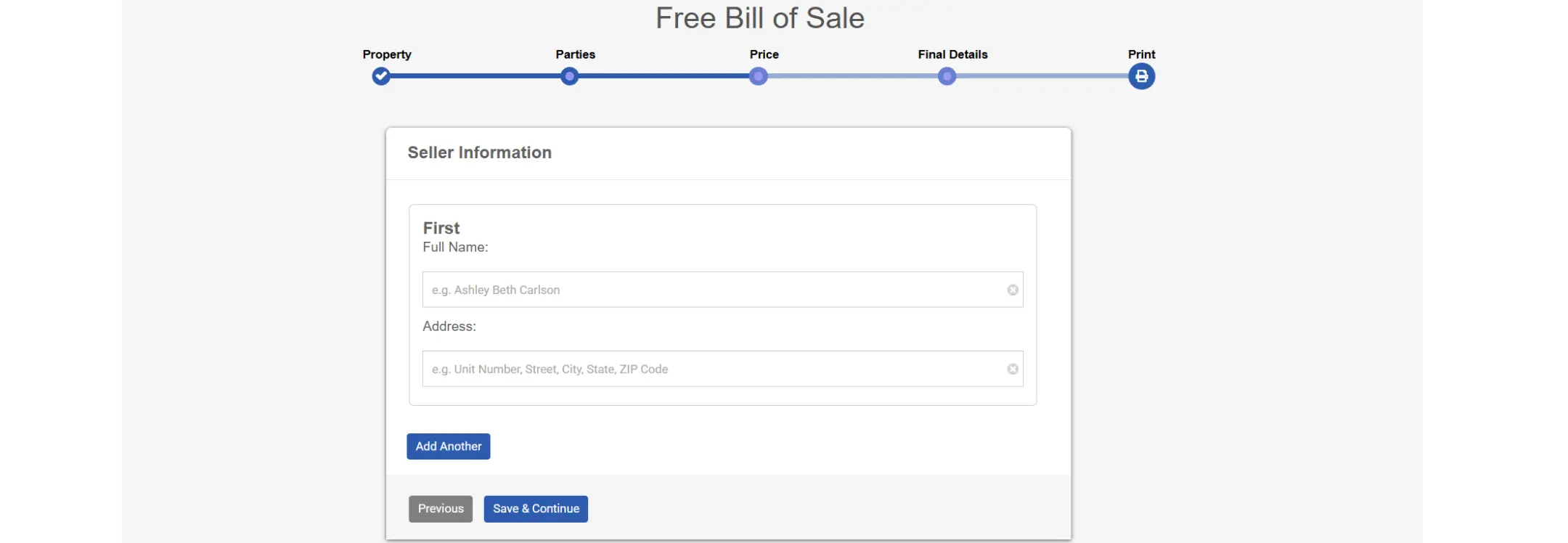
Navigate to Ziji Legal Forms’ homepage and click on “Financial” category on the top and then click on "Bill of Sale". There you will usually see a description of the form and a button that says “Create Document.”
2. Start the document interview process
Click the “Create Document” button. The platform will launch a questionnaire that gathers all the necessary information for your bill of sale.
3. Enter the details of your sale
The online form will prompt you to fill in various fields we covered above including the "Parties to the Sale", "Detailed Description of the Item", "Sale Price and Payment Terms", "Date of Sale and Transfer of Ownership", "Warranties or "As-Is" Clause", and "Signature of Both Parties"
4. Review your completed Bill of Sale
After you’ve answered all the prompts, the platform will create a preview of your fully formatted Bill of Sale document. Review all the information and make sure names are spelled correctly, addresses are right, the item description is accurate, and the price is correct. In case anything needs changing, you can simply go back in the questionnaire or edit the fields before finalizing. Ziji Legal Forms allows you to revise your answers as many times as needed before downloading, so you can tweak any detail.
Advantages of using Ziji Legal Forms Templates
Legally valid documents created through professional platforms incorporate current legal requirements and standard language that courts recognize and enforce. This professional preparation eliminates guesswork about necessary elements or proper formatting. State-specific customization ensures your free bill of sale template includes all local requirements without requiring extensive research into varying state laws and regulations. The platform automatically incorporates necessary disclosures and language based on your location.
User-Friendly Process
Easy customization allows users to input specific transaction details while maintaining legal compliance and professional formatting. The guided process ensures no critical elements are overlooked while accommodating unique transaction circumstances. Peace of mind comes from using professionally designed documents that have been tested in various legal situations. This reliability protects both parties while providing confidence that the document will be accepted by courts, DMV offices, and other relevant authorities.
Conclusion
Creating a legally valid bill of sale requires careful attention to essential elements that protect both buyer and seller while ensuring regulatory compliance. From accurate party identification to proper warranty disclaimers, each component plays a crucial role in preventing disputes and establishing clear legal rights.
Professional platforms like Ziji Legal Forms eliminate the complexity and risk associated with creating these important documents from scratch. By providing comprehensive bill of sale templates that automatically include all necessary elements, these tools ensure your transaction documentation meets legal standards while saving time and reducing errors.
Whether you need a simple bill of sale for basic transactions or complex documentation for high-value transfers, investing in proper preparation protects your interests and provides peace of mind. The modest effort required to create complete, accurate documentation pays dividends through smoother transactions and reduced legal risks for all parties involved.
Bill of Sale FAQs
1. What does a Bill of Sale do?
A Bill of Sale provides written proof that ownership of an item has been transferred from one party to another.
2. What types of property can be sold with a Bill of Sale?
A Bill of Sale can be used for many types of personal property, including vehicles, boats, electronics, equipment, furniture, and other privately sold goods.
3. Does selling an item "as is" protect the seller?
Yes. An "as is" clause states that the buyer accepts the item's current condition without any guarantees from the seller.
4. Should I have my Bill of Sale notarized?
Although notarization is not always required, it can provide additional evidence that the transaction is genuine.
5. Is the buyer's signature required?
It is good practice for both the buyer and seller to sign the document, especially for valuable items.
6. Where can the Ziji Legal Forms Bill of Sale be used?
The Ziji Legal Forms Bill of Sale is valid for use throughout all U.S. jurisdictions.
Author
Mandar Sonavane
|
Legal Content Writer at Ziji Legal Forms Inc.
Symbiosis International University
Mandar is a legal content writer specializing in the development of clear, practical, and easy-to-understand legal resources. With a strong focus on legal research, content creation, and plain-language writing, he works closely with our legal professionals to ensure that legal documents and educational materials are accurate, accessible, and user-friendly. At Ziji Legal Forms Inc., Mandar is responsible for researching legal topics, drafting and reviewing content, and helping transform complex legal concepts into straightforward guidance that empowers individuals and businesses to confidently navigate their legal needs.
Reviewed By
Histon Shek
|
General Counsel and Co-Founder at Ziji Legal Forms Inc.
University of Alberta
Histon Shek was called to the Alberta Bar in 2006. He holds a BA in Sociology and Philosophy and an LLB from the University of Alberta. As co-founder of Ziji Legal Forms Inc., he focuses on making legal documents accessible and affordable, overseeing legal integrity and content development.







 United States
 Canada