TL;DR
- A Rental Inspection Report documents property condition so landlords and tenants can fairly handle security deposits and repair issues.
- Move in reports set the baseline condition while move out reports capture changes and damage for comparison.
- Using a Rental Inspection Report template promotes consistency, reduces human error, and strengthens legal evidence if a dispute goes to court.
- Online Rental Inspection Report tools make it easier to add photos, signatures, and time stamps and to store records securely.
- With Ziji Legal Forms you can quickly generate a structured rental inspection report that aligns with common United States landlord tenant best practices
What is a Rental Inspection Report
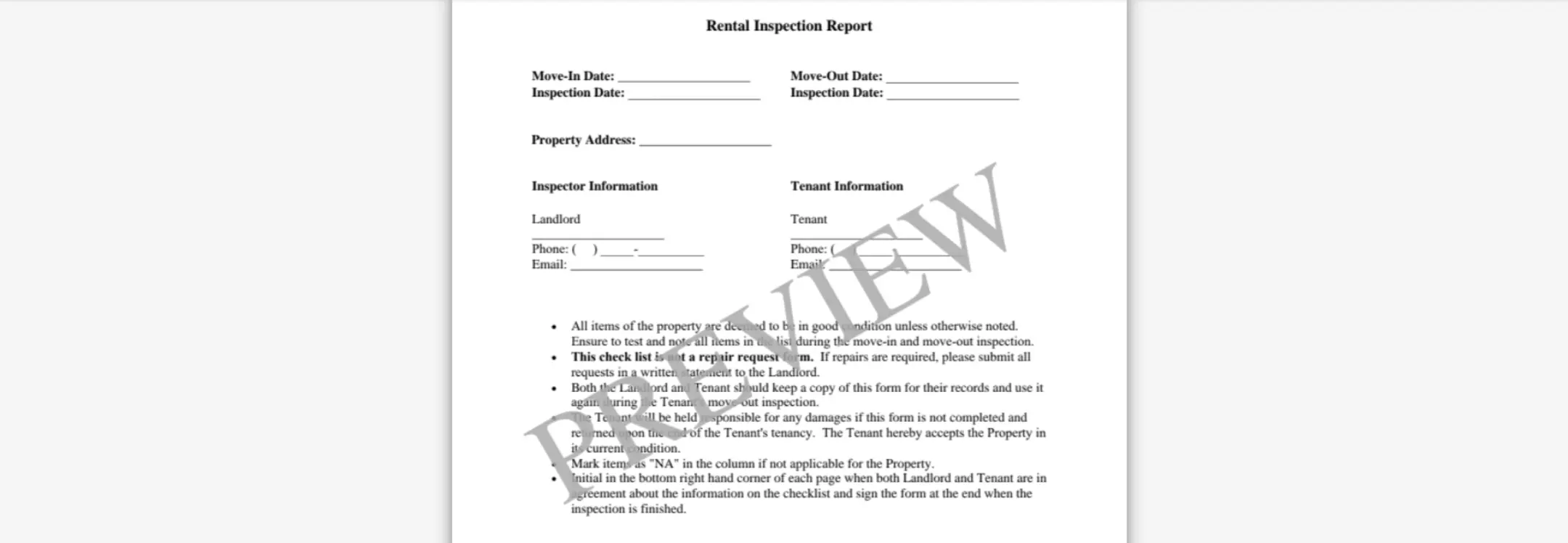
A Rental Inspection Report is a written checklist and narrative that records the condition of a rental unit at a specific time such as before move in, after move out, or during a periodic inspection. It usually covers every room, appliance, surface, and fixture with space for notes, ratings, and photo attachments so that condition can be clearly proven later.
In the United States landlords rely on these reports to justify lawful deductions from the security deposit for tenant caused damage while tenants rely on them to show that some issues existed before they moved in. Many disputes over deposits are won or lost depending on whether a detailed inspection report exists and whether both parties signed it.
Move in vs move out reports
A move in inspection report documents the condition of the property right before the tenant receives possession and usually is completed jointly by the landlord and tenant. It becomes the baseline record that shows what was already worn, damaged, or missing at the start of the tenancy so that the tenant is not later blamed for those conditions.
A move out inspection report is performed when the tenant is leaving and focuses on changes since move in including any damage beyond ordinary wear and tear and any missing items. General landlord tenant guidance across the United States encourages landlords to allow tenants to be present at move out inspections so everyone sees the same issues and can discuss them immediately.
Why accurate inspection reports matter
Accurate inspection reports help landlords document the condition of the unit and defend their decisions if a tenant challenges security deposit deductions or files a claim in court. Detailed checklists, numbered items, and photos make it easier to show that a repair charge is tied to specific damage and not just normal aging.
Tenants benefit because a thorough move in report can prevent them from being charged for pre existing defects such as stained carpet or damaged countertops. A signed move out report also helps tenants dispute improper deductions if the landlord claims damage that is not supported by the documented condition at move in.
Common issues when reports are missing or weak
When there is no move in report or the report is vague landlords may be unable to prove that a specific stain or dent was caused during the tenancy rather than existing earlier. That weakness can lead to courts denying some or all security deposit deductions and in some situations landlords may even owe penalties or attorney fees under applicable law.
Tenants without a signed move in report face the opposite problem because they have little written evidence that damage was already present which can make it harder to contest deductions. Verbal agreements and memories carry far less weight than a dated, signed, and detailed Rental Inspection Report especially when supported by photos.
Best practices for strong Rental Inspection Reports
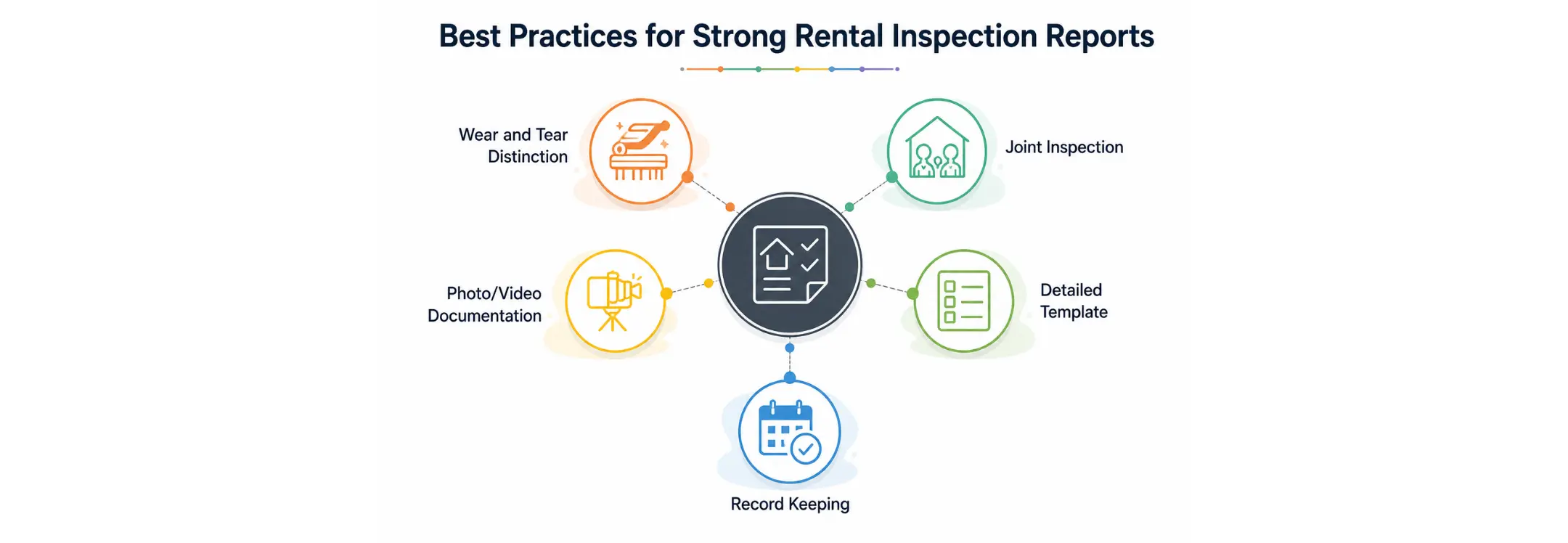
Several recurring best practices appear in landlord tenant guidance across the United States that significantly strengthen a Rental Inspection Report. Following these practices makes your documentation more useful if there is ever a disagreement about damage, repairs, or cleaning.
- Inspect jointly whenever possible so both landlord and tenant review each room together and can discuss issues in real time.
- Use a detailed Rental Inspection Report template that lists each room, surface, and system to reduce the risk of skipping items or forgetting to note damage.
- Record dates, names, and signatures for all parties to show who participated and when the inspection occurred.
- Attach dated photos or videos to document important defects and to show scale, location, and severity of the problem.
- Distinguish normal wear and tear from damage in notes so that routine aging is not treated as chargeable misconduct.
Move in report specifics
A strong move in Rental Inspection Report will usually include basic property information dates and identification of the landlord and tenant. It should note meter readings where relevant as well as keys and access devices issued so there is a clear record of what was provided at the start.
For each room the report should specify whether surfaces are clean, lightly worn, or damaged and it should describe any stains, chips, or defects in plain language. At the end both parties should sign and receive a copy which then becomes the reference document for later inspections and move out assessments.
Move out report specifics
At move out the report should line up with the original move in checklist so that each room and item can be compared side by side. Notations like same as move in or damaged since move in help clarify whether conditions changed and whether any charge is appropriate.
Landlords should document any repair or cleaning that will be charged against the security deposit with specific descriptions and supporting photos. Tenants should be encouraged to attend and review the report so they understand potential deductions before they receive the final accounting and refund.
Benefits of using a Rental Inspection Report template
A dedicated Rental Inspection Report template prompts users to capture all the key information that might otherwise be forgotten such as appliance serial numbers or smoke detector checks. It also standardizes language and layout which makes reports easier to compare across multiple tenancies or properties.
For landlords managing several units a template makes staff training simpler and increases consistency across inspections which courts often view as a sign of professionalism and fairness. Tenants benefit because a predictable, structured format makes it easier to understand what was recorded and to spot any omissions or errors.
Why an online Rental Inspection Report is even better
Online Rental Inspection Report tools combine the structure of a template with the efficiency of digital storage and sharing. With a digital form it is easier to embed photos next to each checklist item capture electronic signatures and automatically add time stamps and location information.
Many property management platforms and online form builders allow landlords and tenants to access the same report from different devices which improves transparency and reduces paper loss. Secure cloud storage also preserves inspection history across multiple tenancies which can be useful for long term maintenance planning and legal documentation.
How to create a move in and move out Rental Inspection Report with Ziji Legal Forms
The outline you are working from anticipates using Ziji Legal Forms to prepare both move in and move out inspection reports so that structure and language stay consistent. A legal forms platform is especially useful when you want a Rental Inspection Report template modeled on common landlord tenant documentation standards in the United States without limiting the form to any one state.
Here is how the five step process would look in concise, one sentence actions as requested.
1. Choose Template
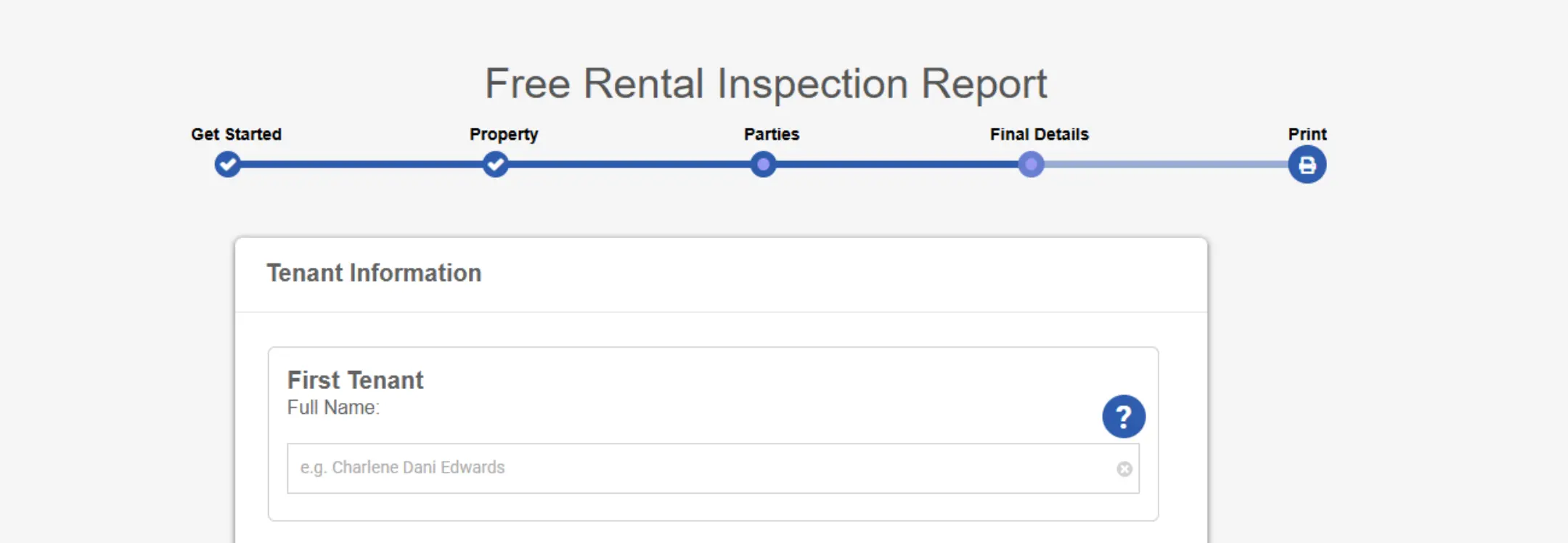
2. Add Party Details
Enter the details of the landlord, tenant, and any inspection participants, making sure every party is accurately identified in the record.
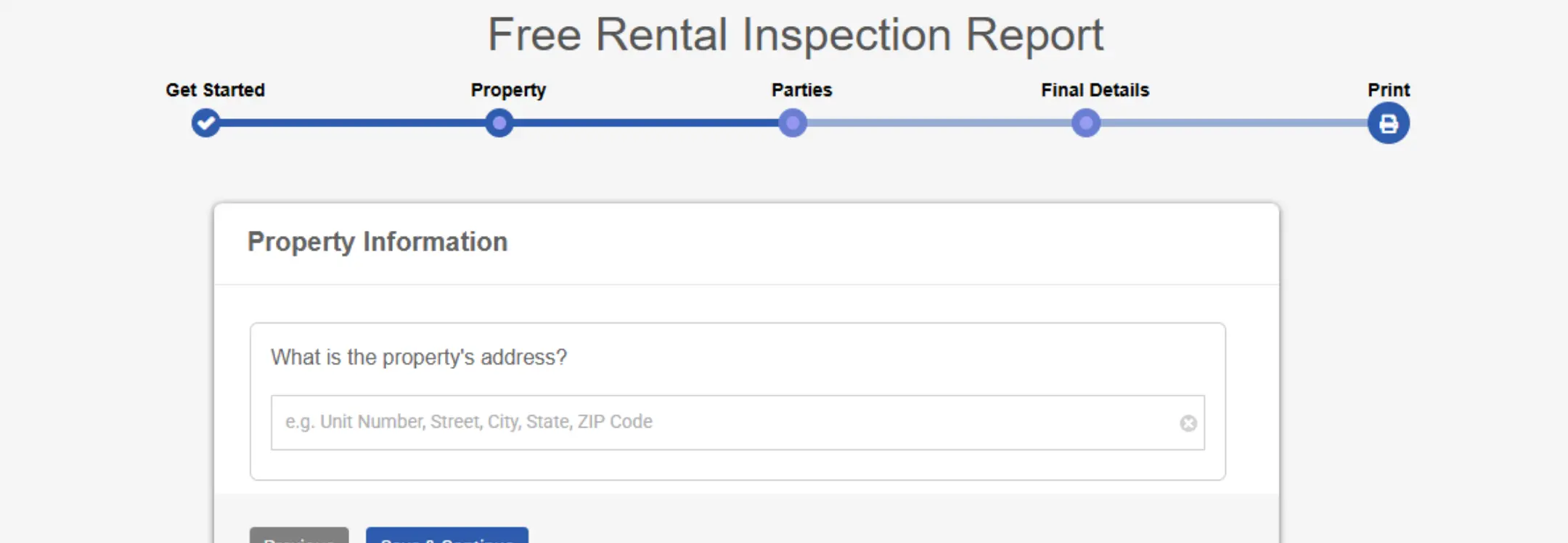
3. Add Property Details
Provide the full property address, specific unit, and the date of inspection so the report clearly reflects where and when it was completed.
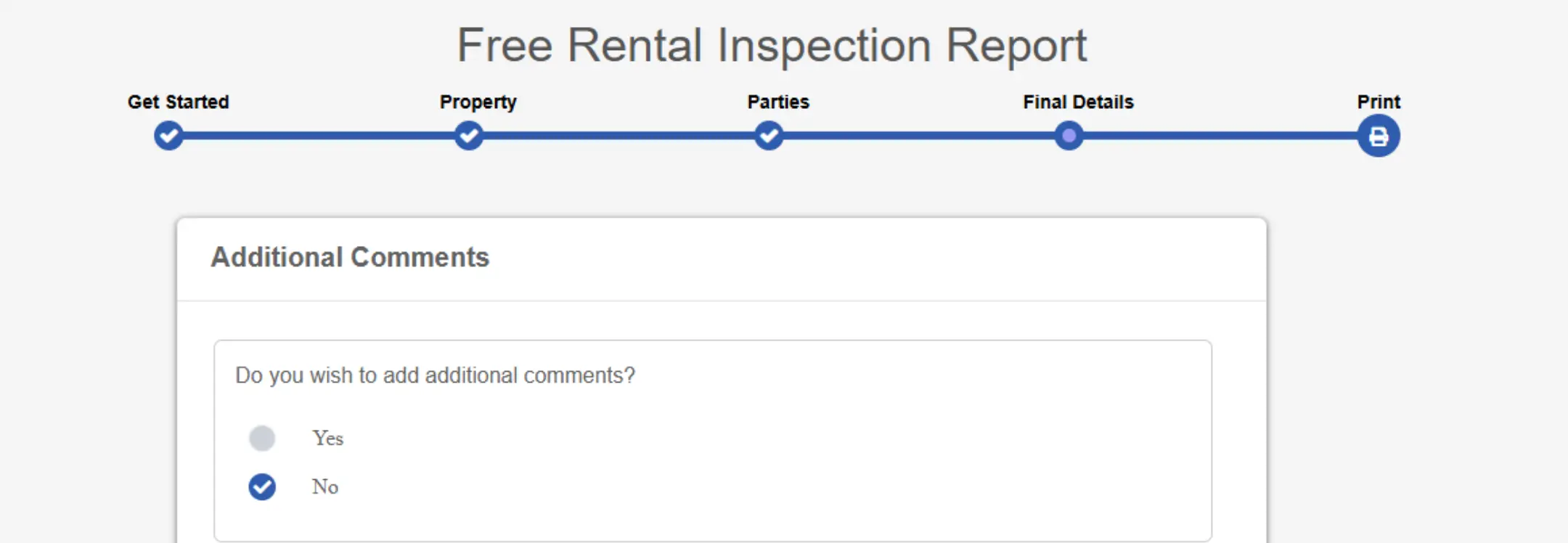
4. Add Final Details
Record the condition of each room, add relevant photos, and note any repair issues or observations to keep the inspection thorough and precise.
5. Preview and Print
Carefully check the finished report, confirm that all entries are correct, then save, download, or print it for signing and secure storage.
Practical tips for landlords and tenants
Both landlords and tenants should approach inspections as a shared risk management exercise rather than an adversarial event. Taking a few extra minutes to open closets, test appliances, and check outlets can prevent costly arguments months or years later.
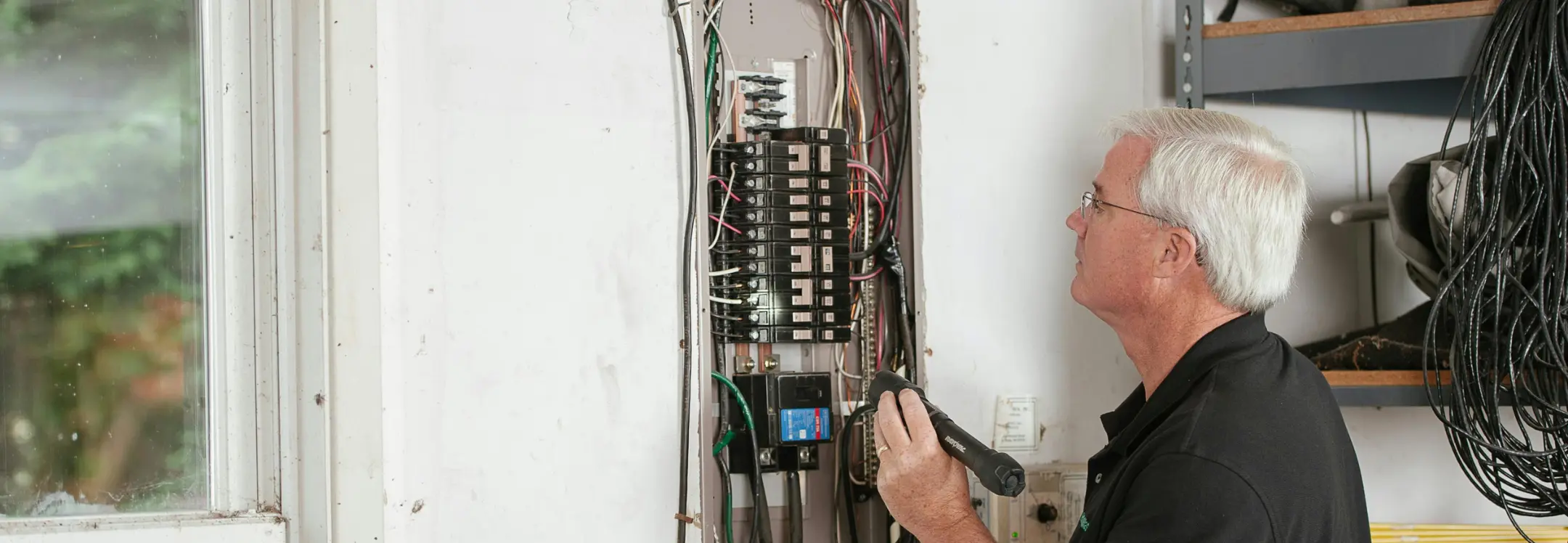
Landlords may want to schedule inspections during daylight hours when natural light makes defects easier to see and to bring simple tools such as a phone camera and flashlight. Tenants should review the completed report before signing and ask for corrections if any conditions are missing or described inaccurately.
When to update or supplement inspection records
Inspection reports are not only for the start and end of a lease because many landlords also perform periodic inspections during longer tenancies. These checkups focus on safety systems, maintenance issues, and emerging damage so that problems can be resolved before they become emergencies or liability risks.
If a major incident occurs during the tenancy such as a water leak or fire it is wise to create a supplemental inspection report with photos and repair details. That extra documentation can help show exactly what changed and how the landlord responded which may be important if insurance or legal questions arise later.
Conclusion
A well prepared Rental Inspection Report protects both landlords and tenants by turning a subjective argument about damage into an objective record of property condition. Using a structured Rental Inspection Report template especially an online Rental Inspection Report with photos and signatures makes the process faster more accurate and easier to prove if challenged. When paired together thorough move in and move out reports create a complete story of the tenancy which supports fair outcomes for security deposits repairs and ongoing maintenance.
Rental Inspection Report FAQs
1. Why is a Rental Inspection Checklist important?
It provides a written record of the property's condition, helping prevent disagreements over repairs and security deposits.
2. When should a Rental Inspection Checklist be completed?
It should be completed before move-in and immediately after move-out to accurately document any changes.
3. Can landlords and tenants complete the inspection together?
Yes. Completing the inspection together helps ensure both parties agree on the property's condition.
4. What items should be documented?
Every major room, appliance, fixture, and visible area of the property should be inspected and recorded.
5. Should inspection photos be kept?
Yes. Keeping photos alongside the checklist creates stronger documentation if questions arise later.
6. In which jurisdictions can I use the Ziji Legal Forms Rental Inspection Checklist?
The Ziji Legal Forms Rental Inspection Checklist is designed for use in every jurisdiction across the United States.
Author
Mandar Sonavane
|
Legal Content Writer at Ziji Legal Forms Inc.
Symbiosis International University
Mandar is a legal content writer specializing in the development of clear, practical, and easy-to-understand legal resources. With a strong focus on legal research, content creation, and plain-language writing, he works closely with our legal professionals to ensure that legal documents and educational materials are accurate, accessible, and user-friendly. At Ziji Legal Forms Inc., Mandar is responsible for researching legal topics, drafting and reviewing content, and helping transform complex legal concepts into straightforward guidance that empowers individuals and businesses to confidently navigate their legal needs.
Reviewed By
Histon Shek
|
General Counsel and Co-Founder at Ziji Legal Forms Inc.
University of Alberta
Histon Shek was called to the Alberta Bar in 2006. He holds a BA in Sociology and Philosophy and an LLB from the University of Alberta. As co-founder of Ziji Legal Forms Inc., he focuses on making legal documents accessible and affordable, overseeing legal integrity and content development.



 United States
 Canada