TL;DR- Retainer service agreements establish ongoing relationships where clients pay recurring fees to ensure service provider availability and priority access to services over extended periods
- Retainers differ from project-based agreements by providing flexible, continuous service rather than fixed deliverables, enabling service providers to become deeply familiar with client needs
- Retainer agreements work well for marketing agencies, consultants, legal services, IT support, and design firms where clients need ongoing availability without renegotiating individual projects
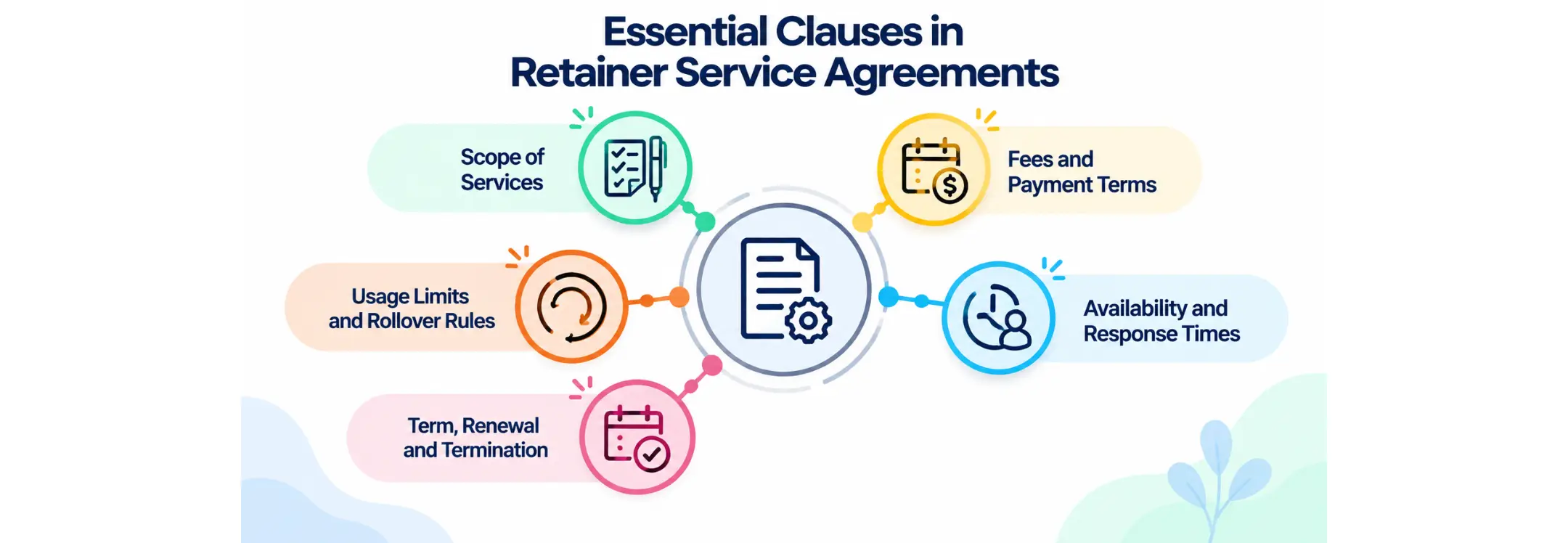
- Essential retainer clauses must specify scope of services, monthly fees, usage limits or hour caps, availability and response times, and clear termination procedures to prevent disputes
- Monthly payments create predictable cash flow for service providers while giving clients budget certainty and priority access to expertise throughout the retainer period
- Ziji Legal Forms provides customizable service agreement templates specifically designed for retainer arrangements with pre-built fields for monthly fees, usage limits, renewal terms, and service availability guarantees
Introduction: Why Recurring Services Need Different Agreements
Many business relationships are not one time projects. They involve continuous support, recurring advisory input, or ongoing technical assistance. In these situations, a traditional project based service agreement may not provide the structure necessary to manage long term expectations. A retainer service agreement is designed specifically for recurring services where availability, continuity, and predictable compensation are essential.
Unlike fixed scope engagements, retainer arrangements focus on access to services over time rather than delivery of a single defined output. This requires careful drafting. Without clear boundaries, recurring service relationships can become financially imbalanced or legally uncertain. A properly structured retainer agreement establishes payment certainty, defines service limits, and clarifies termination rights. When drafted correctly, it creates stability for both parties while reducing the risk of disputes related to workload, availability, or compensation.
What Is a Retainer Service Agreement
Definition and Core Purpose
A retainer service agreement is a contract in which a client pays a recurring fee in exchange for ongoing access to services over a defined period. The payment may secure availability, guarantee a set number of service hours, or provide continuous advisory support. The defining feature of a retainer arrangement is that compensation is tied to time based availability rather than completion of a specific project.
The core purpose of a retainer agreement is predictability. For the service provider, it creates steady income and structured client engagement. For the client, it ensures priority access to professional services without negotiating a new agreement for each task. The agreement should clearly describe what the retainer covers, how services are requested, and whether unused time expires or carries forward. Clarity at the outset prevents misunderstanding about what the recurring fee actually buys.
How Retainers Differ from Project-Based Agreements
Project based agreements are centered around deliverables. They define a beginning, a measurable output, and an end point. Once the deliverable is completed, the agreement typically concludes. Payment is usually tied to milestones or final completion.
Retainer agreements function differently. Instead of focusing on a single outcome, they focus on ongoing service access. The scope may be flexible within defined limits, and services may vary month to month. Because of this flexibility, retainer contracts must carefully define usage caps, response expectations, and billing structure. Without these guardrails, disputes may arise regarding workload, turnaround time, or the value of unused services.
The drafting approach for retainers must therefore account for continuity, rolling obligations, and recurring billing structures rather than one time performance metrics.
Common Industries Using Retainers
Retainer agreements are commonly used in industries where ongoing professional support is required. Management consultants often operate on monthly advisory retainers. Marketing agencies frequently provide continuous campaign management, analytics review, and strategy adjustments under retainer models. Information technology providers may offer system monitoring and help desk services on a recurring basis. Law firms also commonly operate under general counsel retainers where clients pay monthly fees for access to legal advice.
These industries share one characteristic: the client requires consistent availability rather than a single defined deliverable. Retainers allow service providers to allocate resources efficiently while giving clients structured access to expertise. When properly drafted, this model supports long term collaboration without the need for repeated contract negotiations.
When to Use a Retainer Agreement
Ongoing Consulting or Advisory Services
A retainer agreement is particularly appropriate when a business needs continuous strategic input rather than a one time solution. For example, a startup may require regular guidance on financial planning, operational scaling, or regulatory compliance. In these cases, the value lies in access to expertise over time rather than completion of a defined project.
By establishing a recurring fee structure, both parties avoid renegotiating terms each month. The agreement should clearly state how advisory services are delivered, whether through scheduled meetings, written reports, or on call availability. This prevents misunderstandings about what level of engagement is included in the monthly retainer.
Marketing, Design, IT Support, and Legal Services
Creative and technical services frequently operate under retainer models because needs fluctuate. A marketing agency may manage social media campaigns one month and focus on advertising analytics the next. An IT provider may handle maintenance, updates, and unexpected technical issues on an ongoing basis.
Retainers are suitable when service demand is continuous but variable. The agreement should specify whether the retainer covers a set number of hours per month or unlimited services within reasonable limits. It should also clarify how additional work beyond the retainer is billed. Detailed drafting ensures the recurring fee reflects the actual scope of anticipated services.
Situations Requiring Predictable Availability
Retainers are also useful when a client needs priority access to services. Businesses operating in regulated industries, for example, may require quick advisory input in response to compliance questions. Technology companies may need immediate support for system outages.
In these scenarios, the retainer fee compensates the service provider for reserving capacity and maintaining readiness. The agreement should define response times, communication channels, and service windows. Predictable availability must be defined clearly to prevent disputes over what constitutes timely service.
Retainer Versus Project-Based Service Agreements
Payment Structure Differences
Project-based agreements typically use milestone or lump-sum payments aligned with deliverable completion. The client pays for a specific outcome. In retainer agreements, payment is recurring and usually due at the beginning of each billing period. Compensation may be fixed or based on a predetermined number of service hours.
This difference significantly impacts risk allocation. In a retainer model, the service provider receives predictable income, while the client receives guaranteed access. The agreement must clearly state billing frequency, due dates, late payment consequences, and whether the fee is refundable. Transparent payment structure reduces financial disputes.
Scope Flexibility Variations
Project agreements usually contain a fixed scope. Retainers allow greater flexibility within defined parameters. However, flexibility does not mean unlimited work. The agreement should define categories of services included within the retainer and identify services that require separate approval.
Without defined boundaries, the client may assume unlimited coverage. Clear language regarding usage caps or fair use standards prevents scope creep while preserving flexibility.
Duration and Renewal Terms
Project agreements naturally terminate upon completion. Retainers operate over defined recurring terms, such as month to month or annual periods. The agreement should state whether it automatically renews and how notice of non renewal must be delivered.
Clear duration terms prevent unexpected continuation or premature termination. Automatic renewal clauses should be drafted carefully to avoid disputes over notice timing.
Termination Expectations
Termination provisions are especially important in retainer arrangements. Because services are ongoing, the agreement should specify required notice periods, grounds for immediate termination, and payment obligations upon termination.
The contract should clarify whether prepaid fees are refundable and whether unused hours are forfeited. Clear termination expectations prevent conflict when the relationship ends.
Essential Clauses in Retainer Service Agreements
Scope of Services
The scope clause must define the categories of services covered by the retainer. It should describe whether services are limited to advisory support, implementation assistance, monitoring, or specific technical functions. If a monthly hour limit applies, that limit must be clearly stated.
Detailed scope language prevents misunderstandings about what the recurring fee includes. The agreement should also state that services outside the defined scope require written approval and additional fees.
Fees and Payment Terms
The agreement should clearly state the retainer amount, billing frequency, payment due dates, and acceptable payment methods. It should address whether fees are earned upon receipt or as services are rendered.
Clear payment terms reduce disputes related to late payments or refund requests. Including interest provisions or suspension rights for nonpayment provides additional protection.
Usage Limits and Rollover Rules
If the retainer includes a defined number of service hours, the agreement should state whether unused hours roll over into the next period or expire. This prevents disagreement about accumulated service credits.
Clear usage rules help balance workload expectations. Without defined rollover terms, disputes may arise over whether unused services remain available indefinitely.
Availability and Response Times
Availability clauses define when and how services are provided. The agreement should specify business hours, emergency response conditions, and communication methods. If priority response is promised, the timeframe must be defined.
Clear response standards ensure realistic expectations. They also protect the provider from unreasonable demands outside agreed service windows.
Term, Renewal, and Termination
The contract must state the length of the retainer term and whether it renews automatically. Notice requirements for termination or non renewal should be clearly described. The agreement should also address payment obligations through the effective termination date.
Careful drafting in this section reduces confusion and ensures orderly conclusion of the relationship.
Common Retainer Agreement Mistakes
Treating Retainers Like Open-Ended Work
One major mistake is assuming a retainer means unlimited services. Without defined usage limits, clients may expect unrestricted access. This creates imbalance and financial strain.
A well drafted agreement defines boundaries. It clarifies that the retainer provides access within defined parameters, not unlimited labor.
Failing to Set Usage Boundaries
Failing to define monthly hour limits or service categories leads to scope creep. The client may request services beyond what the retainer was priced to cover.
Explicit usage caps protect both parties and maintain fairness in recurring arrangements.
Not Defining Termination Conditions Clearly
Unclear termination terms often create disputes about refundability and final payment. The agreement should define notice periods and financial obligations upon termination.
Clear termination language reduces risk and preserves professional relationships even when the engagement ends.
Legal and Compliance Considerations
Ensuring Fair Payment Structures
Retainer fees must be reasonable and transparent. Agreements should clearly explain what the fee covers and when it is earned. Clear drafting reduces allegations of unfair billing practices.
Transparent structures support enforceability and reduce regulatory risk in industries subject to professional standards.
Avoiding Misclassification Issues
Retainer agreements must avoid creating unintended employment relationships. If the service provider operates as an independent contractor, the agreement should reflect independent status and avoid control provisions that resemble employment.
Clear classification language helps reduce legal exposure under labor and tax regulations.
Documentation for Recurring Services
Recurring services require consistent documentation. Monthly summaries, invoices, and service reports help demonstrate performance and justify fees.
Maintaining records strengthens contractual enforcement and protects both parties if disputes arise.
How to Create Retainer Agreements Using Ziji Legal Forms
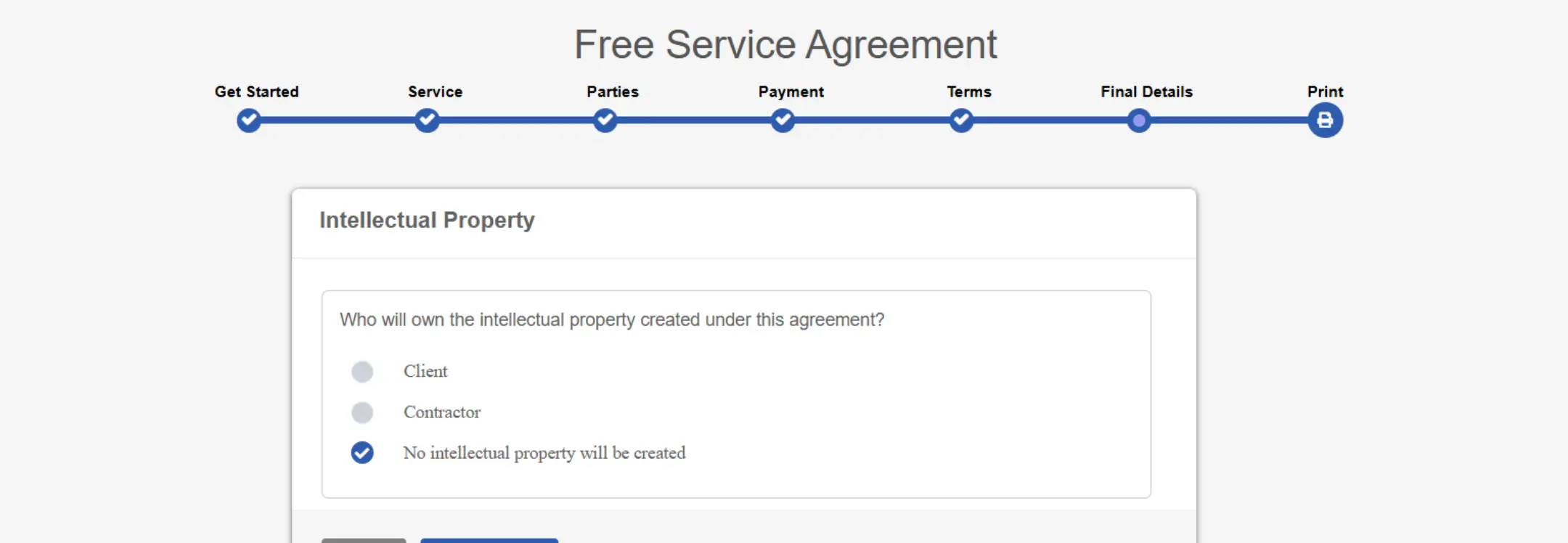
1. Choose template
Access Ziji Legal Forms' Business section and select the Service Agreement Template with retainer agreement features designed for ongoing relationships.
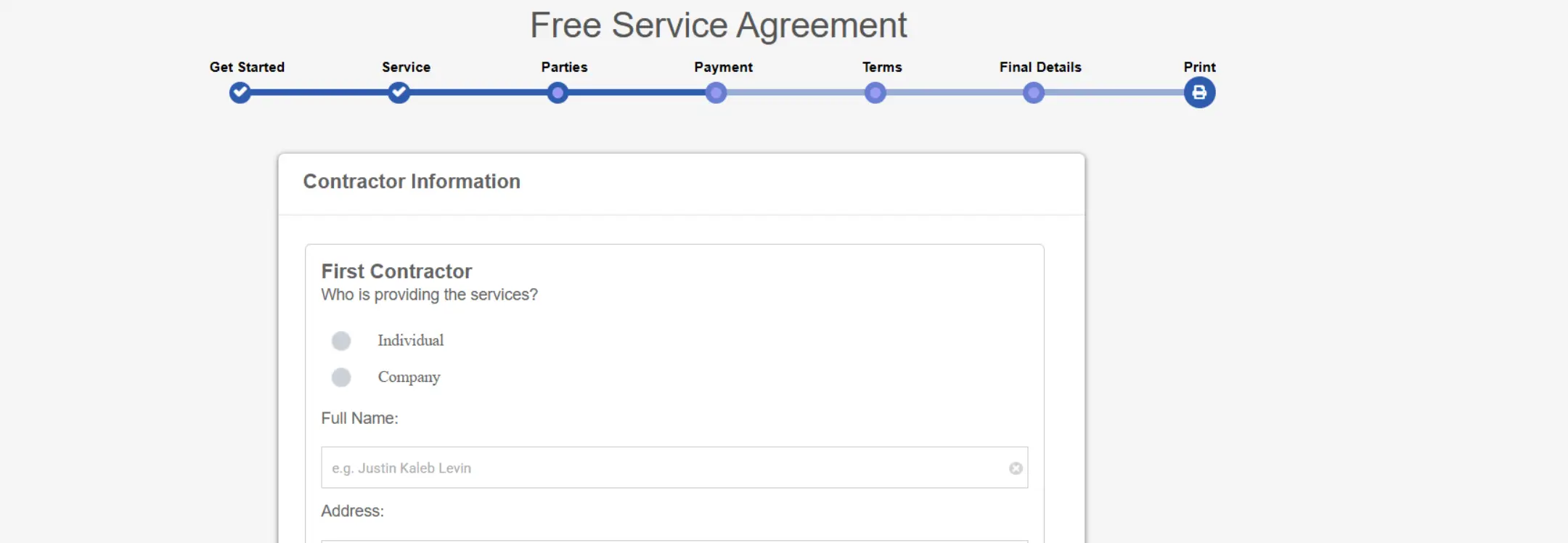
2. Add Parties Details
Enter the service provider name and business information along with the client name and contact details to clearly identify both parties.
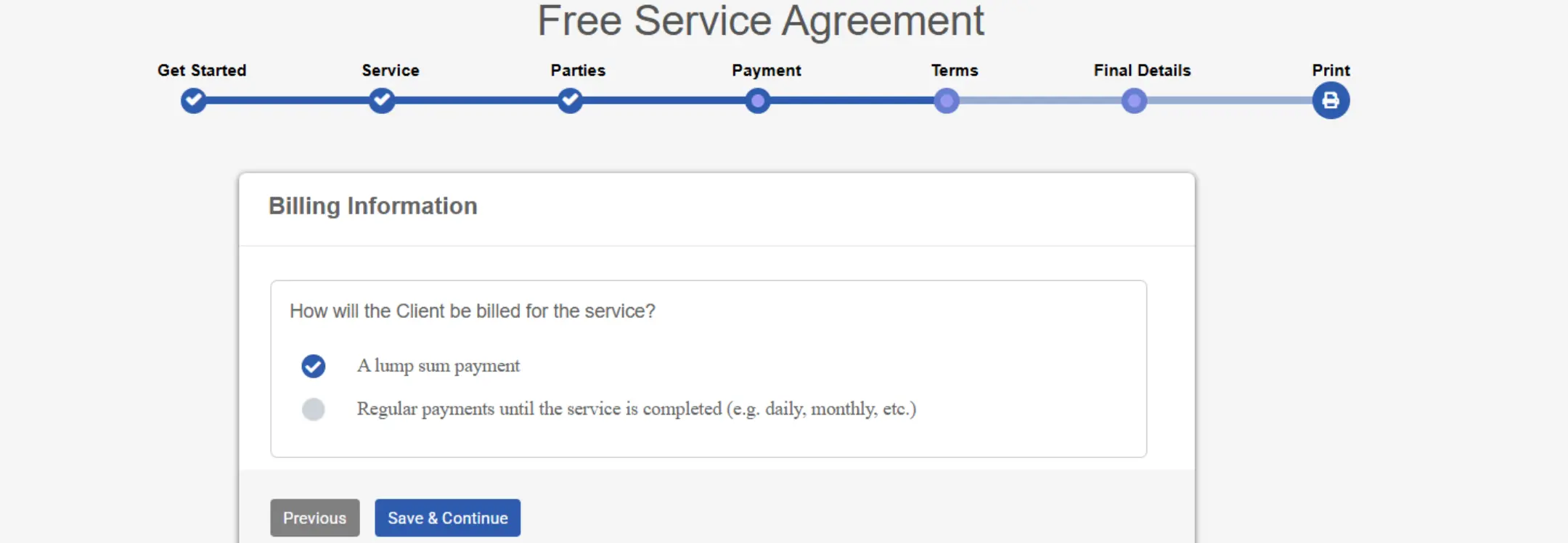
3. Add Payment Details
Specify monthly retainer fees, payment schedule, billing dates, payment methods, and any provisions for additional charges beyond retainer services.
4. Add Terms Details
Define the scope of services with specific hour limits or service caps, establish availability and response time expectations, specify term duration and renewal procedures, and detail termination conditions with required notice periods.
5. Preview and print
Review the completed retainer agreement to verify all terms clearly establish monthly fees, usage limits, availability, and termination procedures, then download in PDF or Word format for signature by both parties.
Template Features Supporting Retainer Structures
Ziji Legal Forms templates include dedicated retainer fields for monthly fees, automatic renewal provisions, hour cap specifications, and rollover rules for unused services. The structured format helps service providers and clients establish clear expectations from the start.
Pre-built language addresses common retainer provisions including service availability guarantees, response time commitments, and procedures for handling requests exceeding retainer scope. These provisions prevent common retainer disputes while remaining flexible for different service types.
Conclusion: Build Strong Long-Term Relationships with Clear Retainer Agreements
Retainer service agreements provide stability and predictability for ongoing professional relationships. When drafted with clear scope limits, payment structures, and termination rights, they reduce disputes and strengthen long term collaboration. Careful drafting ensures that recurring service relationships remain balanced, transparent, and legally enforceable.
Service Agreement FAQs
1. Why is a Service Agreement important?
It establishes clear expectations for the work, payment, timelines, and responsibilities, helping both parties avoid misunderstandings.
2. When is a Service Agreement recommended?
It is recommended whenever services are being performed by an independent contractor or freelancer.
3. What's the difference between a contractor and an employee?
A contractor provides services independently under a Service Agreement, while an employee works under an Employment Agreement and is subject to employment laws.
4. Are verbal Service Agreements sufficient?
While they may be legally recognized in some cases, a written agreement offers much stronger protection for both parties.
5. Can both parties revise the agreement?
Yes. A Service Agreement may be amended at any time if both parties agree to the changes.
6. In which jurisdictions can I use the Ziji Legal Forms Service Agreement?
The Ziji Legal Forms Service Agreement is designed for use in every jurisdiction across the United States.
Author
Mandar Sonavane
|
Legal Content Writer at Ziji Legal Forms Inc.
Symbiosis International University
Mandar is a legal content writer specializing in the development of clear, practical, and easy-to-understand legal resources. With a strong focus on legal research, content creation, and plain-language writing, he works closely with our legal professionals to ensure that legal documents and educational materials are accurate, accessible, and user-friendly. At Ziji Legal Forms Inc., Mandar is responsible for researching legal topics, drafting and reviewing content, and helping transform complex legal concepts into straightforward guidance that empowers individuals and businesses to confidently navigate their legal needs.
Reviewed By
Histon Shek
|
General Counsel and Co-Founder at Ziji Legal Forms Inc.
University of Alberta
Histon Shek was called to the Alberta Bar in 2006. He holds a BA in Sociology and Philosophy and an LLB from the University of Alberta. As co-founder of Ziji Legal Forms Inc., he focuses on making legal documents accessible and affordable, overseeing legal integrity and content development.






 United States
 Canada