TL;DR- Using generic templates without customization misses critical job-specific details, legal requirements, and industry-specific considerations that protect employer interests
- Vague job duties and responsibilities create performance disputes, unclear expectations, and make it difficult to justify disciplinary action or termination decisions
- Missing termination clauses leave ambiguity about exit procedures, notice requirements, and severance obligations causing confusion and potential legal conflicts
- Overlooking confidentiality and IP ownership clauses exposes sensitive business information, trade secrets, and valuable intellectual property to unauthorized disclosure or employee use
- Ignoring labor law compliance failures put employers at risk of wage and hour violations, benefits disputes, and Department of Labor investigations across different jurisdictions
- Using Ziji Legal Forms employment contract templates automatically includes all essential protective clauses while ensuring compliance with current employment law standards
Introduction: Why Employment Contracts Matter
Employment contracts establish the legal foundation for successful employer-employee relationships by defining roles, compensation, benefits, and mutual obligations. Clear, comprehensive contracts protect both employers and employees by preventing misunderstandings while establishing enforceable legal frameworks that guide employment relationships from hire through separation.
Common contract drafting errors create costly problems including wage disputes, wrongful termination claims, intellectual property theft, breach of confidentiality, and regulatory compliance violations that could have been prevented with proper documentation.
Mistake 1: Using Generic or Outdated Templates
Why One-Size-Fits-All Fails
Generic employment contract templates lack the customization necessary to address specific job roles, industry requirements, and individual company needs. Using pre-made contracts designed for general situations misses critical details relevant to your particular position, business structure, and applicable legal requirements.
Outdated templates create compliance problems when they fail to reflect current employment law changes. Labor regulations evolve constantly regarding minimum wage, benefits eligibility, classification requirements, and other employment standards that make old contracts legally inadequate or potentially problematic.
Consequences of Generic Templates
Employer exposures from template misuse include unenforceability of key protective clauses, unintended misclassification of employees leading to wage violations, missing required legal disclosures mandated by current law, and ambiguous provisions that courts interpret against employers.
How to Prevent This Mistake
Customize employment contracts to match the specific role, compensation structure, work schedule, reporting relationships, and industry requirements. Reference Ziji Legal Forms' comprehensive template options that address various employment scenarios while remaining current with employment law developments.
Mistake 2: Leaving Job Roles and Responsibilities Vague
The Cost of Ambiguous Duties
Unclear job descriptions create disputes when employees and employers disagree about what work was promised versus what the employee actually performed. Without specific duty definitions, employees can claim they were asked to perform work outside their original role, complicating performance reviews and termination decisions.
Vague responsibilities make it difficult to establish performance expectations or grounds for disciplinary action when work quality falls below acceptable standards. Employers struggle to justify dismissal decisions when the original job description was so ambiguous that virtually any work could fit the definition.
Performance Management Problems
Ambiguous roles complicate performance management by leaving unclear metrics for success. How can employers evaluate performance fairly when job expectations were never clearly defined? Employees can argue they were never told specific standards needed to succeed in their positions.
Concrete Job Descriptions Protect Everyone
Detailed job descriptions specify exact duties, performance metrics, reporting relationships, and key responsibilities that define what the employee will do daily. This clarity helps new employees understand expectations immediately while providing documentation supporting performance evaluations and disciplinary decisions.
Mistake 3: Ignoring Probation, Notice, and Termination Clauses
Legal Implications of Missing Termination Terms
Unclear or absent termination clauses create problems when either party wants to end the employment relationship. Without documented notice requirements, severance obligations, or exit procedures, disputes arise about whether proper procedures were followed or appropriate compensation was provided.
Missing termination provisions may default to at-will employment status in most jurisdictions, meaning employers can terminate for any legal reason with no notice. However, clear contracts often supersede at-will assumptions, so properly drafted termination language protects both parties by establishing mutually understood exit procedures.
What Good Termination Clauses Include
Comprehensive termination provisions specify notice periods required for termination without cause, grounds for immediate termination for cause, severance requirements if any, return of company property procedures, final paycheck timing, continuation of benefits information, and references to applicable unemployment insurance or severance agreements.
The clause should address probation periods defining how long new employees have before permanent status, performance expectations during probation, and what happens if performance during probation falls short of standards.
Mistake 4: Overlooking Confidentiality and IP Ownership
Business Protection Through Clear Ownership
Intellectual property and confidentiality clauses protect valuable business assets by establishing who owns work products, inventions, creative materials, client information, and business strategies developed during employment. Without clear ownership language, disputes arise when employees claim they retain rights to valuable work they created for the company.
Confidentiality provisions protect trade secrets, client lists, financial data, proprietary processes, and competitive strategies from unauthorized disclosure during employment and after employee separation. These provisions become especially important for employees with access to sensitive information or strategic knowledge.
Common Ownership Wording Errors
Ambiguous IP language creates disputes about what specific items the employer owns versus what the employee retains. Does the employer own work created during business hours, work created on company equipment, or work on company-related projects? What about pre-existing materials or methodologies the employee brought to the job?
Overly broad confidentiality provisions may be unenforceable in some jurisdictions or might go beyond protecting legitimate business interests. Clear, reasonable confidentiality language remains enforceable while protecting essential business assets without preventing employees from using general skills or publicly available knowledge.
Mistake 5: Failing to Comply With Local Labor Laws
Complex, Varying Requirements Across Jurisdictions
Labor law compliance varies significantly between federal requirements, state requirements, and sometimes local municipal requirements, making it difficult to create single contracts complying with all applicable standards. Employers operating in multiple states face exponentially increased complexity when employment laws diverge between jurisdictions.
Wage and hour laws establish minimum wage, overtime requirements, classification standards for exempt versus non-exempt status, meal and rest break requirements, and record-keeping obligations that vary by state and sometimes by industry. Benefits requirements including health insurance, retirement plan contributions, and paid leave vary dramatically.
Consequences of Non-Compliance
Non-compliance creates serious penalties including back wage calculations with interest, overtime compensation for misclassified workers, damages for benefits violations, penalties imposed by Department of Labor or state labor agencies, and potential class action liability affecting multiple employees working under identical defective contracts.
Ensuring Compliance
Regular review of employment contracts against current federal and state law requirements helps ensure ongoing compliance as regulations change. Professional legal guidance helps identify which requirements apply to specific positions and ensures contract language properly implements all mandatory terms.
Mistake 6: Skipping Non-Compete or Non-Solicitation Clauses
When Protection is Necessary
Non-compete and non-solicitation clauses protect employers from unfair competition when employees with valuable knowledge, client relationships, or strategic information leave to work for competitors or start competing businesses. These provisions are particularly important for positions with significant client contact, knowledge of proprietary processes, or access to trade secrets.
Non-compete agreements prevent former employees from working in competing roles for specified periods and geographic areas after employment ends. Non-solicitation clauses prevent former employees from recruiting other employees or soliciting clients from their former employer after separation.
Enforceability Challenges
Courts scrutinize non-compete provisions carefully, viewing them as restraints on trade that limit worker mobility. Overly broad non-compete agreements may be unenforceable or enforceable only in limited form. Reasonable restrictions tied to legitimate business interests remain enforceable while protecting employer interests appropriately.
Restrictions must be reasonable in duration (typically six months to two years), geographic scope (limited to areas where the employer actually conducts business), and subject matter (limited to services or products the employee actually worked on). Overly restrictive provisions can invalidate the entire clause and potentially create liability for wrongful restraint.
Mistake 7: Not Executing the Contract Properly
Execution Failures Undermine Everything
Improper contract execution undermines even well-drafted agreements by creating questions about whether the contract was actually agreed to and signed by authorized parties. Missing signatures, incomplete signatures, missing dates, or unsigned documents cannot be enforced despite containing proper terms.
Both employer and employee representatives with authority to bind their respective parties must sign the contract. For corporate employers, the signatory should be authorized by the corporate board or bylaws to execute employment contracts. Vague signatory authority creates questions about whether the agreement is actually binding.
Digital Signature Validity
Digital signatures are legally valid under federal and state electronic signature laws when properly executed through authorized platforms. Electronic signatures provide advantages including audit trails proving who signed and when, secure storage preventing loss or alteration, faster execution enabling immediate employment without delays waiting for physical signatures.
Proper storage and retention ensures contracts remain accessible for future reference if employment disputes arise. Secure cloud storage with backup copies protects against loss while making records easily retrievable when needed for disputes or compliance verification.
How to Create a Legally Sound Employment Contract with Ziji Legal Forms
Comprehensive Template Selection
Access Ziji Legal Forms' Business section and select the Employment Contract Template appropriate for your specific role and employment situation including full-time positions, part-time roles, and executive positions.
Add Party Details
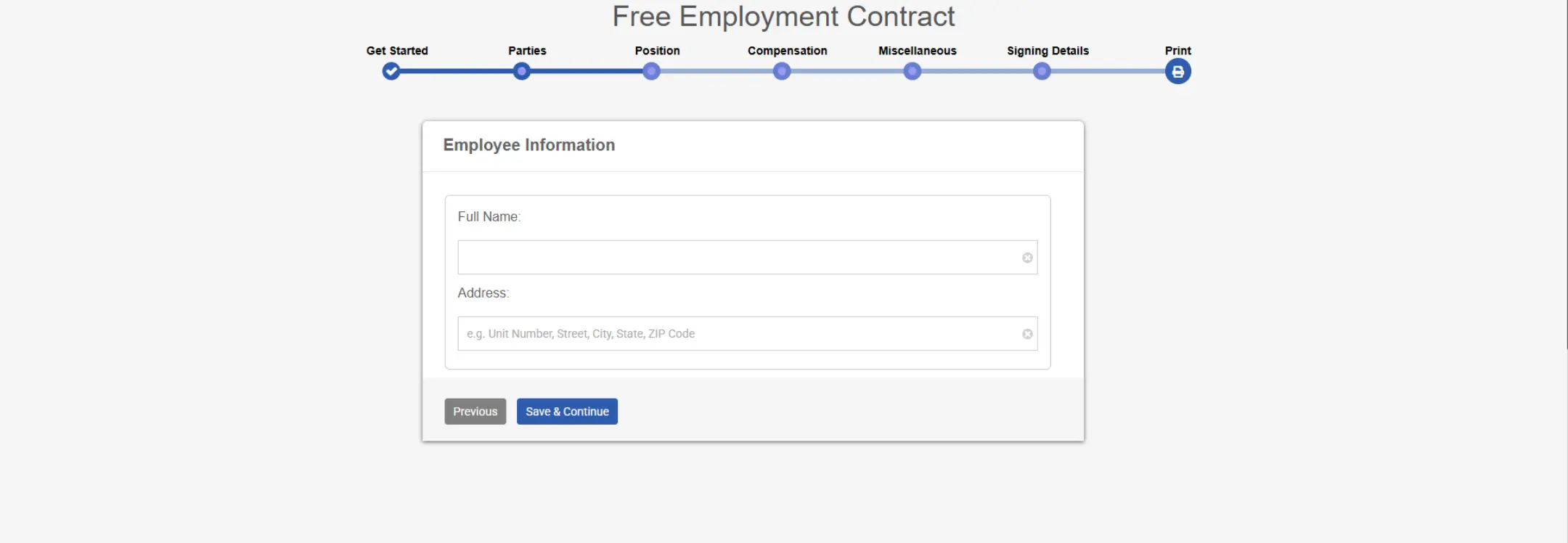
Enter complete company information, job title, employee name, start date, and reporting relationships that clearly identify all parties to the employment relationship.
Add Payment Details.
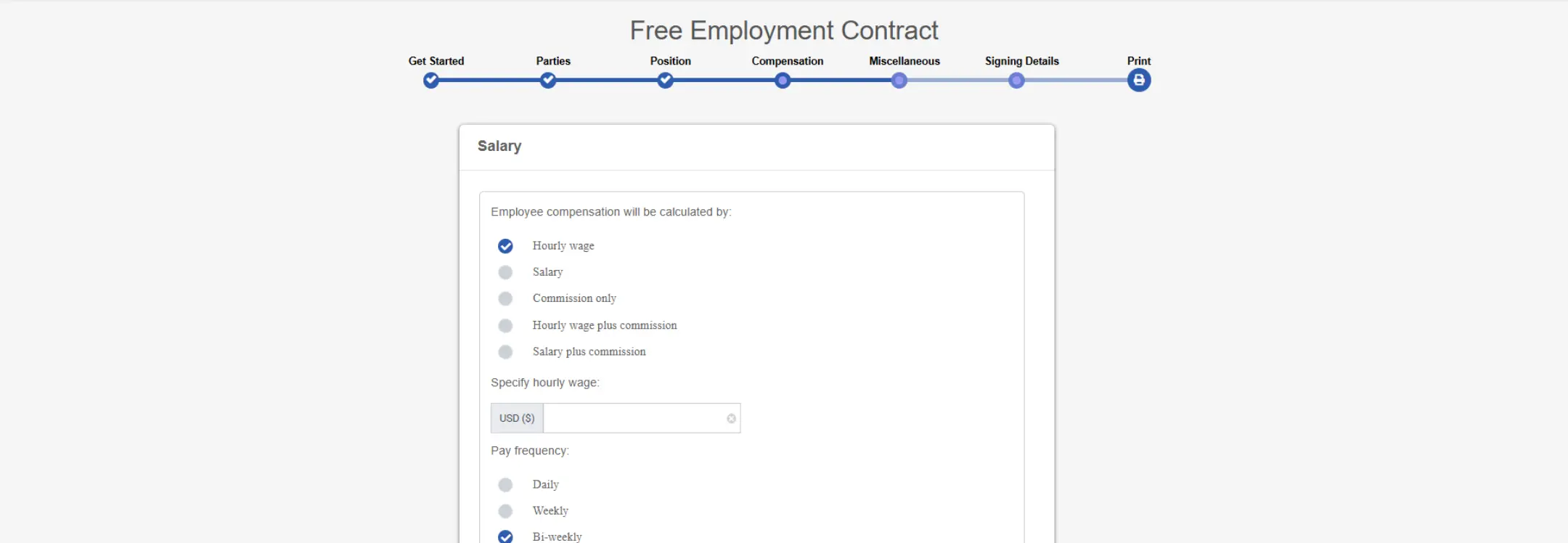
Specify salary or wage amount, payment schedule, benefits eligibility, bonus structures, and any additional compensation that defines complete compensation arrangements.
Add Term Details
Define job responsibilities clearly, establish work schedule and location, specify probation period if applicable, include confidentiality and IP ownership provisions, detail termination procedures, add non-compete or non-solicitation clauses where appropriate, and include any industry-specific provisions relevant to the position.
Preview and print
Review the completed contract thoroughly to ensure all information is accurate and comprehensive, then download in PDF or Word format for execution by both parties with proper signatures and dates.
Platform Benefits
Ziji Legal Forms templates incorporate all seven mistake categories discussed in this blog automatically, ensuring comprehensive coverage of protective clauses while maintaining legal compliance with current employment law standards.
Conclusion: Protect Your Business with Professional Contracts
Avoiding these seven mistakes in employment contract creation protects your business while ensuring fair treatment for employees and compliance with all applicable employment laws. Using Ziji Legal Forms' professionally designed templates eliminates common drafting errors while incorporating all essential protective clauses required for legally sound employment relationships.
Employment Contract FAQs
What is an employment contract also known as?
An employment contract is also known as the following: contract of employment, employment agreement, or employee contract.
What is an employment contract?
An employment contract is an agreement that governs the terms of the working relationship between the employer and the employee by outlining each party’s rights and obligations.
Why do you need an employment contract?
The contract will ensure both the employer and employees know their obligations and there will not be any ambiguity in the working relationship. An employment contract should be used if business owners, managers, human resource managers or recruiters are hiring an employee for their respective company. However, if an independent contractor is being hired for a fixed term or for on going services, an independent contractor agreement or service agreement should be used instead of an employment contract.
What areas are covered in an employment contract?
Typically an employment contract should cover the following topics:
- Duties of the employee: What type of work the employee will be responsible for and the type of daily tasks the employees will be expected to perform.
- Probation period: How long the probation period will be for the employee, if any.
- Terms of the employment: How long will the employee be working for the employer, such as whether the work will be full time or part time, or whether the position will be temporary or permanent.
- Working scheduling: specifying the employee’s working days, working hours and work location.
- Salary: How much monetary compensation will the employee receive, whether the employee will be paid per hour, paid by commission, or a paid by a fixed amount.
- Employee benefits: What other perks and benefits will the employee have in addition to the salary? Typically terms can include vacation time, health and dental insurance, paid leave, employee discounts, pension plan, and paid professional development.
- Confidentiality: Prevents the employee from sharing sensitive business information and trade secrets of the employer.
- Non-compete clause: Prevents the employee from working for a competing business after leaving the employer or inducing the employer’s other employees to leave their job.
What is employment at will?
Employment at will means the employee can be terminated for any reason as long as the reason is not illegal. (Some examples of illegal terminations include but not limited to: terminating an employee based on their sex, race, colour, creed, religion, national origin, pregnancy, age, disability etc.) All states have some form of employment at will with some restrictions. The exception is Montana which only allows employment at will during the 6 month probation period.
What is a confidentiality clause and why do you need one in an employment contract?
A confidentiality clause prohibits the employee from sharing confidential information about the employer’s business both during and after the employee’s employment. For example, sales data, marketing plans, product designs and ingredients, and any business information relating to the employer’s business are confidential needs to be protected.
Having a confidentiality clause or confidentiality agreement will be a good step to ensure the employer’s company will retain a competitive edge by preventing the employee from sharing or utilizing such sensitive information. The typical confidentiality clause lasts from 1 to 2 years but can also last indefinitely for some extreme cases for proprietary recipes and trade secrets, for example, the formula to Coca-Cola.
What is a non-compete clause and why do you need one in an employment contract?
A non-compete clause prohibits the employee from entering into competition against the employer both during and after the employee’s employment. This is also tied in with the confidentiality clause since the goal is to prevent the employee from using and sharing sensitive information from the employer. Typically, the non-compete clause will prevent the employee from working for a competitor of the employer in the same sector for a short period, or limit the geographic location in which the employee may work while working in the same sector. The limit however must be reasonable since the employer cannot prevent the employee from seeking meaningful work after leaving the position.
What is the difference between an employee and an independent contractor?
An employee works directly under the employer’s control and direction, typically following set schedules, using the employer’s tools or equipment, and receiving employee benefits. An independent contractor, on the other hand, operates as a separate business entity, controls how and when the work is done, and does not usually receive employee benefits. The distinction is important because employment laws, tax obligations, and contract requirements differ for each.
Can an employment contract be changed after it has been signed?
Yes, but any changes must be mutually agreed upon by both the employer and employee. Amendments to an employment contract should be made in writing and signed by both parties to ensure clarity and avoid misunderstandings. Verbal agreements are generally discouraged, as they can be difficult to prove if a dispute arises.
Is it necessary to have a written employment contract?
While some jurisdictions allow for verbal employment agreements, having a written contract is strongly recommended. A written agreement clearly outlines the rights and obligations of both parties, helps prevent disputes, and serves as evidence if legal issues arise.
What happens if an employment contract is breached?
If either the employer or the employee fails to fulfill the obligations outlined in the contract, it may be considered a breach. The non-breaching party may seek remedies such as compensation for losses, enforcement of the original terms, or termination of the contract. The available remedies depend on the severity of the breach and the laws of the applicable jurisdiction.
Does an employment contract need to comply with local labor laws?
Yes. Regardless of what is written in the contract, it must comply with the labor and employment laws of the jurisdiction where the employee works. Any clause that conflicts with statutory requirements, such as minimum wage laws, overtime pay rules, or mandatory leave entitlements, will generally be considered invalid.
What jurisdictions can use our employment contract?
You can use our template to create a legal and valid employment contract for the following jurisdictions:
Alabama Alaska Arizona Arkansas California Colorado Connecticut Delaware District of Columbia Florida Georgia Hawaii Idaho Illinois Indiana Iowa Kansas Kentucky Louisiana Maine Maryland Massachusetts Michigan Minnesota Mississippi Missouri Montana Nebraska Nevada New Hampshire New Jersey New Mexico New York North Carolina North Dakota Ohio Oklahoma Oregon Pennsylvania Rhode Island South Carolina South Dakota Tennessee Texas Utah Vermont Virginia Washington West Virginia Wisconsin Wyoming | AL AK AZ AR CA CO CT DE DC FL GA HI ID IL IN IA KS KY LA ME MD MA MI MN MS MO MT NE NV NH NJ NM NY NC ND OH OK OR PA RI SC SD TN TX UT VT VA WA WV WI WY |








 United States
 Canada