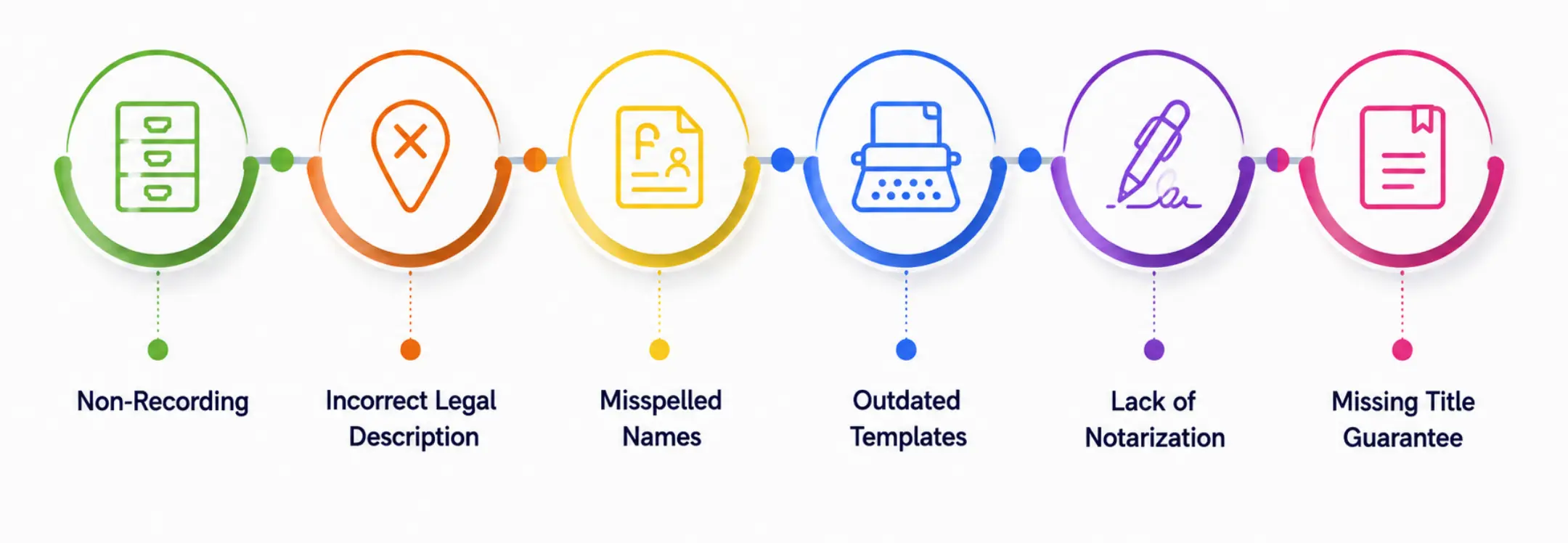
TL;DR- Incorrect legal descriptions create title defects and cloud ownership because property boundaries must be precisely defined in formal legal language rather than street addresses alone
- Misspelled names or incorrect grantor/grantee information invalidates deeds or creates ownership disputes when names do not match government identification documents
- Missing title guarantees exposes grantors to liability for defending title against future claims and leaves buyers vulnerable to undisclosed ownership problems
- Forgetting proper notarization prevents deeds from being recorded and creates legal invalidity because notary authentication is mandatory for property transfers
- Using outdated or generic templates leaves critical clauses missing and fails to comply with current legal requirements or property-specific recording standards
- Not recording the deed with county recorders leaves your property transfer incomplete and creates ambiguity about who legally owns the property in public records
- Ziji Legal Forms provides comprehensive warranty deed templates that prevent these critical mistakes while ensuring all legal requirements and recording compliance
Introduction: Why Warranty Deed Accuracy Matters
A warranty deed represents one of the most important legal documents in real estate transactions. This document transfers property ownership while guaranteeing that the seller holds clear title free from hidden claims or encumbrances. Any errors in this critical document threaten the validity of the entire property transfer and create legal problems that persist for years after the transaction closes.
Warranty deed mistakes cause title defects, prevent property sales or refinancing, trigger disputes between parties, delay transactions, and sometimes require expensive court intervention to resolve. Understanding common errors and how to avoid them protects all parties in property transactions while ensuring smooth transfers and clear ownership.
Mistake 1: Incorrect or Insufficient Legal Description
Why Legal Descriptions Matter More Than Addresses
A property's legal description is its unique identifier in official records, fundamentally different from a street address which can change. Legal descriptions define exact boundaries using precise measurements, lot numbers, or metes and bounds calculations that distinguish one property from all others.
Street addresses alone cannot convey property identity because addresses change, multiple properties can share similar addresses, or buildings can have multiple units. Courts and recording officials require legal descriptions extracted from surveys, recorded plat maps, or subdivision documents that create permanent, unchangeable property identification.
Consequences of Wrong Legal Descriptions
Incorrect legal descriptions create title clouds that prevent future sales or refinancing because title companies and lenders will not proceed without clear descriptions matching official records. Courts may determine that deeds with wrong legal descriptions fail to convey any property or convey the wrong property entirely, leaving ownership unclear.
Neighbors can dispute boundary claims, and future buyers might discover that the property they believed they owned actually refers to different land entirely. Correcting legal descriptions requires expensive judicial reformation or filing corrective deeds that complicate ownership history.
Verifying Legal Descriptions
Always copy legal descriptions directly from prior deeds or current property surveys rather than creating new descriptions from memory. Compare descriptions against county assessor records and plat maps to confirm accuracy. Use precise measurements and reference exact lot numbers, block numbers, and subdivision names rather than approximations.
Mistake 2: Misspelling Names or Using Incorrect Party Information
Identity Verification Requirements
Names in warranty deeds must match exactly with government-issued identification documents and prior deeds. Misspellings, nicknames, married name variations, or incomplete legal names create confusion about who the actual parties are and whether the deed transfers property from the correct owner.
Using "Bob" instead of "Robert," "Marie" instead of "Mary," or omitting middle initials creates ambiguity about party identity. Recording officials may reject deeds or mark them as questionable when names do not match identification documents or prior ownership records.
Legal and Financial Impact
Title companies refuse to insure properties when grantor names do not match prior deeds because they cannot confirm that the seller actually owns the property. Buyers may later discover that they cannot refinance or sell properties because title insurance refuses coverage due to name discrepancies.
Lenders withhold loan approvals or demand expensive title corrections before funding. If disputes later arise about whether the correct person actually transferred the property, name errors undermine arguments about who intended to transfer the property.
Correct Procedures for Names
Use full legal names exactly as they appear on driver's licenses, passports, or prior deeds. Spell out complete names rather than nicknames, include middle initials where used in prior documents, and use consistent name formats throughout the deed. Verify names match identification documents before signing or notarizing deeds.
Mistake 3: Leaving Out the Title Guarantee or Warranty Language
What the Warranty Actually Means
The warranty provision is the core that distinguishes warranty deeds from other deed types. This language guarantees that the grantor owns the property free and clear, that no other person has superior ownership claims, and that the grantor will defend title against future challenges.
Warranty language establishes grantor liability for any title defects that emerge later, whether caused by previous owners, creditors, judgment lienholders, or other claimants. Omitting this language converts the deed into a quitclaim deed that provides no guarantees, leaving grantees vulnerable to undisclosed claims.
Grantor Liability Exposure
Grantors who omit warranty language expose themselves to potential legal disputes if title defects emerge. However, property owners who fail to include warranty language in received deeds lose the ability to recover damages from the grantor if later discovery reveals title problems.
The warranty provision creates enforceable obligations protecting property owners' investments. Without clear warranty language, grantees bear all risk of future title defects regardless of circumstances or the grantor's knowledge of problems.
Essential Warranty Language
Proper warranty deeds include language like "grantor warrants that the property is free from encumbrances except as follows" or "grantor guarantees clear title and agrees to defend against all claims." This explicit language creates legally binding obligations that courts enforce.
Mistake 4: Forgetting Proper Notarization and Witness Requirements
Why Notarization Is Mandatory
Notarization authenticates deed signatures by confirming the identity of signers and verifying that signatures were made willingly without coercion. Recording officials will not accept deeds without proper notary seals and signatures because unnotarized documents cannot be verified as authentic.
Notaries provide legal proof that the person claiming to transfer the property actually exists, personally signed the document, and intended to create binding obligations. Without this verification, anyone could create deeds in another person's name, creating opportunities for fraud.
Missing Notary Seals Create Rejection Problems
Deeds rejected for missing or improper notarization must be re-executed and re-notarized before recording, delaying property transfers and creating complications. If the grantor becomes unavailable or unwilling to sign again, the entire transaction may fail.
Electronic notarization now provides valid alternatives to in-person notarization in many jurisdictions, enabling remote signing while maintaining proper authentication through video verification and digital notary seals.
Witness and Acknowledgment Requirements
Some jurisdictions require witness signatures in addition to notary acknowledgments. Witnesses must sign the deed in front of the notary, attesting that they observed the grantor sign voluntarily. Proper witness procedures include providing printed names, addresses, and phone numbers as required by current recording standards.
Mistake 5: Using Outdated or Generic Templates
Problems with One-Size-Fits-All Approaches
Generic deed templates designed for general situations miss state-specific requirements, property-specific considerations, or updated legal standards that current transactions require. Templates created years ago may not reflect legal changes affecting deed validity or recording requirements.
One-size-fits-all templates often omit mandatory clauses required by specific jurisdictions or fail to address variations needed for different property types like commercial properties, multi-unit buildings, or properties with easements or other encumbrances.
Missing Mandatory Clauses and Requirements
Outdated templates may lack affidavits of consideration, homestead exemption language, or other provisions required by current law. Missing required clauses can result in deeds being rejected or recorded with defects that create future problems.
Recording standards evolve as technology and legal requirements change. Templates from older sources may not comply with current recording format requirements, leading to rejection or digital recording complications.
Selecting Appropriate Current Templates
Use deed templates specifically created for current year legal requirements that reflect your jurisdiction's recording standards. Verify that templates include all mandatory clauses and verify they comply with your property type and transaction structure. Professional legal form services regularly update templates to reflect legal changes and recording requirement updates.
Mistake 6: Not Recording the Deed with County Recorders
Why Recording Is Essential
Recording transforms warranty deeds from private agreements into official public documents establishing legal ownership. Without recording, your deed remains a private contract between parties, leaving you vulnerable to competing claims or fraudulent transfers by others claiming authority to convey the property.
Public recording provides notice to the entire world that you legally own the property. Recording establishes priority in cases where multiple people claim ownership rights to the same property based on recording date and time stamps.
Recording Timeline Requirements
Most jurisdictions require deeds to be recorded within specified timeframes after closing, typically 30 to 90 days. Failure to record within required periods can trigger penalties, title complications, or lender contract violations if financing is involved.
Late recording may also result in priority problems if other parties record conflicting claims to the property. Recording delays create gaps during which ownership remains ambiguous in official records.
Recording Process and Costs
Submit completed, notarized deeds to the county recorder's office in the county where the property is located. Include required cover sheets or recording request forms with the deed and applicable recording fees. Recording fees vary by county but typically range from fifteen to fifty dollars depending on deed length and county fee structures.
Expect recording turnaround times of several days to a few weeks depending on county workload. Electronic filing where available typically processes more quickly than mailed documents. Retain recorded copies as proof that your deed is officially on file in public records.
How to Create a Warranty Deed Using Ziji Legal Forms
1. Choose template
Access Ziji Legal Forms' Real Estate section and select the Warranty Deed Template designed to include all essential legal elements and current recording requirements.
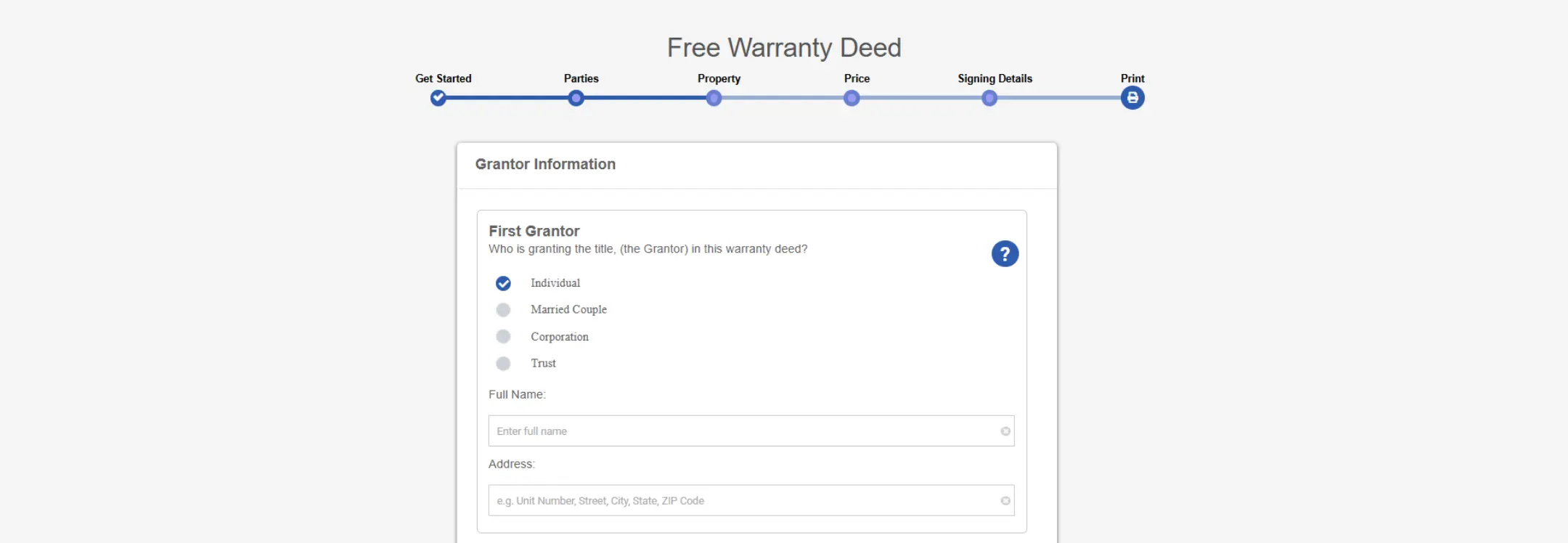
2. Add Parties' Details.
Enter complete legal names exactly as they appear in government identification, addresses, and relationship information for both grantor and grantee to establish clear contractual parties.
3. Add Property Details.
Include the complete legal property description extracted directly from prior deeds or surveys, not street addresses, ensuring precise boundary definition and property identification.
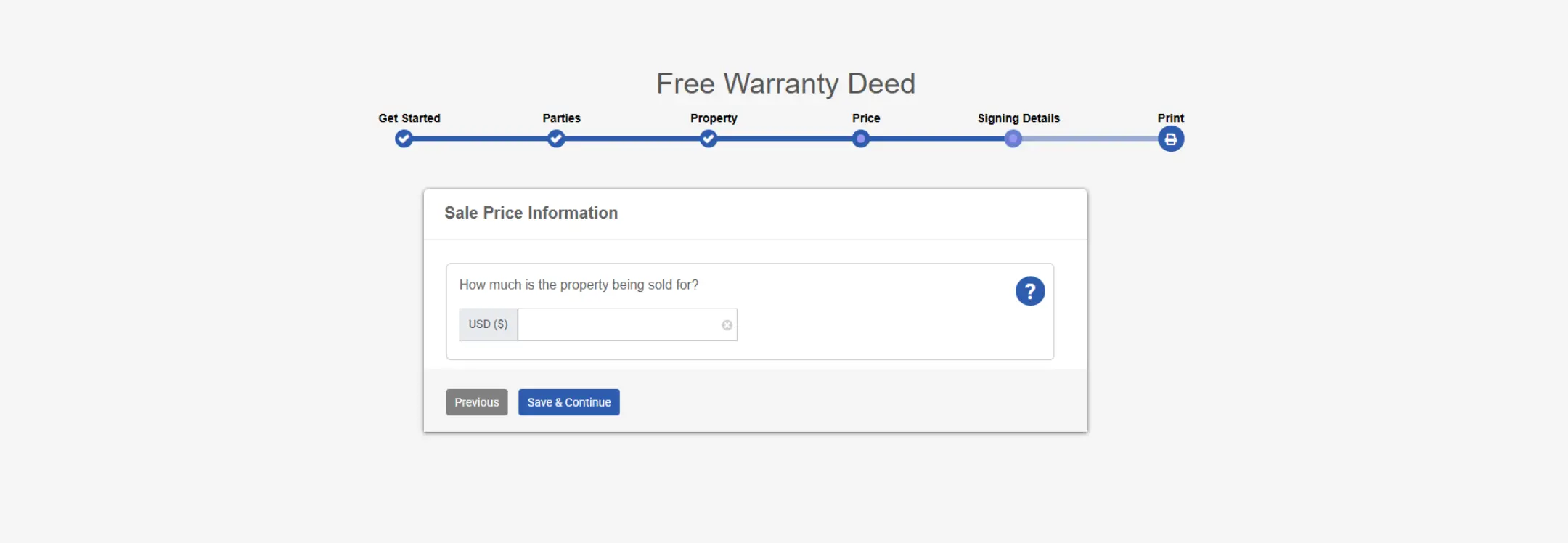
4. Add Price Details.
Specify the consideration amount representing fair value for the property transfer and any special terms or conditions that affect the property conveyance.
5. Preview and print.
Review the completed deed carefully for accuracy and completeness, then download in PDF or Word format for notarization and county recorder submission with all required fees and documentation.
Using Ziji Templates Reduces Common Mistakes
Ziji Legal Forms ensures accurate legal descriptions by requiring specific extracted information rather than general approximations. The platform includes mandatory warranty language guaranteeing title, preventing omissions that would create ambiguity. Current templates incorporate all state-required clauses and formatting standards for proper recording. Built-in formatting compliance prevents rejection due to margin, font, or layout problems. Guided completion helps users provide complete grantor and grantee information matching identification requirements.
Conclusion: Protect Your Property Transfer with Accurate Warranty Deeds
Warranty deed accuracy is essential for valid property transfers that protect all parties' interests while establishing clear legal ownership in official records. Using Ziji Legal Forms' professionally designed templates eliminates the most common drafting errors while ensuring all legal requirements and recording compliance are maintained.
Warranty Deed FAQs
1. What is a Warranty Deed?
A Warranty Deed is a legal document that transfers ownership of real estate while guaranteeing that the seller has clear title and the legal authority to transfer the property.
2. What's the difference between a General Warranty Deed and a Special Warranty Deed?
A General Warranty Deed protects the buyer against title defects from any point in the property's history, while a Special Warranty Deed only covers issues that arose during the seller's ownership.
3. Does a Warranty Deed need to be notarized?
Yes. In most jurisdictions, the grantor must sign the Warranty Deed before a notary for it to be valid and recordable.
4. What should I do after the Warranty Deed is notarized?
The notarized deed should be recorded with the appropriate county recorder or land records office to complete the ownership transfer.
5. Can I use a Warranty Deed to add someone to my property's title?
Generally, no. Adding a co-owner is usually accomplished with a Quitclaim Deed rather than a Warranty Deed.
6. Which jurisdictions can use the Ziji Legal Forms Warranty Deed?
The Ziji Legal Forms Warranty Deed is applicable in all jurisdictions across the United States.
Author
Mandar Sonavane
|
Legal Content Writer at Ziji Legal Forms Inc.
Symbiosis International University
Mandar is a legal content writer specializing in the development of clear, practical, and easy-to-understand legal resources. With a strong focus on legal research, content creation, and plain-language writing, he works closely with our legal professionals to ensure that legal documents and educational materials are accurate, accessible, and user-friendly. At Ziji Legal Forms Inc., Mandar is responsible for researching legal topics, drafting and reviewing content, and helping transform complex legal concepts into straightforward guidance that empowers individuals and businesses to confidently navigate their legal needs.
Reviewed By
Histon Shek
|
General Counsel and Co-Founder at Ziji Legal Forms Inc.
University of Alberta
Histon Shek was called to the Alberta Bar in 2006. He holds a BA in Sociology and Philosophy and an LLB from the University of Alberta. As co-founder of Ziji Legal Forms Inc., he focuses on making legal documents accessible and affordable, overseeing legal integrity and content development.





 United States
 Canada